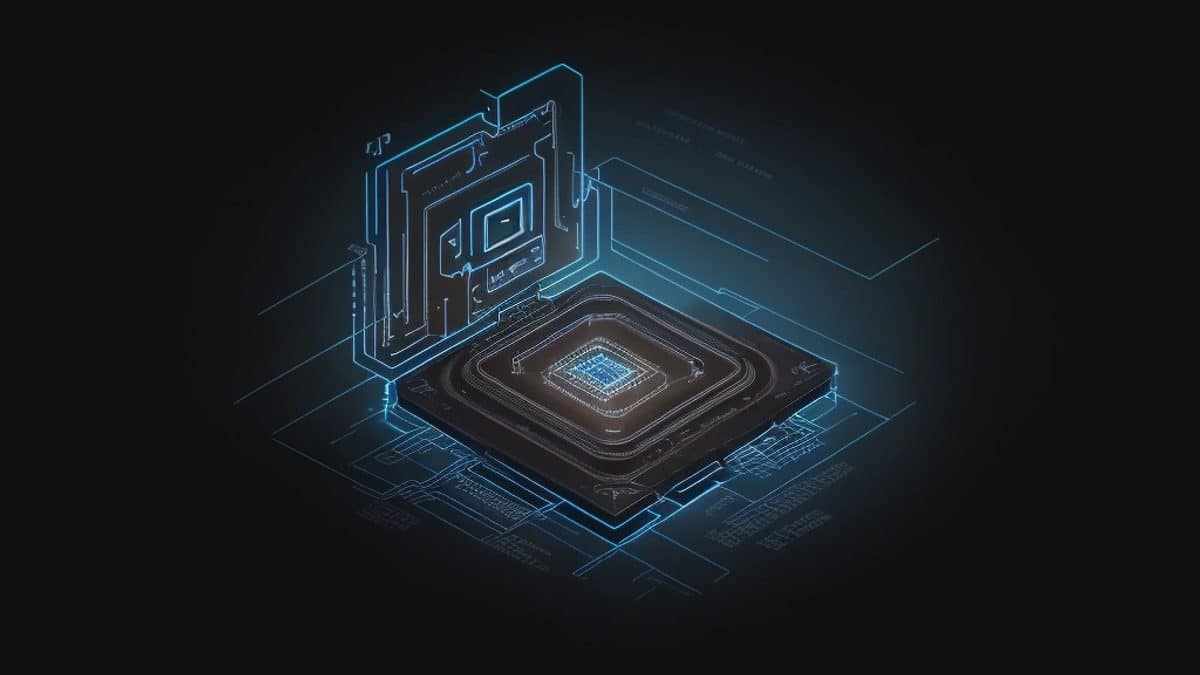
DeepSeek has launched a preview of an AI model built to run on Huawei's Ascend chips, a move that deepens China's domestic AI stack and raises hard questions about how much longer export controls can hold the line.
The announcement is quiet in its framing but loud in its implications. DeepSeek, the Chinese AI lab that rattled Western markets in early 2025 with its cost-efficient R1 reasoning model, has now adapted its model inference and training workflows to run on Huawei's Ascend 910 series processors. No Nvidia required. For anyone tracking the U.S.-China technology standoff, that sentence lands with considerable weight.
Washington began restricting Nvidia's A100 and H100 exports to China in 2022, tightening the screws again in 2023, on the theory that denying China access to leading-edge GPU compute would slow its AI and military development. The logic was straightforward: frontier AI is hungry for chips, and if you control the chips, you slow the frontier. DeepSeek's latest move is essentially a live-fire test of whether that logic still holds.
What makes this development more than a product launch is the structural shift it represents. DeepSeek optimizing for Huawei silicon is not just one company solving a supply chain problem. It accelerates a co-development loop between China's best AI software engineers and its domestic semiconductor industry. Each iteration makes the Ascend platform more capable, and each capability improvement makes it more attractive to the next AI lab. That feedback loop is exactly what U.S. policymakers were hoping to prevent.
For Huawei, the partnership with DeepSeek is a credibility event. The Ascend chips have been China's designated Nvidia substitute for years, but commercial validation from a lab with genuine international standing is different from state-directed adoption. DeepSeek's R1 model earned its reputation in the open market, which means its endorsement of the Ascend platform carries analytical weight that a government procurement contract simply does not.
A bifurcating global stack
The broader competitive picture is one of divergence rather than competition. The AI industry is no longer a single global race toward a shared hardware-software standard. It is splitting into distinct stacks , Nvidia-anchored in the West, Huawei-anchored in China , each optimizing internally and pulling allied markets toward its own ecosystem. Cloud providers, enterprise software vendors, and AI developers building cross-border products will increasingly have to make architectural choices they cannot easily reverse.
DeepSeek's ability to squeeze competitive performance from constrained hardware is not new information , R1 made that clear , but its willingness to invest engineering resources in Huawei optimization suggests the lab sees a durable future in domestic silicon, not just a workaround while waiting for Nvidia access to return. That is a strategic signal as much as a technical one.
The practical takeaway for Western policymakers is uncomfortable: hardware controls remain a meaningful tool, but they are not a ceiling. They raise costs, slow timelines, and create friction. They do not stop determined, well-funded teams from finding paths around them. The more interesting question now is whether the U.S. responds by tightening controls further, shifting focus toward software and talent restrictions, or accepting that the gap it hoped to preserve is narrowing regardless. What to watch next is whether other leading Chinese AI labs follow DeepSeek's lead and publish Ascend-optimized releases of their own, which would confirm this is a coordinated industry pivot rather than a single lab's experiment.
Also read: GPT 5.5 quietly rewrites what a language model is supposed to feel like • DeepSeek V4 arrives as an open-source reasoning model that Western AI labs cannot afford to ignore • DeepSeek's new model can generate an entire novel in one shot and the industry is struggling to process that