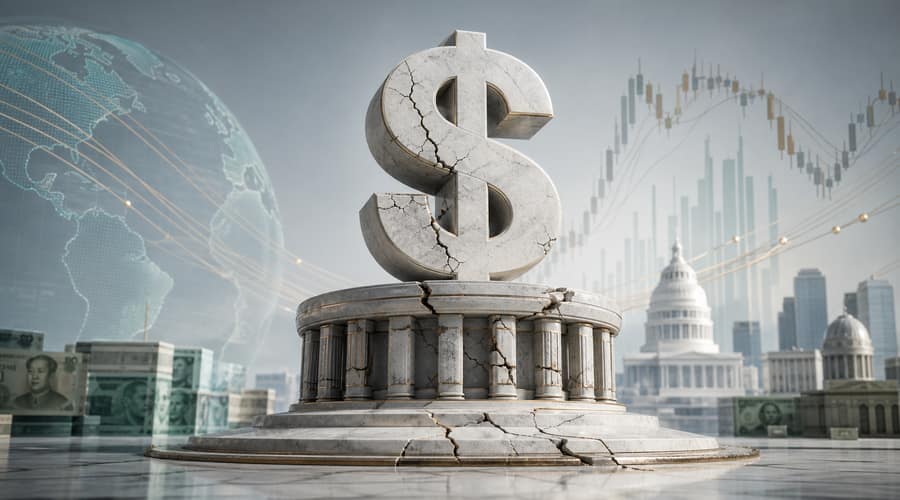
Barry Eichengreen's new analysis of 2,500 years of monetary history warns that America's eroding institutional credibility, not just macroeconomic cycles, is accelerating the dollar's secular decline.
The dollar looks strong right now. Since geopolitical tensions flared in the Middle East, the greenback has climbed back against the euro, Swiss franc, and other majors, reclaiming losses from earlier this year. Safe-haven demand is doing what it always does. But confusing a tactical rally with structural health would be a mistake, and one of the world's leading monetary historians is making that case with unusual bluntness.
Barry Eichengreen, an economist at UC Berkeley who has spent decades studying the architecture of global finance, argues that the same advantages cementing dollar hegemony have historically planted the seeds for its displacement. His latest book, 'Money Beyond Borders: Global Currencies from Croesus to Crypto,' traces how dominant currencies from the ancient world through the British pound eventually lost their status. The parallels to today are uncomfortable.
The dollar still accounts for roughly 58% of global foreign exchange reserves and settles more than half of world trade. Those numbers sound unassailable until you look at the trajectory. In 2001, the dollar's share of reserves sat near 73%. The erosion has been steady, not sudden, which is precisely what makes it easy for policymakers and investors to dismiss.
Conventional wisdom holds that economic size, deep financial markets, and price stability determine a currency's international role. Eichengreen does not dispute these factors but argues the literature has historically underweighted a critical set of domestic foundations: the rule of law, genuine separation of powers, central bank independence, and robust legal protections for creditors. When those institutional pillars crack, the currency standing on top of them does not collapse overnight, but the process of replacement becomes inevitable.
The United States is testing this proposition in real time. Public debt has surpassed $34 trillion, the Federal Reserve faces regular political pressure from both parties, and attacks on judicial independence have become routine talking points rather than fringe concerns. Add to this the willingness to weaponize dollar-based financial sanctions, and trading partners have concrete incentives to explore alternatives that did not exist a decade ago.
The Geopolitical Accelerant
Eichengreen also highlights something most currency analysts have historically ignored: the role of international alliances. A reserve currency thrives when the issuing country provides public goods like security guarantees and predictable diplomacy. When those commitments appear transactional or unreliable, allies begin hedging. Europe's push to develop capital markets less dependent on New York clearinghouses and China's bilateral trade agreements settled in yuan are not isolated experiments. They represent a pattern that history suggests accelerates once underway.
The tariff chaos of recent years compounded the problem. Erratic trade policy forces companies and governments alike to reconsider whether pricing contracts in dollars remains the path of least resistance or an unnecessary vulnerability. When the rules can change with a single executive order, diversification becomes risk management rather than speculation.
Where This Heads Next
The critical question for investors and entrepreneurs is timing. Eichengreen is clear that the dollar's decline will play out over decades, not quarters. No single competitor, not the euro, not the yuan, and certainly no cryptocurrency, currently possesses the depth and institutional credibility to replace the greenback wholesale. The more realistic outcome is a fragmented monetary order where regional currencies and bilateral settlement arrangements chip away at dollar exclusivity in specific trade corridors.
For crypto and digital asset builders, this environment is both an opportunity and a reality check. Stablecoins pegged to the dollar have flourished precisely because they solve settlement friction without requiring users to abandon the familiar unit of account. But if Eichengreen's institutional thesis holds, the long-term demand may shift toward stablecoins and settlement networks denominated in a basket of currencies or regional alternatives. The infrastructure being built today needs to be agnostic about which currency wins, because the odds of a single winner are falling.
Watch central bank reserve allocation data over the next two years. If the dollar's share dips below 55%, the conversation shifts from academic speculation to market reality. The foundations are weaker than the headlines suggest, and history's verdict on currencies that take their dominance for granted is unambiguous.