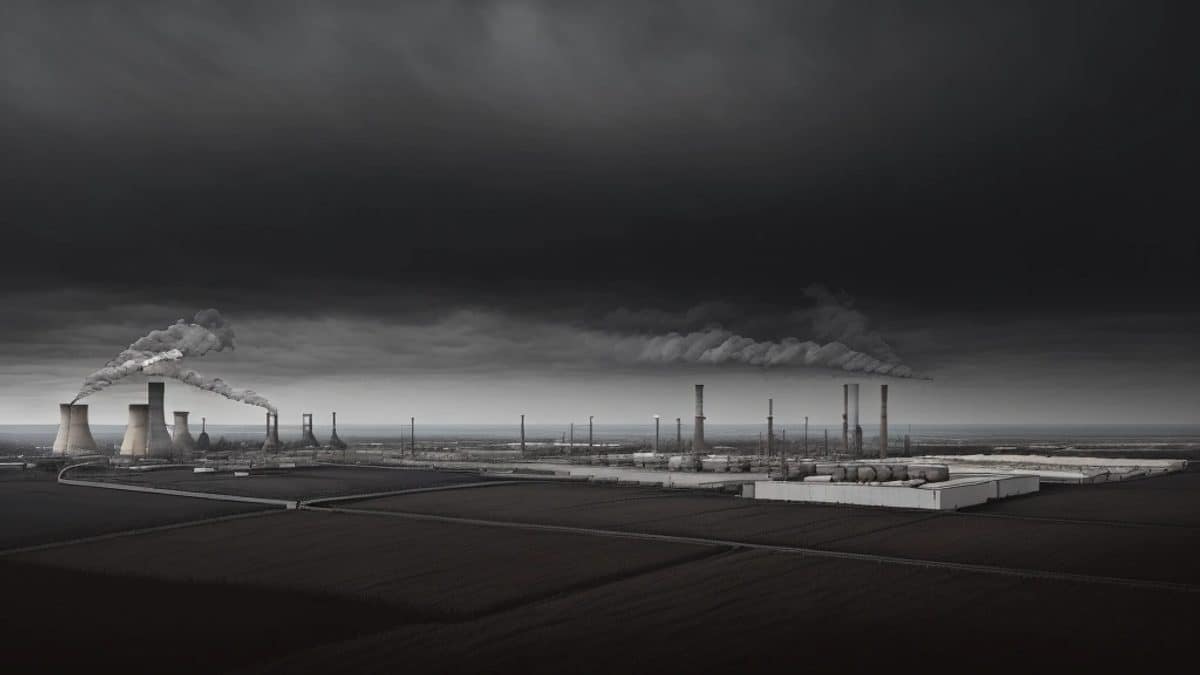
A Wired investigation into air permit documents for natural gas projects linked to just 11 US data center campuses finds they carry the potential to emit more than 129 million tons of greenhouse gases per year , a figure that reframes the AI energy debate from an abstract concern about the future into a concrete accounting of infrastructure already under construction.
The numbers are worth sitting with. Three natural gas projects affiliated with the Stargate Project, the OpenAI-led consortium building data center campuses across multiple US states, show a combined potential to emit more than 24 million tons of greenhouse gases annually. That is more than Costa Rica and slightly less than Croatia , from three projects, in a single year. xAI's Colossus campus in Memphis and the adjacent Colossus 2 campus in Southaven could each generate more than 6.4 million tons of CO2 equivalents per year, which Wired translates as the rough equivalent of 30 average-sized natural gas plants apiece. A Chevron-backed project in West Texas, which Microsoft is reportedly pursuing as a power source, carries a permit showing potential emissions of 11.5 million tons annually , more than Jamaica emits in an entire year. Add it all up across just 11 campuses and you get 129 million tons of potential annual emissions, an amount that exceeds Morocco's entire 2024 output.
The industry's standard response to permit-based emissions analysis is that the figures represent worst-case theoretical maximums, not actual operating projections. Alex Schott, communications director for an oil and gas company building three power plants for Meta, told Wired the estimates "represent a theoretical, conservative scenario, not the actual projected emissions," and suggested real figures could be two-thirds lower. Wired ran the numbers on that claim and found that even if total emissions end up at half the permit maximums, the combined gas power infrastructure would still generate more greenhouse gases in a single year than Norway emitted in 2024 , equivalent, according to EPA benchmarks, to more than 153 average-sized natural gas plants. The margin of error argument does not change the order of magnitude. It changes the comparison from Morocco to Norway.
What makes these figures structurally significant rather than just alarming is their relationship to the grid. According to the International Energy Agency, natural gas already accounts for over 40% of the electricity supplied to US data centers, with coal contributing an additional 15%. The IEA forecasts that those two sources will meet over 40% of additional data center electricity demand through at least 2030. That is not a transition story. That is an entrenchment story. PJM Interconnection, which manages the grid across 13 eastern states including Virginia , the self-described data center capital of the world , delayed the closure of 60% of its fossil fuel plants last year because data center demand growth left no alternative. The AI build-out is not simply adding new energy consumption to an existing grid. It is actively reversing the trajectory of that grid's decarbonization.
The Business Risk Is Catching Up
For the companies involved, the emissions profile of their infrastructure is shifting from an environmental disclosure footnote to a material business risk. Microsoft, Google, and Amazon have all made net-zero or carbon-negative commitments with specific target dates. Those commitments were made when data center energy demand was growing at a rate that clean energy procurement could plausibly track. The AI build-out has broken that relationship. As The Atlantic documented in its April cover piece, data centers are on track to become one of the fastest-growing sources of greenhouse gases on earth, with IEA projections showing potential for emissions to more than double by 2030. Investors who took those net-zero commitments at face value are now looking at air permits that tell a very different story.
The regulatory dimension is moving in parallel. The Union of Concerned Scientists' January 2026 report found that without stronger clean energy policy, the additional fossil fuel generation used to power data centers will increase annual US power plant CO2 emissions by 19 to 29 percent by 2035. The Brookings Institution has begun framing data center energy demand as an AI regulatory question, not just an energy question. The European Union's AI Act already requires energy transparency for high-impact AI systems. The US has no equivalent federal requirement yet, but the political pressure created by permit documents showing individual campuses with emissions profiles larger than sovereign nations will accelerate that conversation faster than most companies are currently modeling in their risk disclosures.
The Infrastructure Opportunity
There is a flip side to the problem, and it is significant. The gap between what the AI industry needs and what clean energy infrastructure can currently deliver is measurable in terawatt-hours and billions of dollars, which means it is also a market. A new generation of companies is building toward that gap: advanced geothermal developers like Fervo Energy, small modular reactor ventures like Oklo and X-energy, long-duration storage companies targeting the peaker plant replacement market, and transmission infrastructure startups focused on unlocking stranded renewable capacity. The data center energy crisis is not primarily a story about what AI companies are doing wrong. It is a story about an infrastructure deficit that took decades to create and will take years to close, with enormous commercial stakes on both sides of that timeline. The Wired permit analysis makes the scale of that deficit visible in terms that are hard to dismiss. What happens next depends on whether the capital flowing into AI compute can be redirected, in part, toward the energy systems that AI compute actually requires.
Also read: Solana's first physical art gallery is using a Frank Ape solo show to prove the onchain art model works in the real world • Palantir's 22-point manifesto has its own employees questioning which side they are on • France is switching 2.5 million government computers to Linux and the rest of Europe is watching