Hackers did not need a brilliant exploit to reach fuel tank monitors at U.S. gas stations. They needed exposed devices, weak configuration and a market that still treats industrial visibility as optional.
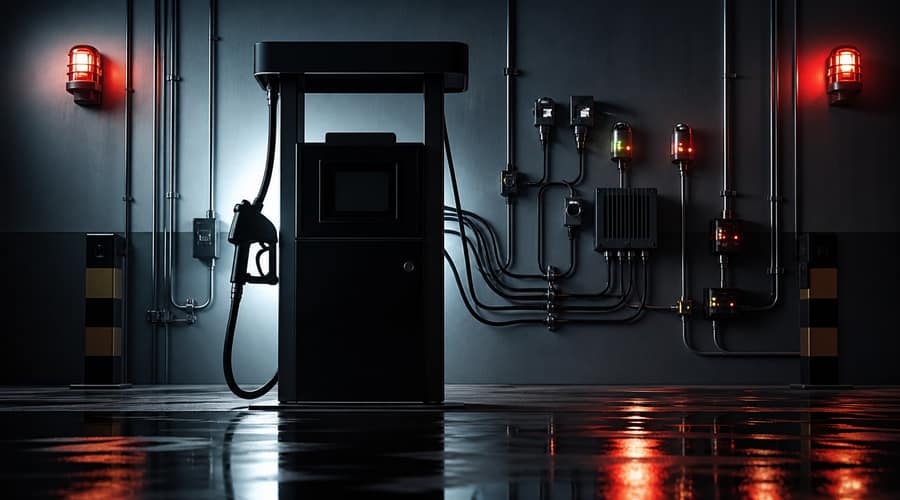
The breach of automatic tank gauge systems at U.S. gas stations is a small incident with a large message. The systems at issue monitor fuel levels in underground storage tanks, and U.S. officials suspect Iranian hackers got into some of them across multiple states by targeting devices that were online without password protection.
According to CNN, the attackers were able in some cases to alter display readings on the tank systems, but not the actual fuel levels. Officials and private experts said there is no known physical damage or harm. That matters. This is not Colonial Pipeline all over again. But it is also not harmless, because these gauges help operators manage inventory, detect leaks and maintain environmental compliance. If the reading can be manipulated, the operator's confidence in the system is weakened.
The uncomfortable part is how basic the opening appears to have been. The reported weakness was not a novel vulnerability buried deep in firmware. It was internet exposure and missing password protection. That is the kind of failure the cybersecurity industry has been warning about for years, and it keeps turning up in places where the real world depends on quiet, unglamorous machines doing their jobs correctly.
Automatic tank gauges are not exotic systems. They sit inside retail fueling sites, truck stops, marinas and facilities with backup generators. They help owners know how much fuel is in a tank, when to order more and whether something looks wrong. At many sites, remote access makes sense because fuel delivery, inspection records and maintenance work all benefit from easier monitoring.
Remote access becomes a problem when it is treated as convenience first and infrastructure second. An April advisory circulated by Energy Marketers of America said known attacks had already targeted ATGs in Tennessee and that criminals were targeting systems nationwide. It also said one convenience store chain had at least 15 tanks hit, with no reported physical impacts at that point.
The same advisory pointed to Veeder-Root TLS-350 and TLS-450 Plus consoles that were not programmed with network or password protection, while noting that other manufacturers' systems had also been targeted where remote access was not secured. That makes the lesson broader than one vendor. A fuel site with an exposed device, a default setting and no monitoring can become part of a national security story overnight.
This is why attribution should be handled carefully. Officials reportedly see Iran as a top suspect because of its history of targeting fuel systems and critical infrastructure, but the investigation may not produce definitive proof if the hackers left little forensic evidence. In operational technology, a weak device on the open internet can attract state actors, criminal crews and opportunists at the same time. The victim still has the same problem either way.
The startup opportunity is not glamorous
For founders, this is not a story about selling another dashboard with dramatic threat scores. The real opportunity is more practical: asset discovery, configuration management, remote access control and continuous monitoring for equipment most executives rarely think about until something goes wrong.
Industrial sites often have a messy mix of old devices, vendor-maintained systems, cellular modems, contractor access and limited in-house security staff. A startup that can tell an operator exactly which devices are exposed, which ones have weak credentials, which ports are reachable and which systems changed configuration last night is solving a real business problem. It is not flashy. It is valuable.
CISA's April 7 advisory on Iranian-affiliated cyber actors made the same point from another angle. Federal agencies warned that attackers were exploiting internet-facing operational technology devices, including Rockwell Automation and Allen-Bradley programmable logic controllers, across U.S. critical infrastructure. The advisory urged organizations to remove PLCs from direct internet exposure, check logs and watch traffic on common OT ports.
Censys later counted 5,219 internet-exposed Rockwell Automation and Allen-Bradley hosts globally relevant to that advisory, with 3,891 in the United States. Those numbers are not about gas stations specifically, but they show the size of the wider exposure problem. Industrial equipment that should be tucked behind secure gateways is still reachable from the public internet in meaningful numbers.
Security buyers do not need another lecture about cyber hygiene. They need products that fit how these sites actually operate. A gas station owner, municipal water operator or regional energy company may not have a large security team. They may rely on outside technicians. They may be cautious about software that touches equipment tied to safety, compliance or uptime. The winning products will be simple to deploy, hard to misconfigure and clear enough for non-specialists to act on.
The broader market signal is obvious. Critical infrastructure cybersecurity is moving from abstract risk to everyday business continuity. If a tank gauge can become a geopolitical concern because nobody set a password, the gap is not only technical. It is operational, commercial and cultural.
What happens next will depend less on whether this specific incident is conclusively tied to Iran and more on whether operators treat it as a warning. The first fixes are boring: find exposed devices, remove direct internet access, change defaults, segment networks and monitor changes. The companies that make that boring work easier may end up building some of the most important infrastructure startups of the next decade.
Also read: AI exploit benchmarks put Mythos at the center of cyber startup strategy • Monad and Rain are testing stablecoin cards as real payment rails • Pixal3D makes image to 3D feel closer to a working pipeline