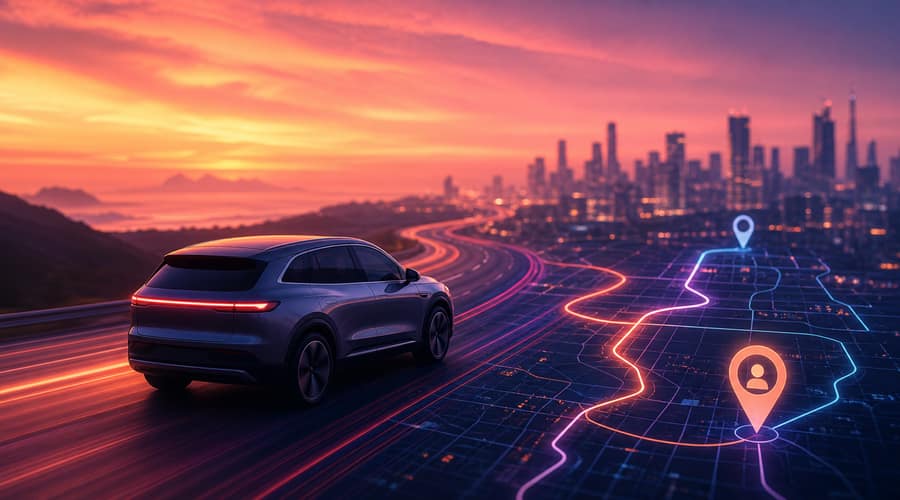
GM has not returned to robotaxis in the old Cruise style. It is rebuilding the option from inside the cars it already sells.
General Motors killed Cruise as a standalone robotaxi bet, but it has not walked away from the robotaxi argument. The company is now trying something less dramatic and probably more useful: making autonomy good enough in personal vehicles first, then deciding whether the same technology can carry passengers for fares later.
Business Insider reported on June 14 that Sterling Anderson, GM's chief product officer and a former head of Tesla Autopilot, sees the company's personal-vehicle autonomy work eventually overlapping with driverless ride-hailing. His point is not that GM is about to relaunch Cruise with a new name. It is that a car which can drive itself across enough highways, arterial roads and city zones starts to look like the same technical object a robotaxi company needs.
That is a quieter claim than the one GM used to make around Cruise. It is also a more believable one. Cruise was a fleet business, a software business, a safety business, a regulatory business and a consumer transport business all at once. GM spent more than $10 billion on it after buying the company in 2016, according to Business Insider, and then pulled the plug in 2024 after the San Francisco crash and regulatory fallout that made Cruise a warning label for the whole sector.
The new plan begins with Super Cruise, the driver-assistance system GM has already put into customer cars. GM said in April that customers had logged 1 billion hands-free miles with the system. That number matters because it is not a demo route, a closed course, or a pilot with engineers watching every turn from a command room. It is a large base of ordinary highway use, and it gives GM a way to improve autonomy without paying to operate an entire taxi network.
The next step is eyes-off driving. Car and Driver reported that GM plans to launch an eyes-off version of Super Cruise in 2028, starting with the Cadillac Escalade IQ. The system will be limited to certain highways at first, and the Escalade IQ prototype uses cameras, radar and lidar, with turquoise exterior lights meant to show other road users when the vehicle is in eyes-off mode.
This is not full urban autonomy. It is not a car pulling up outside a restaurant in Miami with nobody in the front seat. But it is a serious product step because it gives GM a way to sell autonomy as a feature before asking investors to fund it as a fleet. A customer pays for the vehicle. GM gathers experience across more miles. The technology grows inside a business GM already understands.
That is why the rehiring matters. Business Insider said The Information reported that GM has rehired about 100 former Cruise employees to work on eyes-off capabilities. BI also reported in December that GM hired Ronalee Mann, a former Cruise and Tesla executive, for its renewed self-driving push, with Rashed Haq joining as vice president of autonomy. This is not Cruise being restored to its old shape. It is GM moving useful pieces of Cruise into the parent company and putting them under a product roadmap.
The old Cruise burden was not only technical. Axios reported in December 2024 that GM expected to save about $1 billion annually by ending Cruise's robotaxi program and focusing on advanced driver assistance systems. That is the number behind the strategy shift. Robotaxis require vehicles, depots, remote assistance, maintenance, cleaning, insurance, city-by-city approvals and a consumer app good enough to compete with Uber. A feature-led autonomy business starts with the vehicle in the driveway.
Uber is keeping the fleet race warm
GM is not making this move in an empty market. Hyundai-backed Motional has launched robotaxi service with Uber in Las Vegas with safety operators onboard and is targeting fully driverless service there by the end of 2026, according to Business Insider's March interview with Motional CEO Laura Major. Axios also reported that Uber plans to invest up to $1.25 billion in Rivian as part of a plan to deploy Rivian robotaxis starting in 2028, beginning with San Francisco and Miami and expanding toward 25 cities by 2031.
Those deals show why GM cannot simply forget robotaxis. Uber is trying to become the operating layer for many autonomous vehicle partners instead of building all the technology itself. Waymo remains the clearest pure robotaxi leader in the United States. Rivian is treating autonomy as part of its next platform story. Motional is trying to use Hyundai's manufacturing base to lower deployment costs. The fleet business is still alive, even if it has become more disciplined after years of expensive promises.
GM's advantage, if it has one, is patience backed by volume. The company can put autonomy into Cadillacs, Chevrolets, GMCs and Buicks before it has to prove a robotaxi unit can make money on its own. The risk is that this route may move too slowly. A highway eyes-off system in 2028 does not automatically become a city robotaxi in 2029. Cruise's failure showed how difficult the last part is, especially when the public and regulators lose trust.
Still, GM's current position is more honest than the old race to declare every test fleet the future of transport. The company is treating autonomy first as something a car buyer might use on a long highway drive. If that operating domain grows large enough, the robotaxi question comes back in a cleaner form: not whether GM can subsidize another Cruise, but whether the same vehicles it sells can also work when nobody owns the ride.
Also read: Ant Group is rebuilding Alipay around AI after its regulatory reset • Meta says its old open AI strategy no longer works • SEBI is preparing to make AI part of market regulation