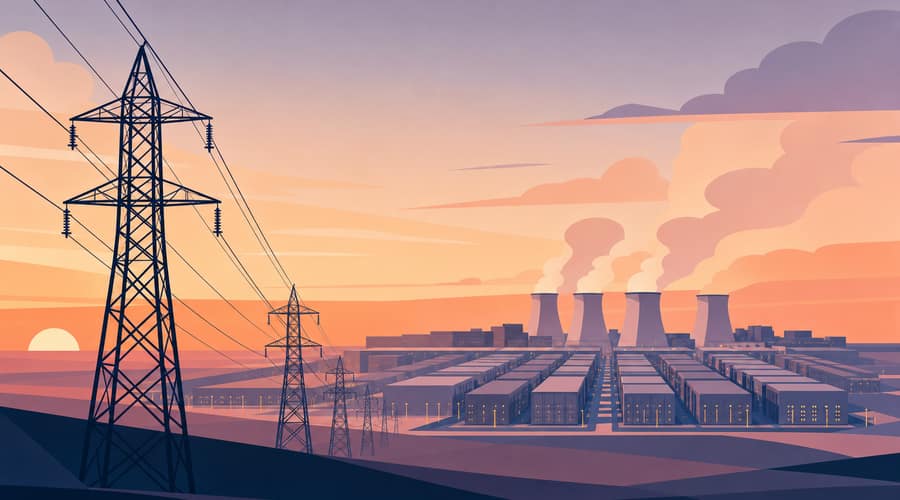
Google's AI growth is now using power faster than its clean energy deals can catch up.
Google's latest environmental report turns a familiar climate promise into a harder question: what happens when a company buys clean power at record speed and still needs far more electricity than before? The answer is now in Google's own numbers. Its electricity demand jumped 37% in 2025, after a 27% rise in 2024, and total demand is roughly 3.5 times higher than it was in 2019, according to figures highlighted by Axios from the company's June 2026 report.
You don't have to run a data center to feel the edge of that curve. If you live on a grid where hyperscale campuses are landing, the fight over AI is no longer just about models, chips, or who gets the best chatbot. It's about substations, power plants, water, and the price of keeping the lights on when a few companies suddenly need city-scale electricity.
Google isn't pretending this is easy. The report says, in Google's own words, "This rapid expansion in energy demand is a reality we must manage actively," and says AI growth shouldn't become a reason to lower environmental standards. Good. But the numbers still do the talking. Axios reported that Google's total greenhouse gas emissions rose 18% in 2025, the largest annual increase the company has reported, driven largely by the manufacturing of AI hardware, including chips and servers. That detail matters because it moves the problem beyond the data hall. Google can sign cleaner power contracts for its buildings. It has much less direct control over the factories making the TPUs, servers, and networking gear feeding the AI buildout.
The company's clean energy buying was not small. Google said it signed agreements for more than 12 gigawatts of new clean energy in 2025, the largest annual total in its history and more than its procurement from the previous two years combined. That sounds like a win until you put it beside the rest of the report. Electricity-related emissions fell just 3% from 2024, compared with a 12% decline the year before. Google is buying more clean power and getting less visible emissions improvement for each added contract.
That's the whole problem in one sentence. Efficiency is improving, but scale is eating the gain.
Google also pointed to a striking Gemini Apps figure: the median text prompt now uses 33 times less energy and has a 44-fold smaller carbon footprint than it did twelve months earlier, thanks to hardware, software, and model improvements. Take that seriously. It is real engineering, and it is exactly the sort of progress you want from a company running models at this scale. But it measures the cost of one prompt, not the total load created by millions more prompts, larger models, more products, and more data centers. A more efficient engine still burns more fuel if you bolt it into a much bigger fleet and keep adding vehicles.
The Grid Gets The Bill
The pressure is already showing up outside Google's own buildings. PJM, the grid operator serving 67 million people from the Chicago area to New Jersey, has become one of the clearest examples of what AI demand does when it lands on a real power system. Monitoring Analytics, PJM's independent market monitor, said wholesale power prices rose from $77.78 per megawatt-hour in the first quarter of 2025 to $136.53 in the first quarter of 2026, and tied the jump to data center load. That is not an abstract climate metric. It is a price signal that eventually finds its way to customers, businesses, and public officials who didn't ask to subsidize the AI race.
The power deals are getting bigger because the computing plans are getting bigger. Talen Energy's expanded agreement with Amazon Web Services will supply up to 1,920 megawatts from the Susquehanna nuclear plant in Pennsylvania to Amazon's nearby data center campus through 2042, with full delivery expected no later than 2032, according to Barron's reporting on the June 2025 deal. Amazon bought that campus from Talen for $650 million in 2024. A single cloud company is now tied to a nuclear-scale power arrangement because AI infrastructure has made ordinary procurement look too small.
Frankly, Google deserves some credit for putting enough detail in public to let the argument happen. Microsoft, Amazon, Meta, you name it, all face the same physics. More chips need more electricity. More electricity needs generation, transmission, cooling, and political permission. The companies can talk about carbon-free energy, but the grid has to deliver electrons hour by hour, not just match annual accounting claims on a sustainability page.
The uncomfortable part is that Google's report can be read two ways at once. It shows genuine progress on efficiency and clean power buying. It also shows those gains being outpaced by the AI buildout they are supposed to tame. If you're looking for the real test, don't look at the next slogan about responsible AI. Look at whether Google's 2026 electricity demand rises faster than the clean power and grid capacity built to serve it.
Also read: A Former Goldman Analyst's New AI Startup Just Raised $22 Million, Bhavin Turakhia is spending $30 million of his own money to rebuild Office from scratch, Switch chases a $19 billion valuation as private money floods into AI data centers