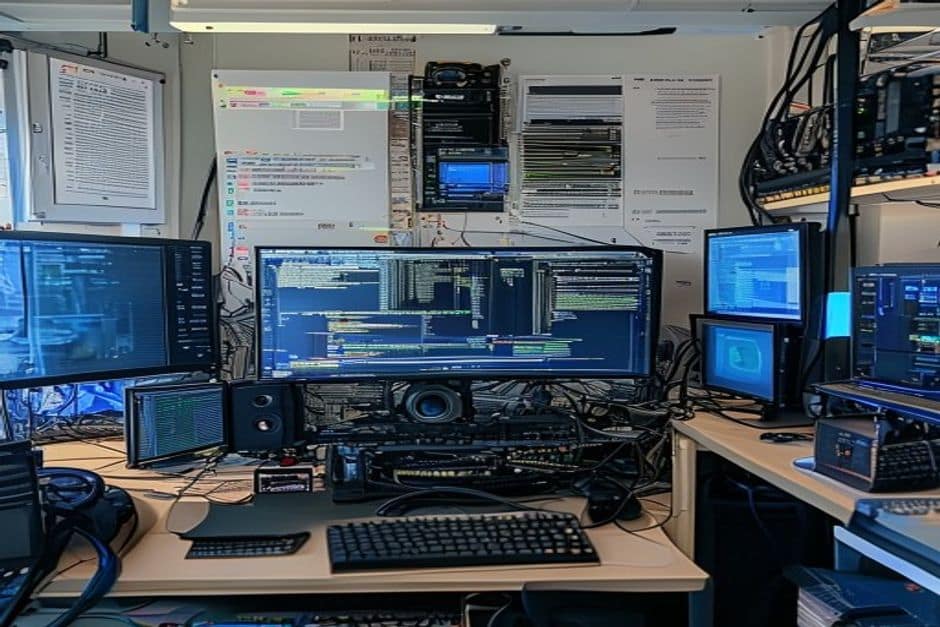
Heretic 1.3, an update to the local LLM tooling stack that claims reproducible model outputs, an integrated benchmarking system, reduced peak VRAM requirements, and broader model support, generated 273 upvotes and 47 comments on r/LocalLLaMA within seven hours of release, a community engagement rate that reflects genuine operational frustration with the local inference ecosystem rather than excitement about capability improvements, because the problems Heretic is solving, reproducibility, honest benchmarking, and memory efficiency, are the problems that prevent serious builders from shipping production-quality local AI applications rather than the problems that generate impressive demo videos.
Reproducibility is the feature that signals Heretic is addressing a professional deployment concern rather than a hobbyist optimization. In the local LLM context, reproducibility means that given the same model, the same prompt, and the same configuration, the system produces outputs that are consistent enough across runs to build reliable automated workflows on top of. Standard local inference runtimes, including llama.cpp and vLLM in their default configurations, introduce non-determinism through floating-point operation ordering, threading parallelism, and GPU kernel execution variability that makes exact output reproducibility difficult to achieve without explicit configuration. This matters enormously for applications where the local model is being used in a pipeline that parses or processes the output programmatically: a structured data extraction workflow that works correctly on 95 out of 100 runs is not a production tool, it is a prototype that will fail in ways that are hard to debug because the failures are non-deterministic. Heretic's reproducibility commitment, if it holds under real-world testing, is not a niche feature for researchers who need controlled experiments. It is a prerequisite for every startup trying to build a reliable product on local inference rather than a cloud API with deterministic temperature settings and retry guarantees.
The integrated benchmarking system is the second update that addresses a genuine ecosystem problem rather than a marginal improvement. The local AI benchmarking landscape has been polluted by a combination of benchmark-specific optimisations, inconsistent testing methodology, and the absence of standardised evaluation conditions that allow meaningful comparison between model versions and quantisation settings. A developer who reads that Model A outperforms Model B on MMLU and then deploys Model A for a coding use case may find that Model B was actually better for their specific task category, because MMLU tests general knowledge recall rather than code generation, and the benchmark comparison did not include the task-specific evaluation that would have revealed the performance difference. Heretic's integrated benchmarking runs evaluations under the same inference configuration that the tool uses for production deployment, rather than in optimised conditions that may not match real-world use, and provides per-task performance breakdowns that allow developers to evaluate models against their specific use case distribution rather than aggregate benchmark scores. That methodology shift sounds academic but has direct product quality implications: a startup that selects its local model based on Heretic's task-specific benchmarks is making a more informed infrastructure decision than one relying on leaderboard headlines.
The reduced peak VRAM requirement is the update that expands Heretic's accessible hardware range and has the most immediate commercial relevance for cost-conscious deployments. Peak VRAM, as distinct from average VRAM utilisation, determines the minimum hardware specification required to run a model without encountering out-of-memory errors during inference. Many quantised local models have average VRAM requirements that fit comfortably on a 12GB or 16GB GPU but peak memory spikes during long context processing or large batch operations that exceed the available memory and cause the inference process to fail or offload to slower system RAM. Heretic's claimed reduction in peak VRAM addresses the spike behavior rather than just the average utilisation, which means models that were previously unreliable on 16GB GPUs due to occasional OOM errors become consistently usable, and models that required a 24GB GPU for reliable deployment can now run on 16GB hardware. At cloud GPU rental prices, the difference between deploying on an A10 at 24GB versus an RTX 3090 equivalent at 24GB versus a 16GB option is measured in dollars per hour that compound quickly in production applications running continuously.
The broader operational layer forming around local LLMs is the context that makes Heretic's trajectory more significant than its current user base suggests. The local AI ecosystem has produced excellent model quality through llama.cpp, Ollama, and the quantisation research community, but the tooling around deployment reliability, configuration management, reproducibility, and honest performance evaluation has lagged behind the model capability improvements. A developer who wants to run a capable local model can do so. A developer who wants to build a production product on local inference that behaves predictably, scales to multiple concurrent users, can be monitored for quality drift, and integrates cleanly with existing DevOps tooling, faces a substantially higher configuration burden than cloud API alternatives impose. The tools that reduce that burden, not by making local AI more impressive in demos but by making it more reliable in production, are the ones that will determine whether local inference becomes a serious enterprise infrastructure option or remains a cost-conscious alternative that requires disproportionate engineering investment to use reliably.
For founders evaluating the build-versus-API calculation for their specific applications, Heretic 1.3's improvements represent progress on exactly the dimensions that have historically tilted the calculation toward API providers despite higher per-token costs. Cloud APIs are reliable, deterministic within their documented parameters, require no infrastructure management, and have SLAs that production applications can depend on. Local inference has been cheaper per token but less reliable, harder to configure correctly, and more demanding of the engineering time that small teams cannot afford to spend on infrastructure rather than product. Each improvement in local inference tooling reliability, reproducibility, and ease of deployment shifts the build calculation toward local for the specific segment of applications where the cost delta is large enough to justify any remaining infrastructure overhead. Heretic 1.3 does not complete that infrastructure maturation, but it advances it in the directions that matter most for professional deployment, and the LocalLLaMA community's response suggests it is solving problems that developers were actually experiencing rather than optimising for benchmark metrics that look good in release notes.
Also read: Apple Has Agreed to Pay $250 Million to Settle Claims Over Siri AI Promises It Did Not Keep and the Implications Reach Every Company That Has Marketed Unreleased AI Features • Apple Plans to Let iOS 27 Users Choose Their Own AI Model and That Is One of the Most Consequential Platform Decisions Since the App Store • PayPal Says It Is a Technology Company Again and This Time AI Is the Argument It Is Making to Investors, Merchants, and Itself