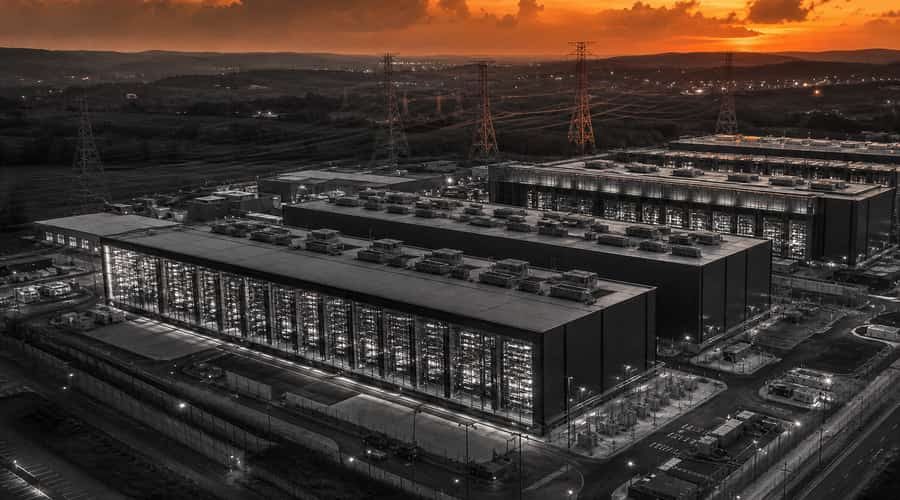
Hetzner's June 15 repricing has turned some of its cheapest cloud plans into a much more expensive bet for new customers. If you built your startup budget around old Hetzner math, the AI hardware boom has just made that spreadsheet stale.
The numbers are blunt. Hetzner's own June 15 price table shows the US CPX11 cloud plan moving from €7.13 to €20.81 a month, excluding IPv4 and including German VAT in the German table. That is not a tidy 30% adjustment. It is almost three times the old bill.
The dedicated vCPU lines were hit hardest. In Germany and Finland, the CCX33 moved from €62.49 to €138.49 a month before VAT, according to Hetzner's English price table. Run three of those and your monthly compute line goes from €187.47 to €415.47 before IPv4 and tax. No founder needs a finance lecture to understand that. It is €2,736 more a year before you've hired anyone or shipped a feature.
This did not come out of nowhere. Hetzner announced on February 23 that prices across many products would rise from April 1 for both existing products and new orders, citing higher operating and hardware acquisition costs. On April 29, it also adjusted setup fees. Then the company announced the June 15 standardization, which changed server naming, introduced fixed configurations, created a limited server type with the -1-Ltd suffix, and raised monthly prices for new cloud orders and rescales.
The hardware bill came due
Hetzner is straightforward about what drove this. In its May 27 pressroom statement, the company pointed to the massive increase in procurement costs and said currently rented servers would keep their existing terms unless customers rescale or place new orders. That caveat matters. If you already have old servers, don't touch them unless you have to.
The component market explains why this landed so hard. TrendForce said conventional DRAM contract prices were expected to rise 90% to 95% quarter-on-quarter in the first quarter of 2026, with server DRAM around 90% as cloud service providers and server OEMs fought for limited supply. In a separate June 11 report, TrendForce said enterprise SSD contract prices rose about 80% in Q1, while revenue among the top five enterprise SSD brands jumped 86.1% quarter-on-quarter to $18.46 billion.
That is where AI stops being a headline and starts being your hosting invoice. GPU clusters need HBM, server DRAM, fast SSDs, power, racks, networking, the lot. Hyperscalers with long-term supply agreements get to the front of the allocation line. Budget cloud providers buy in the same market, but without the same leverage. Hetzner can run a famously efficient operation in Germany, Finland, the US and Singapore. It still has to buy memory.
Storage Switzerland wrote in May that memory and flash prices are unlikely to come down through 2027, arguing that HBM production has pulled wafer capacity away from ordinary DRAM and that meaningful new fab capacity is not expected to arrive quickly enough to rescue 2026 budgets. You should treat that as the right warning, even if the exact timing moves. The old floor was built on cheap components. Those components are gone.
The irony is nasty. Many founders are building AI products on infrastructure whose price is being pushed up by the same AI buildout. The GPU shortage was never going to stay sealed inside Nvidia server racks. It has now reached the ordinary VPS line, which is where small teams actually feel it.
The cheaper cloud is still cheaper
Hetzner has not suddenly become DigitalOcean. Independent comparisons from webhosting.today and AgentDeals still put post-increase Hetzner meaningfully below DigitalOcean, Linode and Vultr on many equivalent cloud configurations. That is the part you should not miss. The company can be both far more expensive than it was and still cheap against US-headquartered rivals.
But the comparison has changed. OVHcloud raised prices too, with webhosting.today reporting an April 1 move that lifted its VPS-1 from $4.90 to $7.60 and raised several public cloud and bare metal products. Scaleway announced June 1 pricing updates. Contabo still competes hard on raw specs per dollar, and Vultr's 32-region footprint makes sense for latency-sensitive teams. DigitalOcean remains a cleaner answer when managed services matter more than the last dollar of compute.
None of those options restores the old Hetzner bargain. Frankly, shopping around is useful, but it is not the whole answer. The more important move is to stop treating infrastructure as a stable background cost. If your margins depend on a $7 VPS staying a $7 VPS, your margins are weaker than they look.
For existing Hetzner customers, the practical call is simple. Preserve old-priced instances where you can. Avoid rescales that trigger current pricing. Benchmark alternatives before panic-migrating, because a rushed move can cost more than staying put. For new deployments, price the full year now, not the first month, and assume memory-heavy services will stay exposed.
Hetzner's June 15 table is the cleanest signal here. The cheap cloud tier still exists, but it has moved up. AI did not just make GPUs expensive. It made ordinary startup infrastructure less ordinary.
Also read: What Is a SAFE Note and How It Converts Into Equity • ServiceNow bets $40 million on an Indian AI banking startup to lock down enterprise agent governance • Khosla Ventures is in talks to raise $5.5 billion as Vinod Khosla doubles down on AI