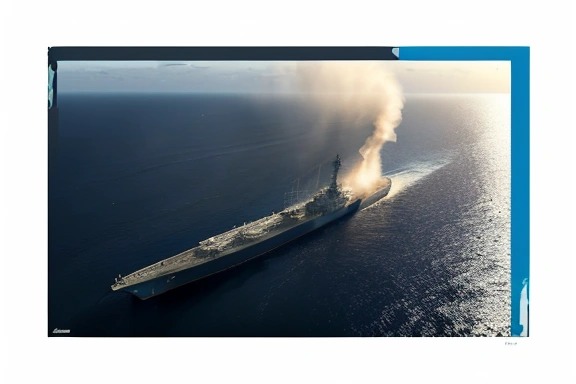
The Strait of Hormuz remains effectively closed to normal commercial traffic in April 2026, as Iran holds firm despite escalating rhetoric from Washington, sending shockwaves through energy markets and the broader global economy.
More than three weeks into what analysts are now calling the most consequential maritime blockade of the 21st century, the Strait of Hormuz shows no signs of reopening. Iran's naval forces continue to assert control over the critical chokepoint, through which roughly 20 percent of the world's oil supply normally flows. The Trump administration has issued a series of increasingly strident warnings, but without a credible military response materializing, Tehran appears to have called the bluff. Markets are beginning to price in the uncomfortable reality that this crisis could stretch for months.
Oil prices have surged past $140 per barrel this week, their highest level since the post-pandemic supply chaos of the early 2020s. Brent crude jumped another 4.2 percent on Thursday alone as traders absorbed fresh intelligence assessments suggesting Iran has reinforced its naval positions near the strait rather than retreating. The ripple effects are vast. Shipping insurance premiums for vessels attempting Gulf transits have become essentially prohibitive, and several major tanker operators have quietly suspended operations in the region entirely.
The Trump White House has leaned heavily on its preferred playbook of maximum pressure and public ultimatums, with the president personally warning Iran of consequences that would be, in his words, far worse than anything they have ever seen before. But the warnings have not been paired with any visible military mobilization at a scale that would suggest a serious strike operation is imminent. Defense analysts in Washington and London note that the administration appears constrained by a combination of factors: a war-weary military establishment, a fractured NATO alliance, and the logistical complexity of any operation that would genuinely reopen the strait by force without triggering a wider regional conflict.
Iran, for its part, has demonstrated a sophisticated read of the situation. By framing the blockade as a response to what it describes as ongoing economic warfare through American sanctions, Tehran has positioned itself as the aggrieved party in the eyes of several major Global South nations. China and India, two of the world's largest oil consumers and both deeply affected by the supply disruption, have declined to publicly condemn Iran's actions. That diplomatic insulation has given Tehran considerable room to hold its position.
Technology Sector Caught in the Crossfire
While energy companies and logistics firms face the most immediate pain, the technology sector is discovering it is far from immune. Semiconductor manufacturers rely on a complex web of specialty chemicals and rare materials that transit through Gulf shipping lanes. Several major chip fabrication facilities in Asia have begun warning customers of potential delays in component deliveries. Taiwan Semiconductor Manufacturing Company issued a quiet advisory to key clients this week acknowledging that alternative shipping routes through the Cape of Good Hope add roughly three weeks to delivery timelines and significantly increase costs.
AI infrastructure buildout, one of the hottest capital expenditure stories of the past two years, is also feeling the strain. The massive data center expansion projects consuming billions of dollars across the United States, Europe, and the Gulf Cooperation Council states require enormous quantities of specialized cooling equipment and power infrastructure components, much of which moves through affected shipping corridors. Project timelines that were already stretched thin by supply chain competition are now slipping further.
Startup funding markets have reacted with predictable nervousness. Venture capital activity, which had been showing genuine signs of recovery through the first quarter of 2026, has hit a pronounced pause. Several late-stage rounds that were expected to close this month have been quietly deferred as institutional limited partners pull back on new commitments amid the macro uncertainty. One prominent growth equity partner at a top-tier Silicon Valley firm described the current mood to StartupFortune as the worst single-event chill on deal-making since the early weeks of the COVID lockdowns.
What Comes Next
The most likely near-term scenarios fall into two broad categories. Either quiet diplomatic back-channels produce some face-saving arrangement that allows both Washington and Tehran to claim partial victory, or the blockade hardens into a prolonged standoff that forces the global economy into a painful structural adjustment. Neither outcome is clean. A negotiated reopening would reward Iran's brinkmanship and establish a template that other regional powers will study carefully. A prolonged closure accelerates an already underway shift toward alternative energy sources and non-Gulf supply routes, but the transition pain in the interim could be severe.
For the technology industry specifically, this crisis is arriving as an unwelcome stress test of supply chain resilience strategies that many companies assumed they had adequately fortified after the lessons of 2020 and 2021. Clearly, the work is not finished. The Strait of Hormuz has always been one of the world's most consequential geographic pressure points. Right now, with hollow threats echoing across the Persian Gulf and oil markets in turmoil, the world is being reminded of exactly how much that narrow waterway still matters.