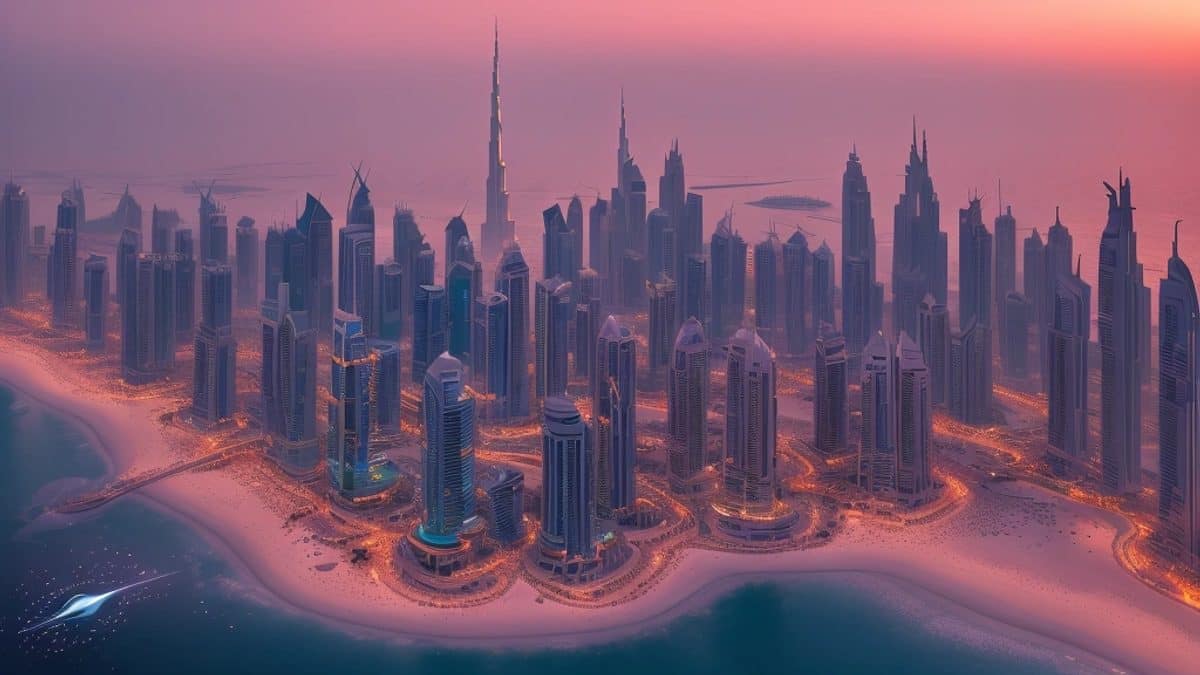
Dubai has spent billions positioning itself as the Middle East's stable, cosmopolitan business hub. The renewed US-Iran tensions of early 2026 are dismantling that narrative faster than any marketing campaign can rebuild it.
There is a particular kind of frustration reserved for places that do everything right on paper and still get punished by geography. Dubai is living that frustration right now. As US-Iran tensions escalated sharply through late 2025 and into 2026 , with Washington reimposing sweeping sanctions, naval posturing in the Strait of Hormuz, and tit-for-tat proxy skirmishes that have kept regional analysts on edge , the instinct among global investors, multinational relocators, and high-net-worth individuals has been predictable: pull back, wait, reassess.
The UAE sits roughly 200 kilometers from the Iranian coastline. That is not a detail that shows up in Dubai Tourism's promotional reels, but it is absolutely the first thing that comes up in a risk committee meeting in London, Singapore, or New York when someone proposes expanding regional headquarters to the emirate. Proximity to a potential flashpoint does not need to be rational to be damaging , it just needs to feel real enough to stall a decision.
What makes this cycle particularly painful for Dubai is that the emirate has genuinely earned much of its safe-haven reputation. The UAE normalized relations with Israel through the Abraham Accords in 2020. It has carefully cultivated neutrality on most geopolitical fault lines, positioned the dirham as a reliable currency peg, and constructed world-class infrastructure that rivals any financial center globally. The 2020 Expo legacy investments, the aggressive crypto and fintech licensing push, the golden visa programs , these were all deliberate signals to the world that Dubai plays a long game.
But the market does not always reward long games when short-term fear is spiking. In the first quarter of 2026, several European family offices that had been in advanced conversations about establishing UAE-based structures quietly paused proceedings, according to advisors familiar with the situations. The reasoning was not that Dubai itself was unsafe. It was that the optics of committing capital to the region while CNN was running nightly segments on Hormuz tension was a conversation no investment committee wanted to have with their trustees.
Dubai's communications apparatus has responded the way it usually does , with a wave of op-eds in international financial press, coordinated statements from the Dubai International Financial Centre, and high-profile events designed to project normalcy and momentum. The World Government Summit in February featured the usual parade of global executives and ministers affirming the emirate's trajectory. These efforts are not cynical; they reflect genuine institutional confidence. But there is an inherent credibility ceiling to PR executed against a backdrop of geopolitical noise that the host city cannot control.
The deeper structural problem is that this is not the first time this cycle has played out. Every escalation involving Iran , the 2019 tanker attacks, the 2020 Soleimani assassination and its aftermath, the 2022-23 nuclear negotiation collapses , produced a temporary chilling effect on Dubai's positioning, followed by a recovery, followed by another escalation. Each recovery has been real. So has each setback. The cumulative effect is a perception that Dubai is perpetually one regional incident away from instability, regardless of what actually happens on the ground inside the UAE.
This matters for the competitive landscape. Singapore, which has no such geographic vulnerability, continues to attract the same pool of family offices, crypto firms, and regional headquarters that Dubai is courting. Riyadh, despite its own complications, benefits from being seen as a Saudi domestic story rather than a frontline-adjacent one. Dublin and Luxembourg remain the default European alternatives for anyone who finds the Middle East too complicated to explain to a board. Dubai is not losing to these cities on merit. It is losing on narrative, and narrative is shaped by headlines it does not write.
The irony is that the UAE's actual exposure to a US-Iran conflict is more nuanced than the fear suggests. The country has historically managed economic relationships with both Washington and Tehran with considerable pragmatism. Abu Dhabi's sovereign wealth infrastructure is deeply integrated with Western financial systems, creating real deterrence against the kind of collateral damage that smaller regional players might face. But nuance does not travel well in a risk-off environment.
What Dubai needs, and what no PR budget can manufacture, is an extended period of regional quiet. Absent that, the more realistic strategic play is doubling down on the sectors where its advantages are structural and less sentiment-dependent , logistics, trade finance, sovereign wealth co-investment, and digital asset infrastructure. These are areas where counterparties evaluate Dubai on execution rather than on geopolitical comfort. The city is already strong here. Concentrating the narrative around provable, transactional strength rather than broad safe-haven positioning may be the more honest pitch for this particular moment. Whether the emirate's communications machine is willing to make that adjustment, or whether it continues reaching for the same cosmopolitan-stability messaging that geopolitics keeps disrupting, will determine how much ground it loses before the next recovery.