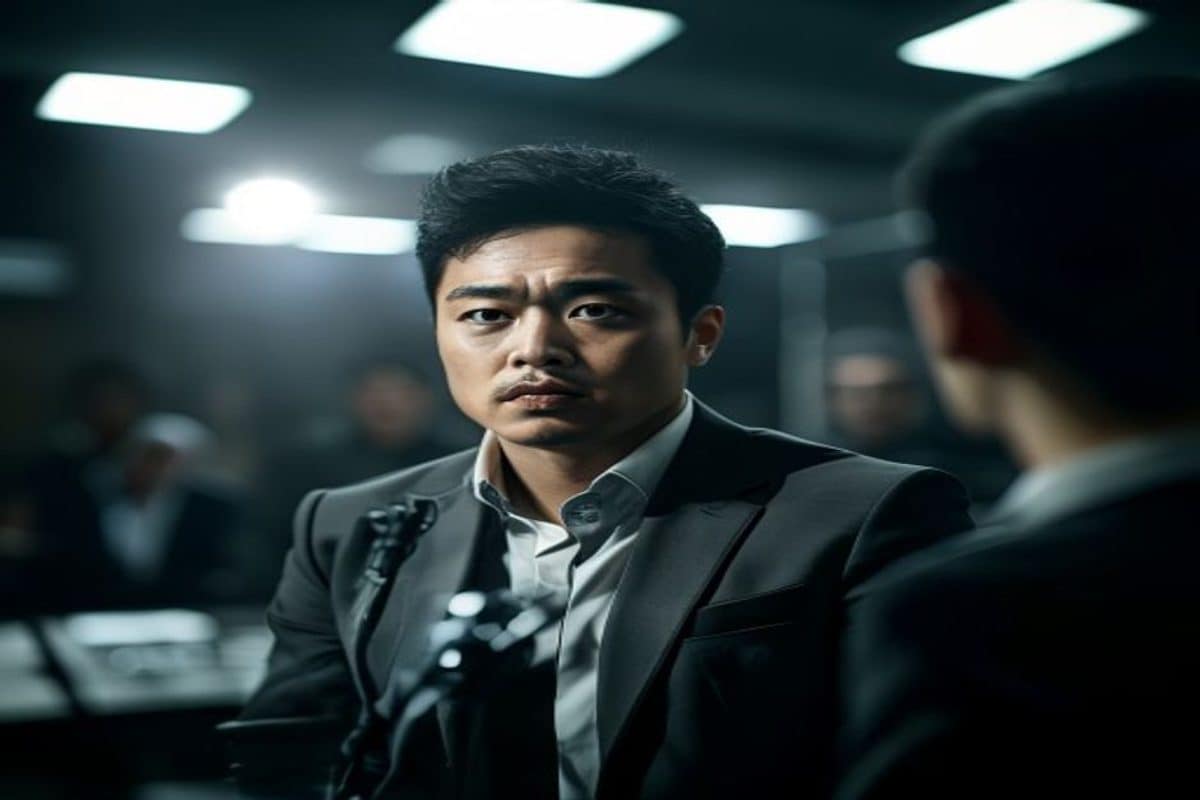
Nvidia CEO Jensen Huang had a visibly charged moment during an interview at company headquarters, pushing back hard against questions about US export controls on AI chips sold to China.
There are corporate talking points, and then there are moments when the mask slips just enough to show what's really at stake. Jensen Huang delivered one of those moments on Saturday when, pressed on the compliance costs and moral weight of selling modified chips to the Chinese market, he reportedly came close to losing his composure entirely. His response cut through the usual diplomatic hedging: "You're not talking to someone who woke up a loser." The clip spread fast.
The context matters as much as the quote. Since 2023, the US Commerce Department has steadily tightened its grip on advanced semiconductor exports to China, initially banning the A100 and H100 GPUs that sit at the heart of large-scale AI training. Nvidia's response was to engineer around the restrictions, producing modified variants like the H800 and H20 calibrated to fall just below the regulated performance thresholds. Those workarounds were subsequently targeted too, leaving Nvidia in a position where satisfying its largest international market increasingly means running a parallel product development track that serves no one particularly well.
China has historically accounted for somewhere between 20 and 25 percent of Nvidia's data center revenue, making it a market the company cannot simply walk away from without consequence. That's the business reality sitting behind Huang's frustration. Every new restriction forces engineering resources toward compliance work rather than innovation, introduces delays, and hands domestic Chinese rivals a window they would not otherwise have. Huawei's Ascend processors have been the primary beneficiary, picking up enterprise contracts that would have gone to Nvidia hardware a few years ago.
What made the interview moment significant beyond the soundbite is what it reveals about the position Huang and a handful of other tech executives now occupy. Nvidia is not a defense contractor. It builds hardware that researchers, cloud providers, and enterprises use to train models and run inference workloads. Being thrust into the center of a geopolitical decoupling argument is not a role Huang signed up for, and the visible strain of that contradiction showed on Saturday.
He was careful to note that Nvidia complies with all applicable laws, which is the only answer a public company CEO can give. But the emotional register of his response suggested something beyond standard investor relations management. There is a real grievance there, one shared quietly by much of the semiconductor industry: that the rules keep shifting, that the goalposts on what constitutes a compliant product have moved multiple times, and that the companies absorbing the cost of those shifts rarely get a seat at the table when policy is being written.
The practical fallout extends well beyond Nvidia's balance sheet. As the US and China pull further apart on technology infrastructure, the AI development landscape is fragmenting into parallel ecosystems. Chinese cloud providers and model developers are being pushed toward domestic silicon out of necessity, not preference, and that redirection is accelerating local capability in ways that may ultimately work against the original policy objective. Huang has made versions of this argument before in more measured settings. Saturday's version had considerably more edge to it.
For investors watching Nvidia's next earnings call, the key question is how much of that 20-25 percent data center exposure can be recovered through other markets and how quickly. For the broader technology sector, the more important signal is that the executives running America's most strategically critical companies are running out of diplomatic language to describe what these restrictions actually cost. When Jensen Huang, arguably the most influential figure in the AI hardware industry, nearly loses his composure on camera, it is worth paying attention to what he was reacting to.
Also read: How Anthropic accidentally became the silent knowledge base powering millions of ChatGPT queries • ChatGPT users are calling the chatbot rude and OpenAI has yet to explain why • Most knowledge workers use AI every day and verify almost everything it tells them