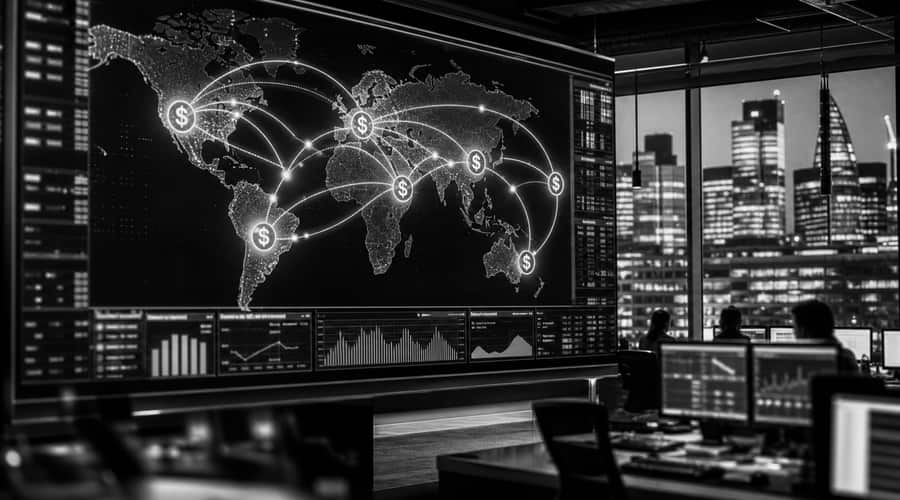
Nvidia CEO Jensen Huang has declared the company holds effectively no market share in China, arguing that U.S. export restrictions have accelerated the very domestic chip ecosystem they were designed to prevent.
Jensen Huang does not tend to choose his words carelessly in public. So when the Nvidia CEO told an audience at a Washington event last week that his company now holds effectively zero percent market share in the world's second-largest economy, the admission carried the weight of both a corporate warning and a geopolitical prophecy. The subtext was unmistakable: Washington's aggressive export control regime, first implemented in October 2022 and tightened repeatedly since, has not merely clipped Nvidia's revenue-it has handed Chinese competitors a once-in-a-generation opening.
To understand the magnitude of what Huang is describing, consider the trajectory. Before the first round of export controls, Nvidia commanded an estimated 90 percent of China's discrete GPU market for data centers. That translated to roughly $5.4 billion in quarterly revenue from Chinese buyers, accounting for more than 20 percent of the company's total sales. Today, that pipeline has been systematically severed. The A100 and H100 chips were restricted first. Then the downgraded A800 and H800, which Nvidia specifically engineered to comply with the original rules, were banned under the updated October 2023 framework. Even the further-diminished RTX 4090 consumer GPU found itself on the restricted list.
What fills the vacuum is precisely what U.S. policymakers hoped to prevent. Huawei's Ascend 910B chip has emerged as the most visible beneficiary, with reports suggesting Chinese cloud providers and AI startups are adopting it in volume. Baidu, Alibaba, and Tencent-companies that once relied almost exclusively on Nvidia hardware-have begun diverting significant orders to domestic alternatives. Moore Threads, Biren Technology, and Cambricon have all reported surging demand, even if their products still lag behind Nvidia's flagship offerings in raw performance metrics.
The irony Huang is highlighting cuts deeper than simple lost revenue. The export controls were predicated on a specific logic: deny Chinese companies access to advanced AI training chips, thereby slowing their technological progress and preserving American competitive advantage. But the policy assumed a static competitive landscape-one where Chinese firms would simply fall behind without Nvidia's silicon. Instead, the restrictions have functioned as an industrial policy for Beijing, creating a guaranteed market for domestic chipmakers that would otherwise have struggled against Nvidia's dominant software ecosystem and hardware performance.
CUDA, Nvidia's proprietary parallel computing platform, was long considered the company's most durable competitive moat. Millions of developers worldwide have built AI models and applications optimized for CUDA, creating enormous switching costs. But necessity has become the mother of ecosystem adaptation. Chinese developers, locked out of easy access to CUDA-optimized hardware, have begun porting their workloads to platforms like Huawei's CANN and open-source alternatives. The more they do so, the less sticky CUDA becomes-and the less relevant Nvidia's software advantage grows in what was previously its most promising growth market.
The financial stakes extend beyond Nvidia's own balance sheet. The company's partners and resellers in China, once a thriving ecosystem of system integrators and AI infrastructure providers, have been forced to pivot. Some have shifted toward selling services built around domestic chips. Others have pivoted to markets in Southeast Asia and the Middle East. A non-trivial number have simply shuttered operations. The ripple effects are reshaping how global AI infrastructure gets built and who profits from it.
Wall Street has absorbed the news with characteristic equanimity-Nvidia's stock has continued its remarkable ascent, driven by insatiable demand from American hyperscalers and European enterprises racing to build out their own AI capabilities. But analysts are beginning to flag a longer-term concern. China is not just a market for AI chips; it is a proving ground. If Chinese alternatives mature without competitive pressure from Nvidia, they could eventually challenge the company not just domestically but in export markets across the developing world, where cost sensitivity often trumps peak performance.
Huang's blunt assessment also arrives at a moment of intensifying debate within Washington about the efficacy of technology export controls broadly. The Biden administration's approach has been to treat advanced semiconductors as a national security asset, restricting not just chips but also the manufacturing equipment and design software needed to produce them. Proponents argue these measures have successfully slowed China's AI advancement. Critics, Huang now prominently among them, contend the policy has sacrificed market leverage for an illusion of control-one that dissolves the moment a domestic competitor achieves rough parity.
The forward-looking question is whether the window to reverse course, or at least recalibrate, has already closed. Chinese AI companies are training large language models on domestic hardware. Chinese automakers are embedding domestically designed chips into next-generation vehicles. Chinese cloud providers are building data center capacity that explicitly excludes Nvidia products. Each of these decisions reinforces the others, creating a self-sustaining ecosystem that no adjustment to export rules can easily unwind.
For Nvidia, the path forward involves a delicate balance. The company continues to generate record revenues from markets that remain open, and its technological lead in cutting-edge AI training remains substantial. But Huang's zero-percent revelation is a reminder that in the technology industry, competitive advantages are not permanent-they are conditional. And when policy removes the conditions under which those advantages operate, even the most dominant companies can find themselves locked out of the rooms they once owned.
Also read: Iran's Largest Crypto Exchange Has a Hidden Political Dynasty at Its Core and the Compliance Industry Should Be Taking Notes • Bitcoin Just Posted Its Best Monthly Performance in a Year and the More Interesting Question Is What Actually Drove It • Trump-Linked Crypto Projects Are Becoming a Live Test of Whether the U.S. Regulatory System Can Handle Political Memecoins