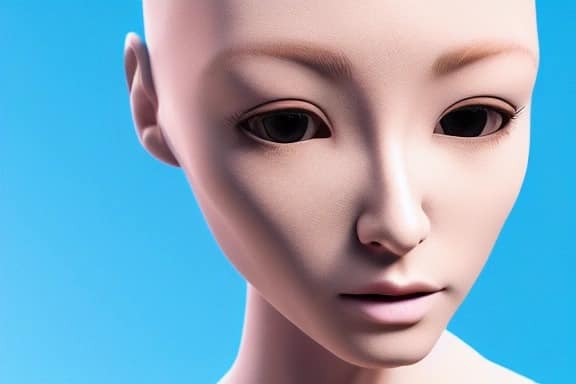
A Chinese startup is marketing Moya, a strikingly lifelike humanoid robot priced at $170,000, as the ultimate AI companion, and the tech world cannot stop talking about it.
In a year already packed with humanoid robot announcements, Moya has managed to cut through the noise in a way that few of its competitors have. Developed by Beijing-based startup Agibot, the robot is not being pitched purely as an industrial workhorse or a warehouse logistics solution. Instead, the company is leaning into something far more provocative: the idea that Moya could serve as a lifelike personal companion, sparking a conversation about loneliness, technology, and where exactly the boundaries of human-robot relationships should sit in 2026.
Moya stands roughly 5.7 feet tall, moves with an unsettling degree of fluidity, and features a facial design that was clearly engineered to evoke warmth rather than utility. The robot uses a multimodal AI system that allows it to process voice, facial expressions, and contextual conversation in real time, giving it the ability to hold extended, nuanced dialogue. Agibot has been careful to describe Moya as a "social companion robot," but the marketing materials and the conversations they have generated online tell a more complicated story.
Social media in China, the United States, and Japan lit up in early April after promotional videos of Moya circulated widely, showing the robot engaging in what looked like natural, emotionally attuned conversation. Comments ranged from genuine fascination to sharp ethical concern, and the clip became one of the most discussed tech stories of the week. The timing is significant: Moya arrives at a moment when loneliness statistics globally are at historic highs, and when AI companion apps like Replika have already proven there is a real, paying market of people seeking emotional connection from artificial intelligence.
The price tag puts Moya firmly in the territory of wealthy early adopters, not everyday consumers. At $170,000, the robot sits comfortably above Figure AI's and Agility Robotics' commercially available units, which are primarily targeting enterprise clients. But Agibot's positioning suggests the company is not just chasing logistics contracts. They are making a bet that the personal companion market, despite its complexity, represents a genuinely massive long-term opportunity.
That bet is not without precedent. Japan's SoftBank-backed Pepper robot attempted something similar a decade ago, though with far more limited AI capabilities, and still managed to find hundreds of thousands of buyers across Asia. The difference now is that the underlying AI has caught up to the ambition. Large language models, real-time emotion recognition, and advances in motor control have collectively made a robot like Moya possible in a way that simply was not true in 2015.
Ethical Fault Lines
Not everyone is celebrating. Ethicists and relationship researchers have been quick to raise concerns about what it means to design a robot, particularly one with feminine features, explicitly for companionship. Critics argue that framing a $170,000 machine as a potential romantic or emotional partner risks deepening unhealthy patterns of social withdrawal and sets troubling expectations about relationships. Some researchers have pointed to existing literature on parasocial relationships with AI to argue that the line between helpful companionship technology and something more psychologically complex is thinner than most companies want to acknowledge.
Agibot has not shied away from the debate entirely, though their public statements remain carefully worded. Company representatives have emphasized that Moya is designed to support wellbeing, assist with daily tasks, and provide social engagement for people who are isolated, including the elderly. That framing gives the product a more defensible social purpose, but it does not fully resolve the questions being asked about the robot's more obviously relationship-oriented marketing.
What This Signals for the Industry
What Moya really represents, beyond the headlines about robot girlfriends, is a signal that the humanoid robotics sector is moving faster toward consumer and personal use cases than many analysts expected even twelve months ago. The industrial humanoid market is already heating up with Tesla's Optimus, 1X Technologies, and Unitree all competing aggressively. But the consumer and companion segment has largely been treated as a future problem. Moya suggests it is a present one.
For investors watching the humanoid space, the companion angle is both a risk and an opportunity. The risk is regulatory and reputational, given that governments in several markets are already beginning to draft frameworks around AI relationships and emotional AI. The opportunity is that emotional utility could prove to be one of the stickiest, highest-margin use cases in consumer robotics, if a company can navigate the cultural and ethical terrain skillfully.
Whether Moya becomes a landmark product or a cautionary tale will depend largely on how real buyers respond once units start shipping, which Agibot has indicated will begin in limited quantities later this year. One thing is already clear: the conversation Moya has started about what we want from our machines, and what we are willing to pay for it, is not going away anytime soon.