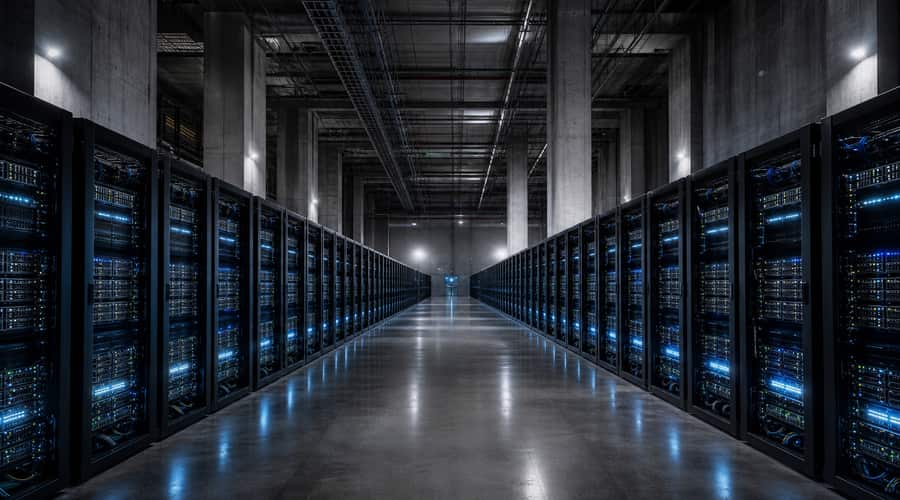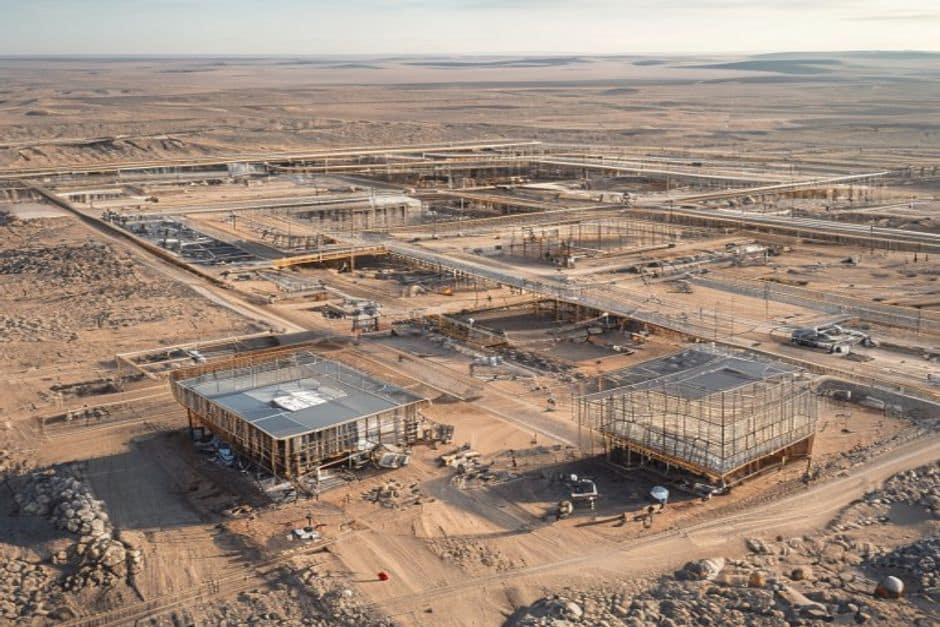
Bloomberg reported on May 4 that Meta Platforms is working with Morgan Stanley and JPMorgan Chase on a roughly $13 billion financing package for its El Paso, Texas data center, with a large majority expected to be debt and the remainder equity, for a facility that Meta expanded sixfold from its original $1.5 billion commitment to over $10 billion in March 2026, targeting 1 gigawatt of capacity at opening in 2028, and representing Meta's first significant use of external project financing for AI infrastructure rather than funding compute expansion entirely from its own balance sheet.
The sixfold commitment increase in five months is the detail that requires explanation before the financing structure makes sense. When Meta broke ground on the El Paso campus in October 2025, the commitment was $1.5 billion. By March 2026, mid-construction, the company had revised that figure to over $10 billion and accelerated what was supposed to be a multi-phase buildout into a single compressed push toward 1 gigawatt. The May financing package at $13 billion implies a total project cost that has grown well beyond even the March revision, as construction commitments, power infrastructure, and cooling systems are absorbed into a single financing vehicle. That acceleration pattern, from $1.5 billion to $13 billion in seven months, is itself an indicator of the demand signal Meta is receiving from its AI infrastructure planning teams. When a company revises a data center commitment upward by more than eight times mid-construction, it has either dramatically underestimated its requirements at inception or has received updated projections about AI compute demand that fundamentally changed the sizing math. In Meta's case, both are likely true: the company's $115 to $135 billion total capex guidance for 2026, nearly double its $72.2 billion in 2025, reflects revised internal demand forecasts for the compute required to train and serve its next generation of AI models.
The decision to raise external financing rather than fund El Paso from Meta's operating cash flows is the structural change worth examining carefully. Meta generated approximately $62 billion in free cash flow in 2025. A $13 billion data center is large but not categorically beyond the company's ability to self-fund, particularly spread over the construction period to a 2028 opening. The choice to raise external debt instead reflects several considerations operating simultaneously. First, external financing at current institutional interest rates may be cheaper than the opportunity cost of deploying balance sheet capital that could otherwise support share repurchases, acquisitions, or additional AI infrastructure in other locations. Meta has approved hundreds of billions in buybacks and maintaining that program while simultaneously funding multiple gigawatt-scale data centers is easier with project finance supplementing operating cash flow. Second, and more significantly for the AI infrastructure ecosystem, a $13 billion project finance deal establishes a financing template and a precedent for how large data center assets can be structured with institutional debt and equity, which makes similar financing available to less cash-rich entities that need to build compute infrastructure but cannot fund it from operating cash flow alone.
The project finance structure that Morgan Stanley and JPMorgan are assembling for El Paso follows patterns that have been refined in large energy and real estate infrastructure transactions over decades. A data center project at this scale would typically be structured with a special purpose vehicle holding the El Paso assets, debt secured against the projected cash flows from the facility, an equity tranche held by Meta and potentially co-investors, and a construction completion guarantee from Meta as the creditworthy parent. The debt sizing relative to the total project cost, if the majority of the $13 billion is debt as reported, implies a loan-to-value ratio in the 70 to 80 percent range, consistent with project finance conventions for assets with predictable long-term revenue streams. The critical underwriting question for the lending banks is what the demand visibility looks like for a gigawatt of AI compute capacity opening in 2028, and whether the asset retains value sufficient to service the debt if AI demand projections prove overstated. JPMorgan's own internal reporting this week indicated it is simultaneously trying to offload data center financing risk to other investors, suggesting the banks are syndicating exposure rather than holding it entirely on their own books, which is consistent with the risk distribution dynamic that project finance markets perform for large infrastructure assets.
The Wall Street financing template implication is the development most consequential for the broader AI infrastructure ecosystem. Before hyperscalers began using external project finance for AI compute, the financing available for AI infrastructure was essentially limited to venture capital for startups, corporate balance sheets for large companies, and real estate debt for colocation facilities. The El Paso deal, combined with similar financing activity by Microsoft, Google, and Amazon for their own data center expansions, is creating an institutional debt market for AI infrastructure assets that treats compute capacity as a financeable asset class rather than a capital expenditure item. That market, once established with credible precedent transactions, is available not only to Meta but to operators, third-party colocation providers, and potentially inference cloud companies that need to finance GPU clusters without the balance sheet of a hyperscaler. The emergence of data center project finance as a repeatable institutional product is what allows AI compute capacity to scale faster than any individual company's cash flow could support, which has a direct bearing on the supply of compute available to startups building on top of it.
For founders in AI infrastructure, chips, cloud services, and model companies, the El Paso deal's most important signal is that compute supply constraints are now primarily a capital allocation and financing problem rather than a technology or manufacturing problem. Nvidia has addressed the hardware supply chain. The hyperscalers have demonstrated demand. Wall Street is developing the financing instruments. The bottlenecks that will determine how quickly AI compute capacity scales from here are power grid access, permitting timelines, and the willingness of institutional debt markets to continue pricing AI infrastructure risk at rates that make the economics work at 2028 opening dates. The El Paso deal is not confirmation that those bottlenecks have been solved. It is evidence that the capital is available to try, which is a different and more actionable signal for anyone making infrastructure investment decisions in the next twelve months.
Also read: APEX MoE Quants Just Added 25 Models and an I-Nano Tier That Runs Frontier-Class MoE on 8GB of VRAM and the Community Reception Tells You Something Useful • Blueprint-Bench 2 Tests Whether AI Models Can Actually Reason About 3D Space and the Results Should Recalibrate What Spatial AI Startups Expect From Frontier APIs • The OpenAI Trial Has Produced Allegations That Musk Threatened to Make Altman and Brockman America's Most Hated Men and the Filings Tell a Darker Founder Story Than Either Side Wants