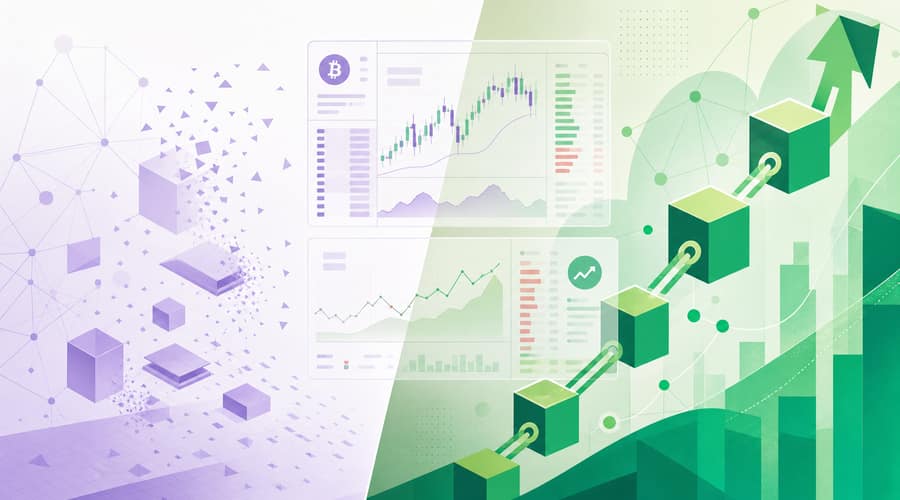
The NFT market is splitting in two: a handful of projects building real businesses and a long tail of speculative assets that may never recover.
Something unusual happened in the NFT space recently. While headline-grabbing floor prices for most profile-picture collections continued their slow bleed downward, Pudgy Penguins quietly racked up over 2 million units in retail sales, pushing past $13 million in physical merchandise revenue. That contrast tells you everything about where this market is heading.
The speculative frenzy that defined 2021 and early 2022 rewarded scarcity above all else. A limited supply of tokens on the blockchain, combined with overwhelming demand from crypto-native buyers, drove prices to absurd heights. That dynamic is gone, and it is not coming back. What remains is a much harsher selection process where only projects capable of generating revenue outside the crypto ecosystem can justify their valuations.
Federico Variola, CEO of the cryptocurrency exchange Phemex, puts the core challenge bluntly. Most NFT projects simply cannot tie their value to real-world brand equity because they lack a clear revenue or distribution funnel. Without that bridge to actual consumers, the argument for holding these assets collapses.
There is a counterargument, and it matters. Fernando Lillo Aranda, marketing director at Zoomex, argues that the market learned a painful but necessary lesson: verification on-chain does not create demand. It just makes something verifiable. That distinction is critical for anyone still holding NFTs hoping for a broad market recovery. Being registered on a blockchain was never the same as being useful or desirable to a mainstream audience.
The projects that appear to be surviving, and in rare cases thriving, are those treating their NFTs as the seed of a broader intellectual property business. Pudgy Penguins moved into Walmart. Doodles is positioning itself as a creative platform spanning content and artificial intelligence. These are not guaranteed to succeed as long-term businesses, but they are at least building something that could exist independently of crypto market cycles.
Gaming's Necessary Correction
The gaming sector offers the clearest example of what happens when speculation overwhelms utility. Play-to-Earn models like Axie Infinity relied on constant inflows of new players to sustain token prices. Once growth stalled, the entire economic structure buckled. Rewards became emissions, emissions became sell pressure, and in-game economies collapsed.
Anton Efimenko, co-founder at 8Blocks, identifies the structural flaw: early models tried to financialize gameplay before establishing genuine demand. The industry is now migrating toward what many call Play-to-Own, where NFTs function as ownership layers within a game rather than yield-generating instruments. It is a subtle but important shift. Players own assets that carry meaning within the game world, rather than holding tokens whose primary purpose is to be sold to the next participant.
This transition matters because it aligns incentives. When players spend money to enhance their experience rather than to earn a financial return, the economic model becomes sustainable. The risk, of course, is that building genuinely engaging games takes years, and the patience of crypto investors is notoriously short.
What Comes Next
The NFT market is not dying. It is restructuring in a way that eliminates most participants. Projects without genuine product-market fit, those relying solely on artificial scarcity and community enthusiasm, face a slow drift toward zero. The data already reflects this: trading volumes remain a fraction of their peaks, and the vast majority of collections sit far below their all-time highs.
For investors and entrepreneurs watching this space, the signal is clear. Pay attention to projects generating revenue from non-crypto consumers. Look for teams building distribution channels, licensing deals, and products that would still have value if the word blockchain disappeared tomorrow. The NFT market's next chapter will be written by companies that figured out how to exist beyond the speculation that birthed them, not by those still waiting for the next bull run to save them.