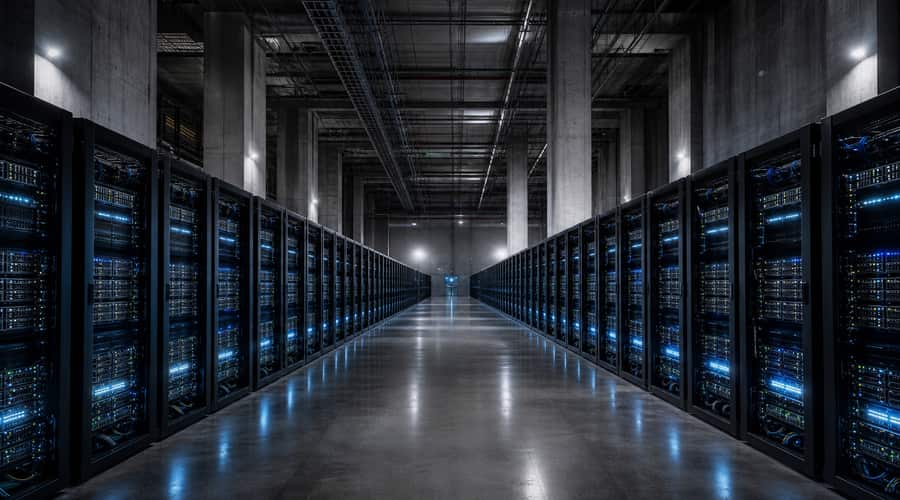
Nvidia has purchased $500 million of rights tied to Corning stock, Bloomberg reported, in a deal that extends the AI infrastructure investment thesis from chips and servers into specialty glass, optical fiber, and the physical connectivity layer that increasingly determines how fast and how densely AI data centers can be wired together.
The instrument matters before anything else. Bloomberg's reporting describes the deal as Nvidia purchasing rights tied to Corning stock rather than buying shares outright, which suggests a structure more like a prepaid forward, convertible note, or strategic commitment than a passive equity position. That framing is important because it signals intent. Nvidia is not simply parking cash in a materials company. It is creating a financial and strategic alignment with a supplier whose products are becoming more important as AI clusters get bigger, denser, and faster. The structure allows Nvidia to participate in Corning's upside as AI-driven demand lifts the company's optical and data center segments, while also giving Corning the kind of anchor commitment that de-risks capacity expansion decisions. The deal is therefore both a financial position and a supply-chain statement.
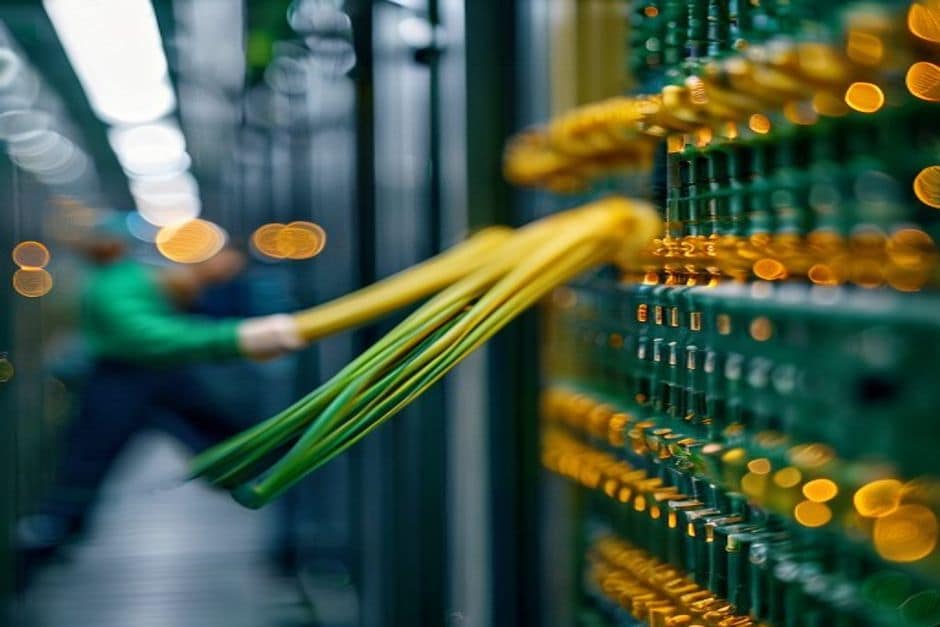
Corning's relevance to AI infrastructure has been building quietly for some time. The company supplies the glass and specialty optical fiber that connects servers, switches, and racks inside and between data centers. As AI cluster architectures have evolved toward very high-density GPU configurations requiring enormous bandwidth between nodes, the connectivity layer has become a serious engineering challenge. InfiniBand and high-speed Ethernet links need more and better fiber as the switch fabric scales up. Corning's data center glass solutions and optical fiber products sit directly in that demand path. The company's optical communications segment has been growing as hyperscalers and AI labs invest in faster interconnects, and Corning's own guidance for 2026 has pointed toward significant data center-related growth as one of its core near-term drivers. Nvidia's $500 million commitment is therefore not just a bet on Corning's future. It is a recognition that what Corning makes is becoming harder to route around as AI scale increases.
Nvidia's broader supply-chain strategy has been evolving in ways that the Corning deal fits neatly into. Jensen Huang has been explicit about wanting Nvidia to engage more directly with the physical infrastructure layer, not just the chips. The company's investments in networking through Mellanox, its push into data center design with the NVL72 reference architecture, and its increasingly active voice in how hyperscalers plan their facilities all point toward a company that wants to influence the full stack from chip to connectivity. The Corning rights purchase extends that logic one level further into materials. If fiber quality, optical coupling efficiency, and glass density become bottlenecks in data center wiring at the density levels that next-generation AI clusters require, Nvidia has an obvious interest in making sure Corning has the capital and the commitment certainty to invest in production capacity. A $500 million deal does not just buy financial exposure. It keeps a key supplier focused on the problem Nvidia cares most about.
The optical and specialty materials angle is one that most AI investors have been slow to price in. The conversation around AI infrastructure has concentrated on GPUs, power, cooling, and increasingly memory, but connectivity is the other physical constraint that becomes more acute as clusters grow. Moving data between thousands of GPUs at training scale requires staggering bandwidth, and that bandwidth has to move through physical fiber running through racks, cages, and ultimately between buildings. The longer the fiber runs and the higher the data rates, the more the quality and specifications of the glass itself matter. Corning is one of the few companies with the materials science expertise, manufacturing capacity, and global supply chain to supply specialty glass and optical fiber at the volume and precision that hyperscaler data centers need. That makes it less substitutable than most of the other suppliers sitting two or three steps below Nvidia in the AI supply chain.
Corning's recent financial commentary supports the idea that the data center business is becoming a larger share of its overall profile. The company has flagged optical communications as a key growth area and has been investing in capacity ahead of anticipated demand. If AI-driven hyperscaler construction continues at the pace currently projected, Corning's data center segment could grow substantially, changing the way investors weight the company relative to its historical profile as a glass and display manufacturer. The Nvidia deal is a signal that at least one of the most important buyers in the AI ecosystem believes that transformation is real.
For San Francisco readers, the Corning deal is another data point in a pattern that has been developing throughout the AI infrastructure buildout. The economic value of being in the AI supply chain is spreading. It started with Nvidia itself, then expanded to memory, packaging, power semiconductors, and data center operators. It is now reaching into fiber, specialty glass, and the physical connectivity layer that most software-oriented founders never think about. The companies controlling the physical bottlenecks in that stack are becoming AI infrastructure beneficiaries whether or not they appear in a typical AI investment screen. Nvidia's $500 million commitment to Corning is a signal to the market that those bottlenecks are real, that Nvidia knows where they are, and that the company is willing to pay to make sure they do not slow down the buildout it depends on.
Also read: AI trading bots are losing money and the market is exposing what agentic hype hides • Dario Amodei's job-loss warnings have not softened, but his own company's data is quietly telling a different story • Open source downloads have hit 10 trillion and the hidden commons is starting to bill its biggest users