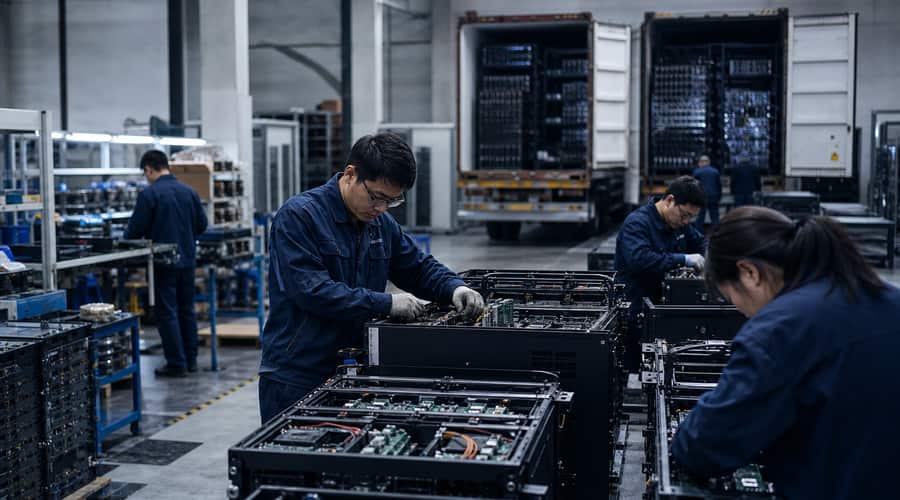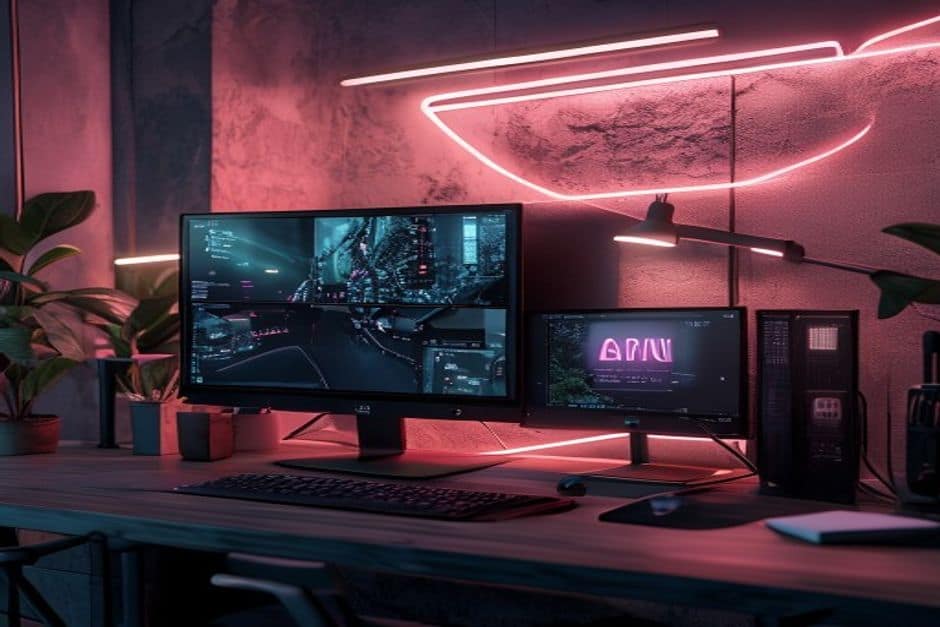
Realistic AI image generation is no longer only a cloud story. A seven-year-old consumer graphics card is now enough to make credible visual work feel local, cheap, and close at hand.
The useful signal from the latest Z-Image-Turbo discussion is not that another image model can make a convincing portrait. That part is becoming normal. The more interesting part is that a Reddit user says the results were generated on an RTX 2060, the kind of 2019-era Nvidia card that is still sitting in gaming PCs, spare workstations, and small studio machines around the world.
That changes the math for founders and small teams. Visual experimentation used to mean hiring a designer, buying stock assets, paying for a hosted AI tool, or waiting until there was enough budget to justify a proper creative process. Now the early version of that work can happen on hardware a team may already own. It will not replace a strong art director or a polished brand system, but it does reduce the cost of asking what if.
According to the r/StableDiffusion post, which drew more than 500 votes within roughly 12 hours, the images were made with Z-Image-Turbo on an RTX 2060, with some later discussion noting that a few outputs were enhanced through upscaling workflows. That caveat matters. Local generation and cloud-enhanced finishing are not the same thing. Still, the practical point remains: even before the final polish, the base outputs were good enough to make people stop and argue about the hardware.
The RTX 2060 was launched in January 2019 as a midrange gaming GPU, not as a workstation card for generative AI. Nvidia pitched it around ray tracing, 1080p performance, and the arrival of RTX features to a broader gaming audience. In 2026, that same class of card is being used to run models that can produce realistic marketing-style images, character references, product mood boards, and social creative.
That is a different kind of progress from the enterprise AI story. The market spends a lot of time watching hyperscalers pour billions into data centers, power contracts, and high-end accelerators. Those investments are real, and they matter for frontier models. But beneath that headline economy, there is a quieter layer of capability spreading through depreciated consumer hardware.
For a cash-constrained startup, this is not a small distinction. A founder trying to test a landing page, visualize a product concept, or create campaign variants does not always need the best possible image model. They need something that is credible enough to move the next decision forward. If that can happen without a monthly subscription, usage credits, or uploading sensitive prompts to a third-party service, the barrier to experimentation falls sharply.
Z-Image-Turbo also reflects a broader design pattern in AI models: smaller, faster, more efficient systems that trade some flexibility for practical output. ComfyUI documentation describes Z-Image-Turbo as a distilled 6 billion parameter model designed for efficient image generation, with strong photorealistic output and low step counts. In plain terms, it is built to get to useful results quickly rather than ask users to wait through a heavy, fragile workflow.
Local Does Not Mean Frictionless
There is still a cost, just not always a cash cost. Running local image generation means installing tools, downloading large model files, managing drivers, understanding workflows, and learning why a prompt that works once may not work again. A hosted tool hides that complexity behind a clean interface. For many teams, that convenience is worth paying for.
Speed is another tradeoff. A high-end cloud service can return polished results quickly because it is running on hardware built for the job. A used RTX 2060 can be impressive and still slow. In the Reddit thread, the original poster said some images ran locally in about 180 seconds. That is workable for a patient hobbyist or a founder exploring concepts at night. It is less attractive for a production team that needs dozens of controlled variants by lunch.
Consistency is also the hard part. Realistic image models can create beautiful one-off outputs, but startups need repeatable assets. The same face, product shape, package design, or campaign style has to survive across multiple images. Hosted platforms often invest heavily in editing tools, brand controls, and user-friendly guardrails. Local workflows can do some of this, but the setup quickly becomes more technical.
Licensing and privacy cut both ways. Local generation may appeal to teams working on unreleased products, confidential prototypes, or sensitive customer scenarios because prompts and drafts can stay on their own machines. At the same time, startups still have to understand the model license, the licenses of any LoRAs or add-ons, and whether generated outputs are safe for commercial use. Cheap experimentation is not the same as clean commercial clearance.
The Startup Advantage Is Iteration
The real opportunity is not to fire the creative team. It is to widen the top of the funnel for ideas. A solo founder can test three visual directions before calling a designer. A small agency can mock up campaign concepts before a client meeting. An indie game team can explore character tone before commissioning final art. A hardware startup can create mood boards for investor decks without spending a week searching stock libraries.
This is where older GPUs become strategically useful. They turn visual work from a formal request into an everyday habit. The same way cheap cloud servers made software experiments easier, local AI image models make visual experiments easier. Some outputs will be unusable. Some will look slightly wrong. But the cost of finding the promising direction keeps falling.
The next thing to watch is whether models like Z-Image-Turbo become easier to package for nontechnical teams. If installation, licensing, and repeatability improve, the market for hosted tools will not disappear, but it will have to justify itself with workflow quality rather than mere access. The grassroots AI story is becoming harder to ignore: a lot of useful capability is now running on machines people already paid for years ago.
Also read: OpenAI's trial turns its $852 billion rise into a founder warning • Rave is testing Apple's App Store power in court • AI image editing is turning loneliness into a startup signal