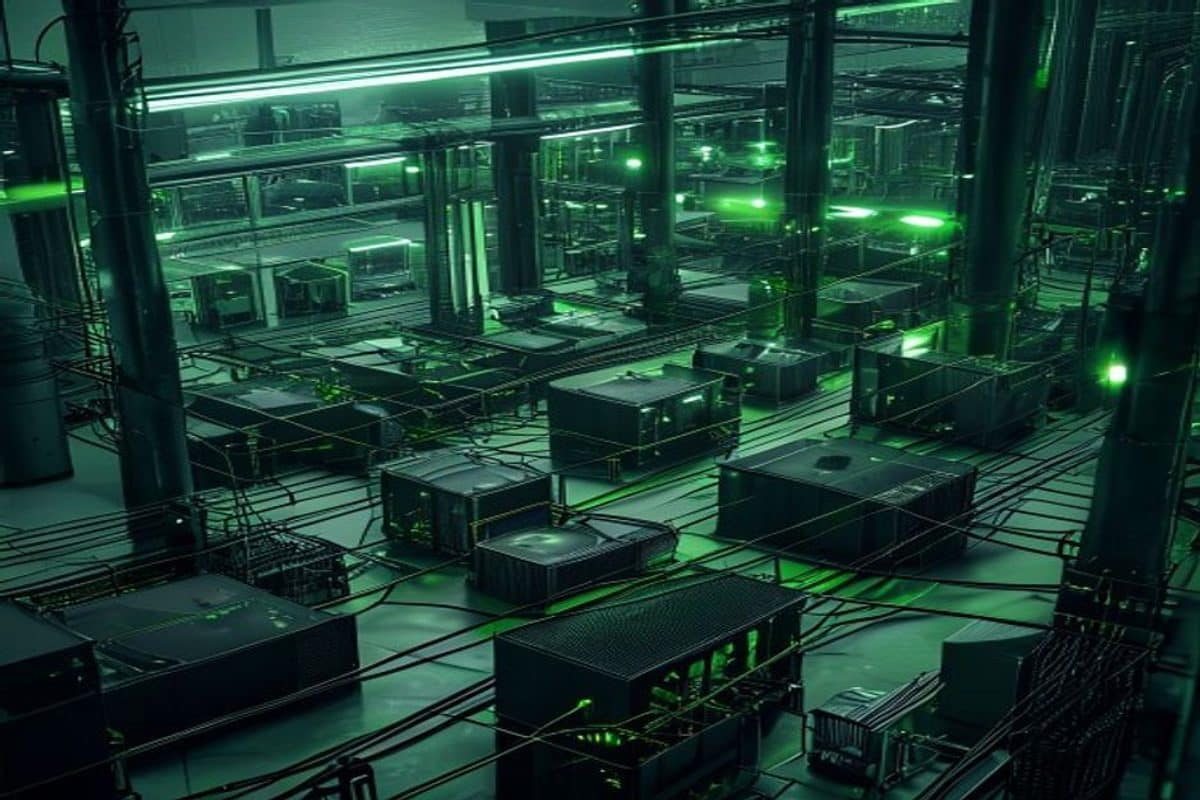
Kevin O'Leary's planned 9GW Utah data center campus shows how quickly the AI infrastructure race is becoming a power race, with developers trying to secure generation before they sell compute.
Kevin O'Leary's Utah data center plan has moved closer to reality after state and local approvals advanced a proposed 9-gigawatt hyperscale campus in Box Elder County. The project, known as Stratos and also tied to the Wonder Valley brand, is being led by O'Leary Digital with support from Utah's Military Installation Development Authority. It is designed to generate its own electricity on site, a crucial detail at a time when grid access has become one of the biggest bottlenecks in AI infrastructure.
The scale is the story. Current reports put the campus at roughly 40,000 acres of private land, with another 1,200 acres of military and state-owned property involved in the project area. Phase one is expected to target about 3GW of generation capacity, with a long-term plan that could reach 9GW. That would make the site larger than many national power systems and more than double Utah's current average electricity use, which is why the project has drawn attention well beyond the state.
According to reporting from The Salt Lake Tribune, officials framed the development as both an economic opportunity and a national-security play, while residents and county leaders pressed for more clarity on timing, tax incentives, water use and local oversight. MIDA approved a development agreement before the county process fully settled, which added to the sense that the project was moving faster than some local officials expected.
The core pitch is simple: build the power first, then bring in the compute customers. O'Leary Digital says the campus would rely on on-site natural gas generation connected to the Ruby Pipeline, allowing it to avoid drawing electricity from the existing grid. MIDA executive director Paul Morris told officials the facility would not take power from the local system, though the project may eventually be able to send surplus electricity back if generation exceeds internal demand.
That model reflects a broader change in the AI buildout. The limiting factor is no longer only chips, land or fiber. It is reliable power at industrial scale. Nvidia's latest AI accelerators consume far more energy than the server fleets that defined the previous cloud era, and large training clusters can require hundreds of megawatts before cooling, networking and redundancy are added. A 9GW campus is not just a data center. It is an energy project with compute attached.
O'Leary has leaned into that point, saying the United States needs to move faster if it wants to compete with China in AI infrastructure. The message is blunt, but the business logic is clear. Hyperscalers and AI labs cannot train frontier models on promises of future grid upgrades. They need firm power, predictable permitting and large contiguous sites where energy, cooling and networking can be engineered together.
Utah gives developers several of those ingredients. Land is available at a scale that is difficult to find near coastal technology hubs, and state leaders have shown a willingness to use tax policy and special development authorities to attract major infrastructure projects. For data center builders, that matters. Power-hungry AI campuses are increasingly competing with factories, utilities and residential growth for the same electrical capacity, so locations that can streamline approvals have a stronger hand.
Regulatory Community Risks
The approvals do not remove the local concerns. Residents have raised questions about water use, visual impact, emergency services, property rights and the long-term cost of public incentives. Project backers have pointed to closed-loop cooling and off-grid generation as answers to some of those concerns, but a campus of this size will still reshape the surrounding area if it is built as proposed.
The tax structure is another point to watch. Utah officials have discussed incentives that could lower energy-related taxes and rebate a large share of property taxes, while supporters argue the project could still generate significant revenue and permanent jobs over time. That tradeoff will matter because communities often bear the disruption first, while the promised fiscal benefits arrive only if tenants sign, power plants are completed and the campus operates at scale.
Implications for AI Infrastructure
The O'Leary project fits a wider pattern across the industry. Microsoft has supported nuclear restart plans, Amazon has pursued power-linked data center deals, and other hyperscalers are looking for ways to tie compute capacity directly to energy assets. The lesson is becoming hard to miss: whoever controls power has more control over the pace of AI deployment.
That shift changes how investors will look at data centers. A standard facility with leased grid power is easier to understand, but the next wave of AI campuses may look more like hybrid energy and infrastructure companies. Compute can become a commodity faster than electricity can be permitted, financed and delivered, which gives power-secured projects a real advantage if they can manage the political and environmental risk.
The next question is whether Stratos can turn approvals into construction and construction into customers. No major hyperscaler tenant has been publicly named, and the details around generation, water and local agreements will decide whether the project becomes a blueprint or a cautionary tale. For now, O'Leary's bet is clear: in the AI infrastructure race, the winner may be the company that secures the electrons before everyone else does.
Also read: Musk calls Altman 'Scam Altman' as OpenAI trial jury convenes • Monad's 1.2 Million-Follower X Account Was Suspended Overnight and the Crypto Community Had Feelings • Musk weaponizes X algorithm against Altman as OpenAI trial opens in Oakland