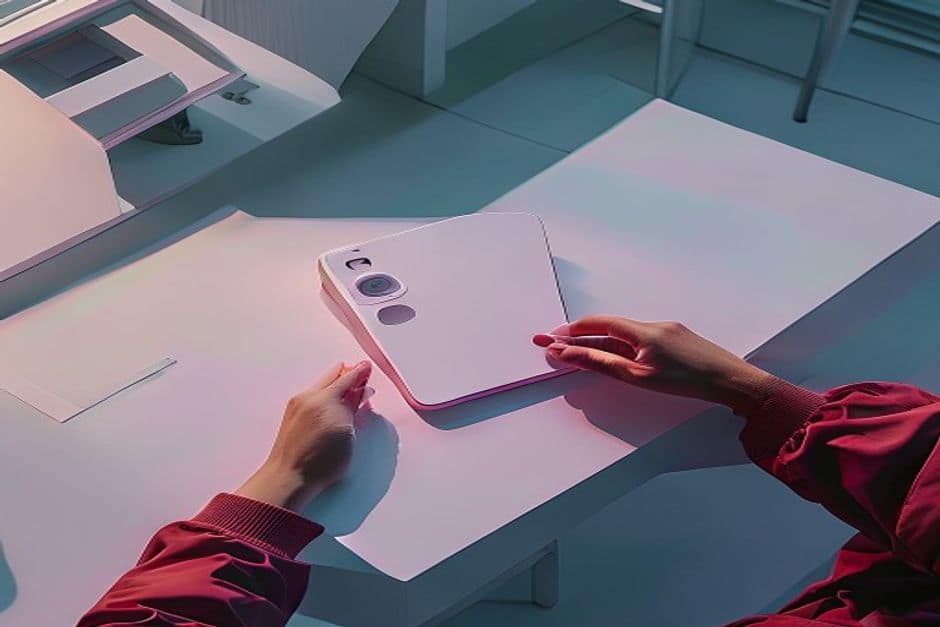
Reports citing industry analyst Ming-Chi Kuo suggest that OpenAI may be preparing production of a ChatGPT-focused AI agent phone, with Kuo estimating as many as 30 million units could be manufactured in the first half of 2027, a figure that if accurate would represent one of the largest hardware launches in consumer electronics history and that places the project, almost certainly connected to OpenAI's acquisition of Jony Ive's design firm io, in the context of a platform strategy rather than a device strategy: OpenAI is not primarily trying to build a better smartphone, it is trying to create a distribution channel it controls before Apple and Google consolidate the AI agent interface layer inside operating systems that OpenAI does not own.
The Jony Ive connection is the most important piece of context for understanding why this is a serious hardware bet rather than a vanity project or a PR move. OpenAI acquired io in a deal valued at approximately $6.5 billion in early 2025, bringing Ive and the team that designed the iPhone, the MacBook Air, the iPod, and AirPods under the same corporate structure as GPT-4o and the ChatGPT product suite. Ive's specific skill is not chip design or operating system architecture. It is the reduction of complex technology to a physical form that users find intuitive and desirable before they understand what the technology does. The question he has been working on with Sam Altman and OpenAI's product team is what the physical form factor of an AI-first device should be, not a smartphone with better AI features but a device designed from the ground up for a world where the primary interface is conversational, agentic, and continuous rather than app-based and session-based. The 30 million unit production estimate Kuo has put forward implies a device that looks more like a mass-market consumer product than a developer kit, which means the Ive-led design process is likely producing something meant to be carried and used daily rather than a specialised AI tool for a niche audience.
The platform strategy argument is worth stating directly because it explains why OpenAI would accept the enormous operational complexity of consumer hardware manufacturing rather than continuing to grow through iOS and Android app distribution. Apple and Google are not passive distribution partners for OpenAI. They are the companies that own the operating systems, the app review processes, the payment systems, and increasingly the AI model infrastructure that sits at the OS level. Apple's Apple Intelligence suite, announced in 2024 and progressively rolled out through iOS 18 and 19, puts Siri backed by Apple's own models at the native OS layer, with integration into calendar, messages, photos, and third-party apps that ChatGPT can only access through deliberate user steps. Google's Gemini integration into Android follows the same pattern. Both companies have been explicit that their AI assistants will be the default interface for most users, relegating third-party AI apps to the same position that any other App Store category occupies: accessible, but subordinate to the OS-level default. An OpenAI device running its own operating environment, where ChatGPT and its agent capabilities are the native interface rather than an app competing with Apple Intelligence or Google Gemini for the user's attention, would solve that subordination problem permanently rather than negotiating around it in perpetuity.
The Humane and Rabbit failures are the cautionary examples that every discussion of a new AI hardware category now begins with, and they deserve direct engagement rather than dismissal. Humane's AI Pin launched in April 2024 at $699 and received uniformly negative reviews: its laser projection display was hard to read in ambient light, its inference latency made every interaction frustrating, and its core use cases were handled better by a smartphone already in the user's pocket. Rabbit's R1 launched at $199 and was reviewed as a charming device built around large action model technology that did not yet work reliably enough for the use cases it promised. Both devices failed for overlapping reasons: the AI capabilities they depended on were not yet reliable enough to replace the applications they were supposed to supersede, the hardware form factors did not provide advantages over existing devices that justified the category switch, and neither company had distribution reach, brand recognition, or manufacturing relationships capable of achieving the scale required to build a hardware ecosystem. OpenAI has structural advantages over both failed predecessors in every dimension that mattered for their failure: ChatGPT has 600 million weekly active users providing AI brand recognition that Humane and Rabbit could not claim, the Jony Ive design pedigree provides consumer hardware credibility that those teams lacked, and an OpenAI device with 30 million units in production has supply chain leverage and carrier relationship potential that small hardware startups cannot achieve.
The agent phone concept, as distinct from an AI-featured smartphone, implies specific product design choices that have not yet been confirmed in detail. An agentic device is one where the primary value proposition is a continuously running AI that takes actions on the user's behalf across communication, scheduling, research, commerce, and productivity workflows rather than an AI that responds to individual queries. That continuous agency model requires persistent context about the user's life, the permissions to act across services and accounts, and the battery life and connectivity reliability to maintain background operation without constant user prompting. Those requirements push toward device design choices that differ from the smartphone optimization targets: longer context memory, better microphone arrays for ambient input, persistent always-on AI processing that is energy-efficient at low duty cycles, and physical form factors that make the device unobtrusively present rather than commanding attention. Whether the Ive-led team has found a form factor that solves those requirements in a design that consumers will want to carry is the question that no amount of production unit speculation can answer before the device is shown publicly.
For startups building applications, tools, or services in the AI ecosystem, an OpenAI device would create a platform event comparable to the App Store launch in 2008. The companies that were positioned on day one of iOS with useful applications built for the new interaction model captured user bases and revenue positions that competitors spent years trying to erode. If an OpenAI device ships with an open developer platform that allows third-party agents and applications to integrate at the OS level rather than being relegated to a browser or sandboxed app context, the startups that build for that platform early will have distribution advantages that compound with every device unit sold. The risk is the mirror image: if OpenAI's device ships with a closed ecosystem where ChatGPT agents are the only first-class citizens and third-party developers are limited to the same restricted API access they have today, the device creates a platform that concentrates value at OpenAI rather than distributing it across the startup ecosystem. Sam Altman's public statements about developer relationships suggest openness is the strategic intent, but the commercial incentives of a hardware platform owner push toward controlled integration, and the tension between those two orientations will be the most consequential design decision the company makes before the device launches.
Also read: Enter Just Tripled Its Valuation to $1.2 Billion and the Brazilian Legal AI Company's Growth Reveals Why Emerging Markets Create Different AI Moats Than Silicon Valley Expects • CopilotKit Raised $27 Million to Build Agents Into Applications Rather Than Beside Them and the Distinction Is the Entire Product Thesis • A C++ Port of Microsoft VibeVoice Just Brought Local Voice AI to CPU and GPU Without Python and the Deployment Story Matters More Than the Benchmark Numbers