As AI models tear through white-collar work at a pace few predicted, the jobs holding firm aren't in corner offices or research labs. They're in crawlspaces, courtrooms, and confessionals.
Ask anyone in tech what's safe from AI, and three years ago they'd have said creative writing, legal analysis, strategic consulting. By April 2026, those answers have aged badly. GPT-5 and Anthropic's latest model iterations have absorbed enough reasoning and agentic capability to rattle professionals who once felt comfortably insulated. The conversation has moved on. The new consensus, forming loudly on Reddit and X, points somewhere unexpected: toward the person snaking your drain at 11pm, the judge weighing a life sentence, the grief counselor sitting with a family that just lost someone.
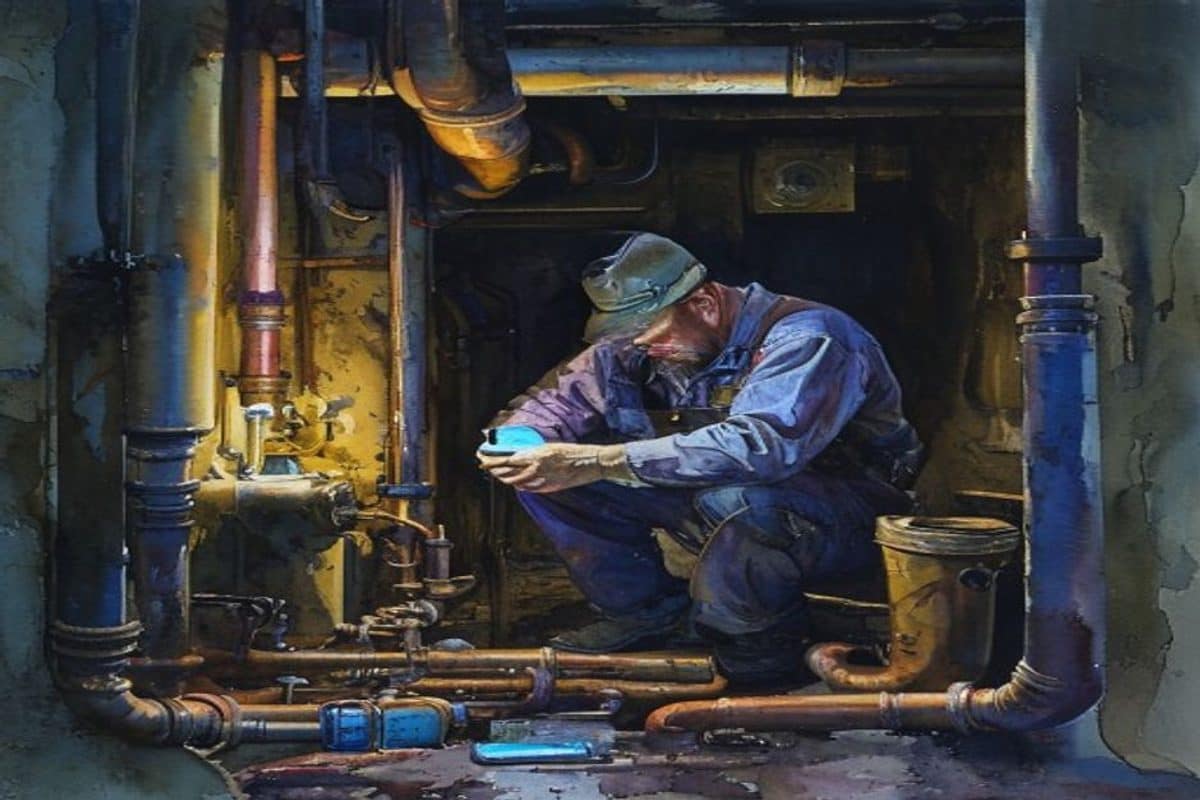
If I had to name one profession I'd bet my career on being irreplaceable in 50 years, I'd pick the skilled trades. Specifically, plumbing. Not because it's glamorous, but because the physical reality of the job is a genuine barrier that current robotics cannot clear at any commercially viable price point. A robot can beat a grandmaster at chess. It cannot reliably navigate a century-old crawlspace, diagnose a pressure problem by feel, and improvise a repair with three mismatched fittings from a worn toolbox. Dexterity, spatial reasoning in unstructured environments, and the sheer unpredictability of aging infrastructure form a combination that current robotic systems simply cannot handle affordably.
The market already knows this. Vocational trade school enrollment in the US climbed 18% year-over-year heading into 2026, while university matriculation in generalist business and liberal arts programs declined in parallel. That's not a coincidence. It's a generation recalibrating in real time, watching AI absorb the work that once justified a four-year degree in communications or mid-level project management.
The skilled trades argument is economic. But there's a second category of AI-resistant work that operates on entirely different logic: roles where society has decided, at a structural level, that a human must be responsible. Judges and surgeons don't just perform tasks. They carry liability. When a surgical error occurs, the legal and insurance system requires a human to answer for it. No hospital board, no malpractice insurer, and no jury is currently equipped to assign culpability to a machine in any meaningful way. That gap, between what AI can technically do and what society will allow it to be held accountable for, is enormous. Legal frameworks move slowly. The liability architecture for AI errors barely exists at the start of 2026, and regulators are still writing the foundational rules. Until those frameworks mature, human oversight roles aren't optional. They're legally mandated.
Insurance and legal sectors are actively scrambling to define AI liability right now, which means the humans sitting at the top of those systems, the supervising surgeon, the presiding judge, the licensed professional signing off, aren't going anywhere soon. The paperwork alone keeps them employed.
What AI cannot fake
Then there's the third category, harder to quantify but deeply human: clergy, therapists, early childhood educators. The argument here isn't about technical limitations. Current models can simulate empathy with unsettling fluency. The argument is about authenticity and what people are actually seeking when they're in crisis. A parent burying a child doesn't want a statistically optimal condolence. A person in their first therapy session after a trauma needs to feel witnessed by something that has genuinely lived in a body, experienced loss, and chosen to be present anyway. Whether or not AI can replicate the surface of that interaction, there is a persistent and likely durable human preference for biological presence in moments of extreme vulnerability. That preference is itself a market force.
None of this means these professions are static or effortless. Plumbers who use diagnostic software will outcompete those who don't. Therapists who understand how clients are already using AI mental health tools will serve patients better. The 50-year window isn't a guarantee of comfort. It's a structural advantage worth building on.
The deeper takeaway for anyone watching the labor market right now: the jobs best positioned for the next half-century aren't the ones that were hardest to automate yesterday. They're the ones rooted in physical unpredictability, legal accountability, or genuine human presence. Those three factors are durable. Almost everything else is negotiable.
Also read: YouTube's ban on Iran's Lego-style AI propaganda videos sets a new precedent for how platforms police state-sponsored synthetic media • Bosses are celebrating AI productivity wins while workers drown in a flood of low-quality output they did not ask to manage • Anti-AI saboteurs are attacking data centers with incendiary devices as Europe's energy crisis hands them an unexpected opening