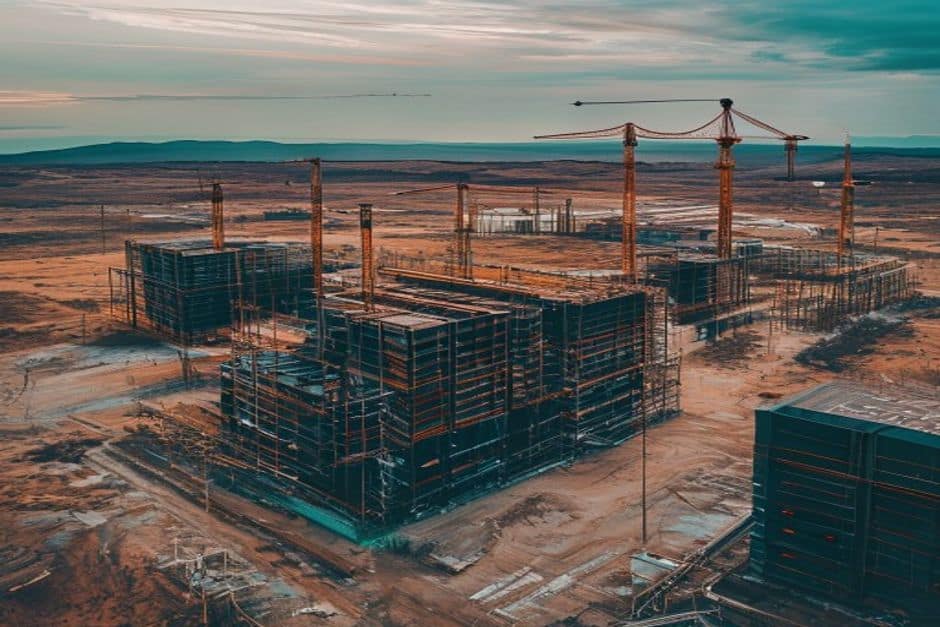
Principal Asset Management closed its third data center fund at $3.64 billion in February 2025, exceeding its $3 billion target with capital from a diverse global investor base, confirming that AI infrastructure has become a mainstream institutional asset class sitting squarely between private real estate and industrial infrastructure.
The fund, called the Principal Data Center Growth and Income Fund, is structured as an opportunistic closed-end vehicle. It backs the development of hyperscale data center projects across the United States in partnership with Stream Data Centers, a digital infrastructure provider. The total development value expected from the fund is more than $8 billion in assets, meaning Principal is using $3.64 billion in equity to control a much larger capital stack. That leverage structure is not unusual in real estate, but it is new to data centers, which a decade ago were treated as specialised corporate infrastructure rather than investable property. The fact that Principal's third fund in this category is its largest, and exceeded its target, shows the institutional appetite has not cooled.
For founders and investors tracking AI economics, the operational question is what this kind of capital formation means for how compute gets built and priced. Hyperscalers such as Microsoft, Google, Amazon, and Meta have committed to spending more than $300 billion combined on AI infrastructure in 2025 and 2026. But they cannot build everything directly on balance sheet fast enough. Private funds like Principal's are entering the gap, developing projects on long-term leases that hyperscalers then occupy. The hyperscaler gets capacity without owning the land, the power contracts, or the construction risk. The fund gets a durable lease income stream tied to AI demand. That structure is now common in industrial real estate and it is replicating itself at high speed inside data centers.
The shift in risk transfer is the part most institutional investors focus on. Public cloud companies carry enormous capital expenditure cycles that compress margins and require near-perfect execution timing. Private real estate funds absorb the development-phase risk in exchange for long-duration, relatively predictable returns. For the AI industry, this means more capital chasing compute capacity than the hyperscalers alone could deploy. The total private and institutional capital flowing into data centers globally now exceeds $3 trillion in projected development according to Bloomberg data, and a meaningful share of that is sitting in vehicles structured the way Principal's funds are.
For startups, the implications run in two directions. The first is the opportunity inside the capital stack. Power procurement, cooling engineering, grid connection services, modular construction, and facilities management are all components of a data center development project that large asset managers need delivered. The funds do not build anything themselves. They finance operators like Stream and rely on a supply chain of smaller companies to deliver the physical infrastructure. Founders working on grid integration, liquid cooling, or modular building systems are not pitching into a niche. They are pitching into a supply chain that is now backed by institutional equity with multi-year deployment mandates.
The second direction is more cautious. The data center funding rush may consolidate rather than open the market. Hyperscalers anchor the tenants in most of these funds. Stream, Equinix, Digital Realty, and a handful of others dominate the operator side. When capital is abundant and project sizes are measured in hundreds of megawatts, smaller colocation providers and infrastructure startups face a higher entry bar. A startup building a 10-megawatt AI colocation facility in a secondary market competes against capital-abundant operators with hyperscale pre-leases already signed. Principal's fund, at $8 billion in development value, is targeting projects that are likely far larger. The infrastructure investment wave creates a real opportunity set, but the opportunity concentrates toward scale and existing operator relationships.
The broader signal Principal's third fund sends is that AI infrastructure has passed the point where institutional capital needs to be convinced. The question has shifted from whether data centers are a viable asset class to how much of the institutional real estate and infrastructure allocation should flow there. KKR committed $50 billion to AI-oriented data centers and power infrastructure in a joint venture in 2024. Brookfield, Blackstone, and Digital Bridge are running parallel vehicles. Principal's $3.64 billion is not a headline outlier, it is evidence of how deep the institutional formation has become. For startups whose compute costs depend on this infrastructure, that depth is both reassuring and clarifying. The capital is there. The access is the question.
Also read: Bumble is trying to move beyond the swipe before AI dating does it for them • Disneyland's face scan rollout shows biometric convenience is becoming the default, not the exception • Firefox shipped 423 fixes in April after Claude Mythos unearthed 271 vulnerabilities