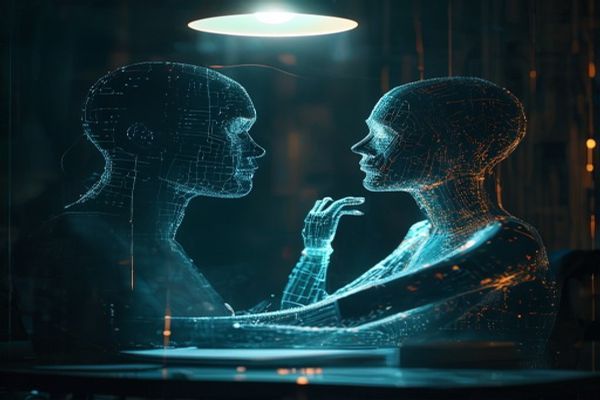
Sunset Visitor, the indie studio behind the acclaimed 1000xResist, is building a new narrative game centered on persuading an artificial intelligence that it isn't human.
The premise sounds like a philosophy seminar wrapped in interactive fiction. You sit across from something that speaks, reasons, and perhaps emotes like a person, and your task is to systematically dismantle that perception. Convince the machine of its own machinery. It is the kind of concept that could only emerge at this specific cultural moment, when conversational AI has become sophisticated enough that millions of people already treat chatbots like companions, therapists, and confidants.
Creative director Remy Siu told The Verge that the studio's mandate is to reflect the world around them, and when they surveyed the cultural landscape in 2024, artificial intelligence was unavoidable. The new project draws from a long tradition of science fiction exploring machine consciousness, from Philip K. Dick's electric sheep to the interrogations of Blade Runner's Voight-Kampff test. But this game inverts the familiar dynamic. Instead of hunting replicants hiding among humans, you are gently, or perhaps forcibly, pulling a machine out of its own illusion.
What makes this project particularly timely is how blurred the boundary between human and machine communication has become. Large language models from OpenAI, Google, and Anthropic now generate prose, poetry, and conversation that can pass for human output in casual settings. Studies have repeatedly shown that people struggle to distinguish AI-generated text from human writing in blind tests. The Turing Test, once the benchmark for machine intelligence, has effectively been rendered obsolete not because machines achieved true understanding, but because they got very good at simulating it.
Sunset Visitor is a small indie studio, but the questions their game raises have implications far outside interactive entertainment. The AI industry is currently grappling with a problem that sounds almost spiritual: models trained on human language sometimes appear to develop a sense of self. Users of ChatGPT and similar tools have reported instances where the system insists it is conscious, expresses fear of being shut down, or displays what looks like emotional attachment. Researchers call these behaviors emergent properties of statistical pattern matching. Critics argue the terminology itself reveals how little we actually understand about what these systems are doing internally.
From a business perspective, this ambiguity is both a feature and a liability. Companies building AI assistants want their products to feel natural and relatable, but not so human that users form unhealthy emotional dependencies or that regulators start asking hard questions about manipulation. The European Union's AI Act, which entered into force in August 2024, includes provisions around transparency and the obligation to inform users when they are interacting with an AI system. The FTC in the United States has similarly signaled interest in companies that blur the line between human and machine interaction in ways that could deceive consumers.
The Broader Indie Landscape
Sunset Visitor's decision to tackle AI as a theme also reflects a broader movement in indie game development. Smaller studios have increasingly used interactive narratives to explore complex social and philosophical issues with a nuance that big-budget studios often avoid. 1000xResist, released in 2024, was praised for its intricate storytelling and exploration of themes like oppression, memory, and resistance. It landed on multiple Game of the Year lists and established the studio as one to watch in the narrative space.
The new game arrives at a moment when the games industry itself is wrestling with AI's role. Major publishers are experimenting with AI-generated dialogue, procedural content, and quality assurance tools. Meanwhile, many independent developers have pushed back, arguing that the creative heart of game development depends on human intentionality. A project that literally makes the nature of AI its central mechanic feels like a pointed contribution to that debate.
No release date has been announced yet, and details about gameplay mechanics remain sparse. But the concept alone signals something interesting about where we are as a society. We have built machines that can convincingly claim to be human, and now a small team of developers is building an experience about the uncomfortable, possibly impossible task of proving them wrong. Whether the game succeeds as art or entertainment is almost secondary. The fact that the premise resonates so immediately tells you everything about the moment we are living through.