Fabric8Labs has become an important name in AI chip cooling because its copper 3D printing process tackles one of the least optional problems in data centers: heat.
AI infrastructure is not only a race for faster GPUs, larger clusters, and cheaper power. It is also becoming a race to keep those systems cool enough to operate reliably. That is where Fabric8Labs, a San Diego company working on high-precision copper manufacturing, has drawn attention from chip and data center engineers looking for better ways to move heat away from processors.
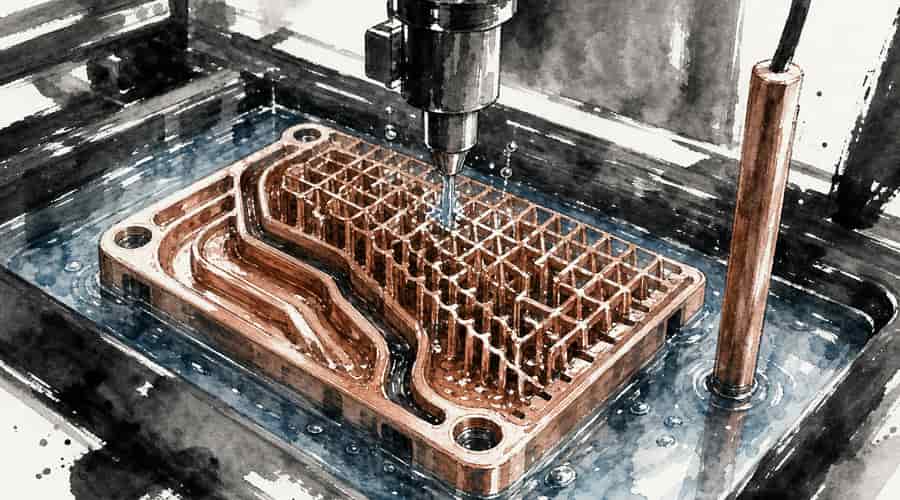
The company’s core technology is called Electrochemical Additive Manufacturing, or ECAM. Unlike laser-based metal 3D printing, which uses intense heat to fuse metal powder, ECAM deposits metal through an electrochemical process at room temperature. The practical point is simple: it can create very small, complex copper structures without some of the thermal distortion and post-processing problems that come with conventional metal additive manufacturing.
That matters because AI accelerators are pushing cooling systems into territory that older data center designs were not built for. Air cooling can still handle many enterprise workloads, but high-density AI racks are increasingly moving toward liquid cooling, cold plates, and more specialized thermal components. The more power that gets packed into each server, the more valuable it becomes to shape coolant channels with precision instead of relying on standard designs that were built for a less demanding generation of chips.
As Tom’s Hardware recently noted, Fabric8Labs has demonstrated copper cooling structures designed for processors, including intricate channel patterns that can be optimized for performance. The publication described the company’s approach as using ECAM to produce detailed copper features for chip cooling, with the longer-term idea of placing cooling structures closer to the silicon itself. That is the important part for the market. Cooling is moving from a facility-level concern into the chip package and board design conversation.
Fabric8Labs was founded in 2015 and has positioned itself at the intersection of additive manufacturing, copper fabrication, and electronics cooling. That is a useful place to be as the economics of AI infrastructure change. A hyperscaler can spend billions on compute capacity, but the value of those chips depends on whether they can be run hard, run consistently, and avoid reliability problems tied to heat. Thermal management is no longer a supporting detail. It is part of the performance envelope.
The broader acquisition logic around this sector is easy to understand, even where specific deal claims need careful verification before publication. Industrial companies with manufacturing depth want defensible thermal technology because AI data centers are creating a durable demand curve. Specialist cooling companies, meanwhile, often need larger partners to scale from promising engineering into production volumes that cloud providers and server makers can actually use. That combination is why thermal management has moved higher on the strategic agenda for component makers, infrastructure suppliers, and electronics manufacturers.
For Fabric8Labs, the central question is scale. It is one thing to prove that ECAM can produce fine copper structures with performance advantages. It is another to produce those components at the volume, consistency, and cost profile required by AI infrastructure customers. That is where partnerships, manufacturing expansion, and potential corporate buyers become important. The technology has to move from impressive prototype capability to a repeatable supply chain asset.
For data center operators, the takeaway is just as practical. The next phase of AI buildout will not be decided only by who can secure GPUs or raise project finance. It will also depend on the companies that solve power delivery, cooling, interconnects, and materials constraints. If Fabric8Labs and companies like it can make cooling hardware more efficient, they will sit closer to the center of the AI infrastructure story than many investors expected.
Watch the thermal management market closely. As AI racks grow denser and chipmakers keep pushing performance, the winners will be the suppliers that can turn better cooling into higher uptime, better utilization, and more usable compute per dollar spent.
Also read: Citi says AI data center bonds are finally being priced as the project finance deals they actually are • CoreWeave's $8.5 billion investment-grade loan rewrites how AI infrastructure gets financed • China Is Turning the Compound Semiconductor at the Heart of Every AI Data Center Into Its Most Potent Trade Weapon