Tesla's latest SEC filing contains a one-sentence disclosure of a $2 billion AI hardware acquisition with no named supplier, no stated purpose, and no further explanation , and that opacity is telling its own story.
Somewhere in the fine print of Tesla's most recent quarterly filing, sandwiched between the routine line items that most readers skip, sits a sentence that has lit up financial Twitter and Reddit in equal measure: the company acquired roughly $2 billion in AI hardware. Full stop. No vendor. No technical specifications. No project attribution. For a company that typically uses its earnings materials as a platform for Elon Musk to evangelize about autonomous vehicles and humanoid robots, the deliberate minimalism here is striking.
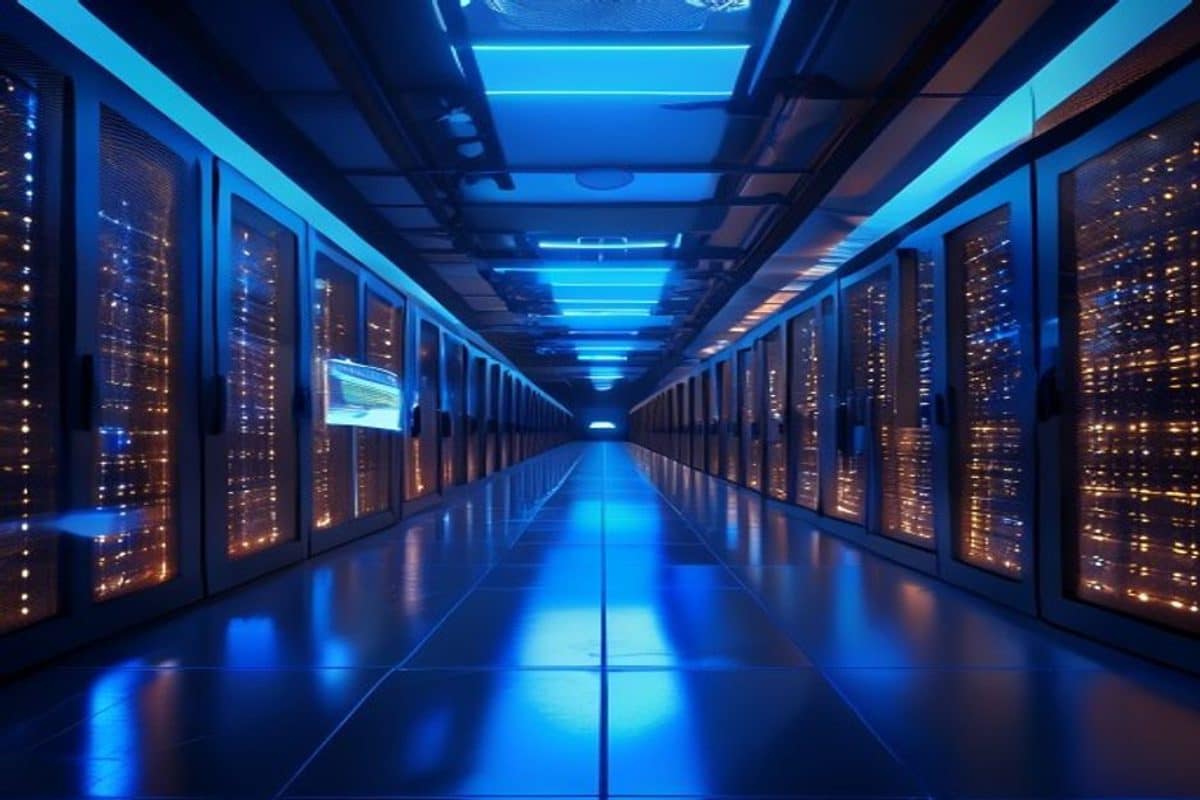
The immediate question analysts are racing to answer is what exactly Tesla bought. The company has been developing its proprietary D1 chip for the Dojo supercomputer program since 2021, and Dojo remains Tesla's most visible bet on building internal AI compute infrastructure. But $2 billion in a single procurement cycle suggests this goes well beyond incremental Dojo expansion. A capital outlay of that scale points more plausibly toward high-density GPU clusters , Nvidia H100s or the newer Blackwell architecture , or the kind of high-bandwidth networking fabric that makes large-scale distributed training viable. Neither of those would be built in-house.
The hardware could plausibly serve any of three distinct programs, which is part of what makes the disclosure so maddening for analysts trying to model Tesla's AI spend. Full Self-Driving's neural network training is compute-hungry and perpetually behind schedule relative to Musk's public timelines, so feeding that pipeline with fresh silicon would be entirely rational. Optimus, Tesla's humanoid robot program, requires its own simulation and training infrastructure that scales with the number of physical units being manufactured. And Dojo itself still needs additional wafer capacity and memory systems to reach the petaflop targets Tesla has publicly cited. Any one of these explanations is credible. The filing offers no way to distinguish between them.
The supplier question carries real market weight. Nvidia's stock moved on the news almost immediately, with traders speculating that a deal of this size likely flows through Santa Clara whether or not Tesla wants to admit it. The company has been publicly ambivalent about Nvidia dependency , Musk has alternated between praising Jensen Huang and positioning Dojo as Tesla's path to hardware independence , so confirming a nine-figure Nvidia order would carry some awkwardness. That may partly explain why the disclosure stayed at one sentence.
Margins now, positioning later
From a purely financial standpoint, $2 billion in hardware CAPEX in a single quarter is a significant margin headwind for a company that has already been compressing prices on its vehicle lineup to defend market share. Investors who bought Tesla on its automotive story will feel this in the near-term numbers. Investors who bought it on the AI and autonomy thesis will likely view it as table stakes , the cost of staying in a race where Microsoft, Google, Meta, and Amazon have each committed tens of billions to infrastructure build-out over the past eighteen months.
That broader context matters. The AI infrastructure arms race has shifted from being a story about model capability to being a story about physical compute ownership. Companies that control their own training infrastructure control their own development timelines, their own cost curves, and ultimately their own competitive moats. Tesla acquiring $2 billion in hardware , even quietly , signals that it understands this dynamic and is moving to secure its position before supply tightens further.
What to watch now is whether subsequent disclosures or an earnings call fill in the blanks. If Musk addresses this on the next quarterly call and frames it around Dojo, that's a specific and verifiable claim. If the details remain vague, or if supply chain reporters start tracing the purchase order to a specific manufacturer, the story gets considerably more interesting. A crisis is an endurance test, so you want to focus your energies on brand building activity for the longer term , and Tesla just made a very expensive long-term bet. The market will want to know, eventually, what exactly it bought.
Also read: Cardano and SingularityNET just gave AI agents their own wallets and the market noticed immediately • GPT 5.5 scores 1.7% on OpenAI's toughest internal benchmark and the AI industry has questions • A scrappy research collective just beat OpenAI at its own game and the market noticed