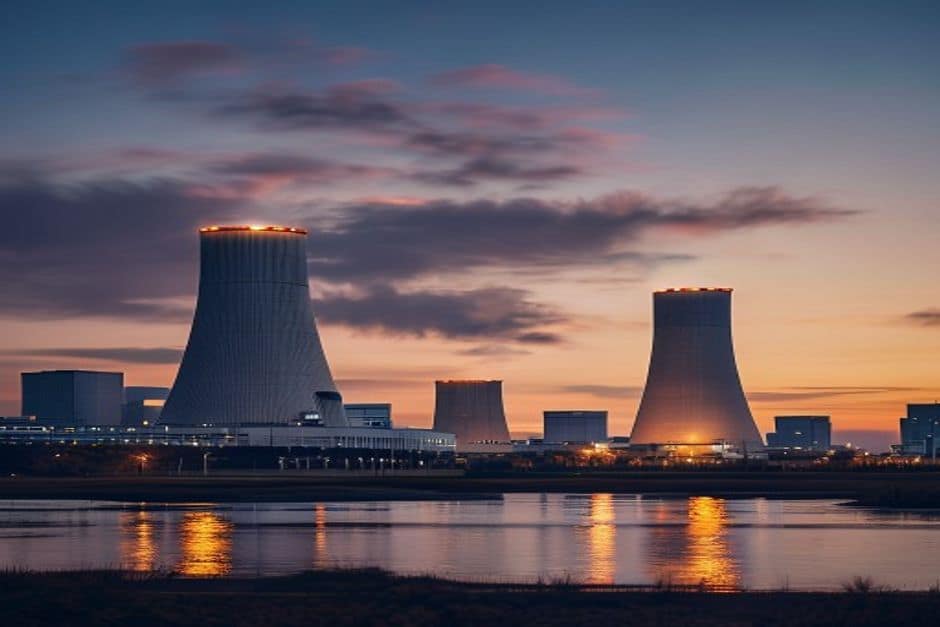
Three Mile Island is being recast as part of the AI supply chain, with Microsoft and Constellation betting that old nuclear assets can solve a new data center problem.
The most famous nuclear address in America is no longer only a symbol of what went wrong in the 1970s. It is now becoming a test case for whether artificial intelligence companies can secure the kind of round-the-clock electricity their ambitions require.
Constellation Energy is working to restart Unit 1 at the Three Mile Island site in Pennsylvania, a reactor that closed in 2019 for economic reasons and is separate from Unit 2, the reactor involved in the 1979 partial meltdown. The revived plant has been renamed the Crane Clean Energy Center, and Microsoft has agreed to buy its output under a 20-year power purchase agreement for its cloud and AI data center needs.
That is the real story. The AI boom is often described through chips, model releases and capital spending plans, but power is becoming the harder constraint. A frontier model does not run on GPUs alone. It needs land, transmission, cooling, permits and a supply of electricity that does not disappear when the sun sets or the wind drops.
The numbers explain why the deal matters. The restarted reactor is expected to provide about 835 megawatts of generating capacity, enough electricity for hundreds of thousands of homes. Constellation has previously put the restart cost at about $1.6 billion, while the U.S. Department of Energy announced a $1 billion loan in November 2025 to help finance the project.
As Bloomberg reported this week, the plant is already being viewed through a very different lens than it was a decade ago. Three Mile Island used to sit in the public imagination as shorthand for nuclear risk. Today, the same site is being folded into the infrastructure story behind AI, where always-on clean power has become a commercial advantage.
Microsoft's role is important because it shows how hyperscalers are moving from buying renewable energy credits toward directly shaping the power market. A long-term contract gives Constellation a buyer for the electricity, and it gives Microsoft a cleaner way to support data centers that are consuming more energy as AI workloads grow. That is not a side issue for Microsoft. Its emissions have risen as cloud and AI infrastructure has expanded, making firm low-carbon power more valuable than ordinary sustainability messaging.
The project also illustrates why older nuclear sites are suddenly interesting again. Building a new nuclear plant in the United States is expensive, slow and politically difficult. Restarting a shuttered reactor is still hard, but it can be more practical because the site, grid connection and much of the physical infrastructure already exist. For investors and infrastructure developers, that creates a category between pure greenfield nuclear projects and ordinary power procurement.
The politics are as important as the engineering
The restart is not automatic. Constellation still needs regulatory approvals, including from the Nuclear Regulatory Commission, and the plant must pass through equipment upgrades, staffing, inspections and operating reviews before it can return to service. The company has discussed a 2027 restart target, which would make the project one of the earliest major examples of nuclear power being brought back for AI-era demand.
That timeline matters because data center demand is moving faster than most power markets were built to handle. Utilities are dealing with interconnection queues, local opposition, transmission limits and rising load forecasts from Virginia to Texas. In that environment, a single 835-megawatt source of firm generation has more strategic value than a spreadsheet might suggest.
But Three Mile Island carries a political burden that other power projects do not. The 1979 accident did not involve the unit being restarted, but the name is still powerful. Any AI company associated with the site will have to explain why the project is about dependable clean power rather than a careless rush to feed data centers. Public memory can be a permitting risk, especially when communities already worry that data centers bring noise, water use and higher power bills without enough local benefit.
For startups, the lesson is not that every AI company should go buy nuclear power. The lesson is that infrastructure strategy is moving closer to the core of AI strategy. The next durable businesses may not only be model labs or chip companies, but also developers, financiers and software providers that help connect compute demand with power supply, cooling systems and grid planning.
Three Mile Island's AI makeover is therefore bigger than one Pennsylvania reactor. It shows how quickly old energy assets can become newly valuable when technology demand changes. If Constellation and Microsoft make the restart work, other dormant or underused power sites will attract fresh attention. If they stumble on cost, regulation or public trust, it will remind the AI industry that electricity is not just another input. It is the gate that decides how much of the future can actually be built.
Also read: Google DeepMind has raised the bar for AI math reasoning • Starcloud plans to test Bitcoin mining from orbit • Akamai is turning its old internet backbone into an AI cloud bet