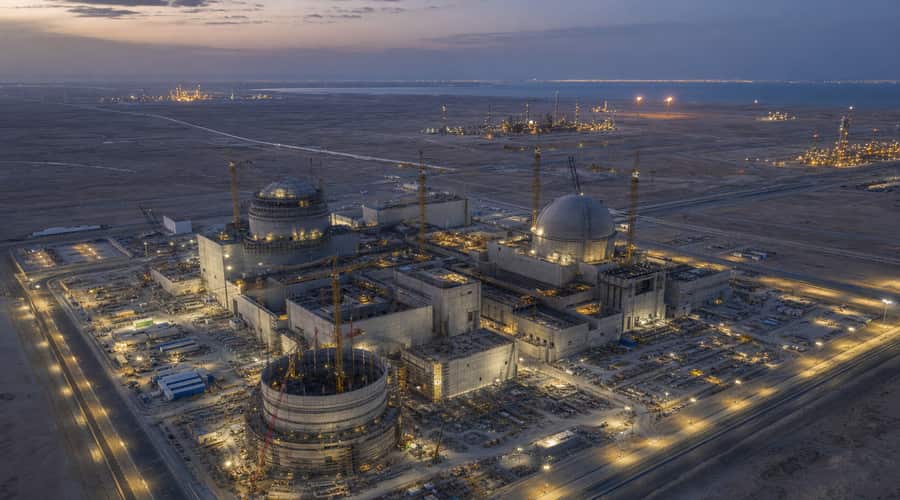
The United States has signed a 30-year nuclear cooperation agreement with Saudi Arabia that could let Riyadh move toward uranium enrichment. If you care about Middle East capital, oil prices, or U.S. credibility on Iran, this is not a side issue.
The deal is done. On July 22, the U.S. Energy Department said Energy Secretary Chris Wright and Saudi Energy Minister Prince Abdulaziz bin Salman signed a peaceful nuclear cooperation agreement, known as a 123 agreement, alongside a bilateral safeguards pact. The official line is commercial and strategic: American companies get access to a Saudi nuclear program, and the kingdom gets help meeting future energy needs. That is the clean version.
The harder version is just as plain. As the Associated Press reported, the agreement could allow Saudi Arabia to enrich uranium for civilian use after a U.S.-Saudi study, while it does not require the kingdom to adopt the IAEA's Additional Protocol, the inspection regime that gives nuclear monitors stronger access. You do not have to be a weapons expert to see the problem. Enrichment is the step everyone argues about because the same basic capability can sit inside a civilian program or move a country closer to bomb fuel.
Crown Prince Mohammed bin Salman put the regional risk on the table years ago. In a 2018 CBS News interview, he said Saudi Arabia did not want a nuclear bomb, but if Iran developed one, the kingdom would follow as soon as possible. That line matters more now because Washington is trying to punish Iran's nuclear ambitions while giving a close partner a pathway to the most sensitive part of the fuel cycle. The message is messy. Tehran will read it that way.
The bill comes due
Defense spending is not free. Saudi Arabia's 2026 budget projects a deficit of 165 billion riyals, about $44 billion, or 3.3% of GDP, according to the Saudi Ministry of Finance. That budget is already built around Vision 2030 spending, with money going into tourism, logistics, manufacturing, entertainment and the other non-oil sectors Riyadh needs before crude demand becomes a weaker foundation for the state.
A nuclear competition changes the order of priorities. The money has to come from somewhere. If the region starts pricing in more missile defense, more surveillance, more hardened infrastructure and faster nuclear hedging, that pressure lands on the same public balance sheet funding NEOM, the Red Sea project and Riyadh's attempt to become a global business hub. You can call that security policy. Investors will call it risk.
Foreign investors notice these signals. Goldman Sachs analysts have warned that crude could rise above $120 a barrel in the fourth quarter of 2026 if Strait of Hormuz disruptions continue, according to reports on the bank's forecast. AP also reported this week that Houthi threats around the Bab el-Mandeb could disrupt about 2.5 million barrels a day of Saudi-routed oil. The nuclear deal did not create those shipping risks. It adds another reason for insurers, logistics firms and fund managers to charge more for exposure to the region.
Frankly, the tourism and trade piece gets skipped too often. Saudi Arabia wants Riyadh to host the kind of conferences and corporate travel that Dubai and Abu Dhabi spent years building. That depends on people believing the trip is normal. It does not take a shooting war to hurt that business. Higher insurance costs, tighter travel policies and a steady drip of nuclear headlines are enough to make companies pause.
The Iran problem
Look at the timing. The Guardian reported on July 22 that the U.S. had carried out 11 consecutive nights of strikes on Iranian targets, while Trump was also threatening wider attacks on Iranian infrastructure. In the same news cycle, Washington signed a nuclear pact with Saudi Arabia that leaves open a route to enrichment. You cannot run those messages beside each other and expect the region to hear a neat distinction between ally and adversary.
Senator Ed Markey, responding to the signing on July 22, called the deal irresponsible and dangerous, and warned that it could ignite an arms race in the region. That criticism is not coming from nowhere. Markey had warned in February that any agreement should include a blanket ban on enrichment and reprocessing and require Saudi Arabia to adopt the IAEA's Additional Protocol. The July agreement does not meet that standard.
The comparison with the UAE is the point. The 2009 U.S.-UAE nuclear agreement became known as the Gold Standard because Abu Dhabi agreed to forgo enrichment and reprocessing. Saudi Arabia did not make the same commitment. Congress still gets a look. Under the 123 agreement process, lawmakers can review the pact, but blocking it would be difficult if the White House holds firm.
The administration's argument is that if the U.S. does not move, China or Russia will. That is a real commercial concern, especially when Westinghouse and other U.S. suppliers want the reactor business. But a commercial concern is not a nonproliferation strategy. If Washington's answer to Iran is pressure, and its answer to Saudi Arabia is supervised access to enrichment, the region will understand the rule clearly enough: the technology is dangerous unless your flag is friendly.
That gap is the story. The deal may bring U.S. companies a multibillion-dollar opportunity, but it also asks investors to believe that the Middle East can absorb another nuclear ambiguity without raising the price of everything around it. Oil, shipping, tourism, government borrowing, project finance: none of those markets waits for a centrifuge to start spinning before it reacts.
Also read: UK Parliament opens inquiry into banks blocking crypto payments as £1 billion in transactions gets rejected • STMicroelectronics posts 25% revenue growth as its AWS deal turns data centers into its fastest-growing business • Nokia beats Q2 2026 earnings estimates as AI data center demand rewrites the company's story