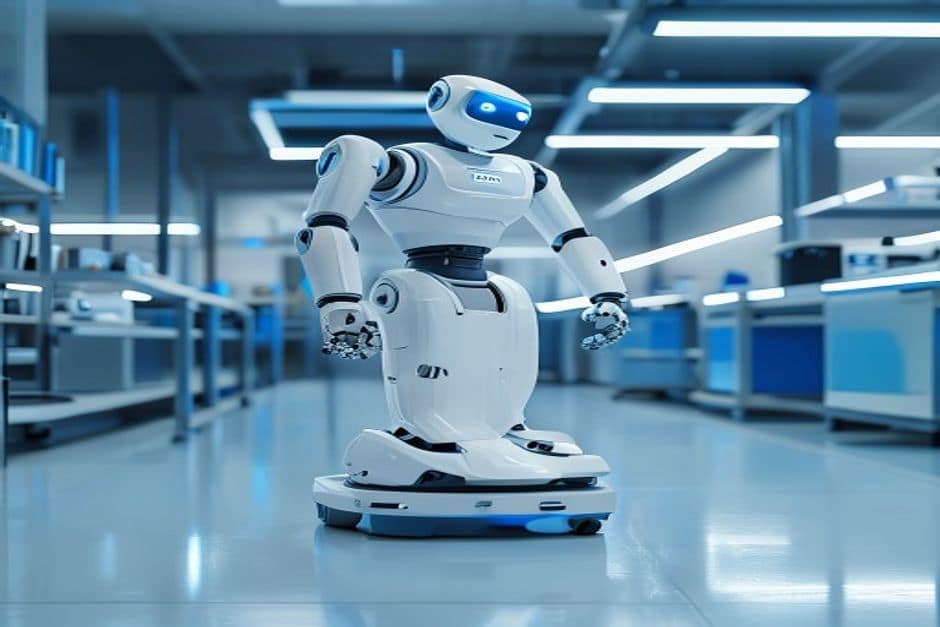
Unitree Robotics has launched a dual-arm humanoid robot platform starting at $4,290, a price point that shifts humanoid robotics from exclusive industrial territory into reach of research labs, university programs, and smaller development teams for the first time at meaningful scale.
The humanoid robotics conversation has been dominated by two narratives that haven't served most people particularly well. The first is the industrial deployment story, where companies like Figure, Agility Robotics, and Tesla's Optimus project promise transformative factory automation at price points and timelines that remain out of reach for most organizations outside major manufacturing. The second is the household robot promise, perpetually five to ten years away and priced as aspirationally as it sounds. Unitree Robotics, the Chinese hardware company that has already disrupted the quadruped robot market with competitively priced dog-like robots, is now applying the same logic to dual-arm humanoid platforms. A starting price of $4,290 is not an industrial robot price. It is closer to a high-end workstation price, and that positioning has specific and significant implications for how fast the embodied AI field can develop.
The hardware specifications being offered at that entry price are not trivially capable. The platform includes binocular vision, voice interaction, and 5-DOF robotic arms in the base configuration, with a 7-DOF option and higher-performance AI compute available in upgraded versions. Multiple form factors are available, including fixed-base and wheeled configurations, which makes the platform adaptable to different research environments and use cases without requiring a complete system replacement when requirements change. For a university robotics lab or a small team of embodied AI researchers, the ability to acquire a dual-arm manipulation platform at this price, modify it, break it, learn from it, and replace or upgrade components without triggering a capital expenditure approval process is a material change in how quickly experimentation can happen.
The technology in Unitree's new platform is capable but not unprecedented. Binocular vision, voice interaction, and multi-DOF manipulation arms are components that have existed in research systems for years. What Unitree has done is not invent new robotics capabilities. It has compressed the cost of assembling those capabilities into a functional dual-arm system to a level that changes who can participate in developing applications for them. That is a different kind of innovation, and historically it has been the more consequential kind.
The personal computer didn't invent computing. It made computing accessible to people who couldn't justify mainframe budgets, and the applications that followed came from that expanded developer base rather than from the organizations that had always had access to computing resources. The same dynamic played out in 3D printing, in drone development, and in single-board computing with platforms like Raspberry Pi. In each case, the price drop that brought the hardware within reach of individual developers and small teams produced an explosion of application development that the expensive, institutional-access version of the technology had never generated. Unitree's pricing is attempting to trigger the same dynamic in embodied AI, and given what has happened in every analogous category, there is a reasonable basis for expecting it to work.
The research and university market is the most immediately addressable segment. Institutions that have wanted to work on manipulation tasks, human-robot interaction, embodied large language model applications, or physical AI demonstrations have faced a hardware access problem that has constrained their research programs. Expensive systems require institutional procurement cycles, careful maintenance protocols, and access controls that slow experimentation. A $4,290 system that a lab can purchase with a discretionary budget, hand to a graduate student, and allow to be tested aggressively changes the iteration speed of that research in a way that more expensive alternatives simply don't permit.
The Competitive Context Unitree Is Operating In
Unitree's move into dual-arm humanoid platforms follows its established pattern in the quadruped market, where its Go series robots brought capable legged robotics to a price point that previously comparable systems couldn't approach. That strategy generated a large installed base of developers building on Unitree hardware, created a software ecosystem around its SDK and control interfaces, and positioned the company as the default entry point for anyone wanting to work with legged robotics without a large capital commitment. The same flywheel logic applies to dual-arm manipulation if the execution is comparable.
The competitive risk Unitree faces in this segment is more complex than in quadrupeds, where the field was less crowded at the time of its entry. The dual-arm manipulation and humanoid robotics space now includes well-funded Western companies with significant engineering resources and, in some cases, established enterprise customer relationships. Boston Dynamics, despite its premium pricing, has brand credibility in professional markets that Unitree will need to overcome for customers where reputation and support infrastructure matter as much as unit cost. For the research and developer market Unitree is targeting with this launch, however, brand credibility matters considerably less than price, capability, and the availability of software tools that make the hardware useful quickly.
The forward implication for anyone working in embodied AI, whether as a researcher, a developer, or an investor watching the application layer develop, is that the hardware access constraint is meaningfully lower than it was six months ago. That should accelerate the development of manipulation applications, physical AI demonstrations, and the kind of messy real-world testing that simulation environments can approximate but never fully replace. What gets built on $4,290 robot arms over the next eighteen months will tell us more about where embodied AI is actually headed than any number of polished demo videos from companies with hardware that most developers will never touch. Watch the open-source repositories, the academic publications, and the small startup formations around Unitree's SDK. That is where the next chapter of this story will be written first.
Also read: Spotify's New Verification Badge Is the Music Industry's First Real Answer to the AI Content Flood and Artists Should Pay Attention • The FCC Just Voted to Upend How 75% of US Electronics Get Certified • Visa Is Turning Stablecoins Into Back-Office Plumbing