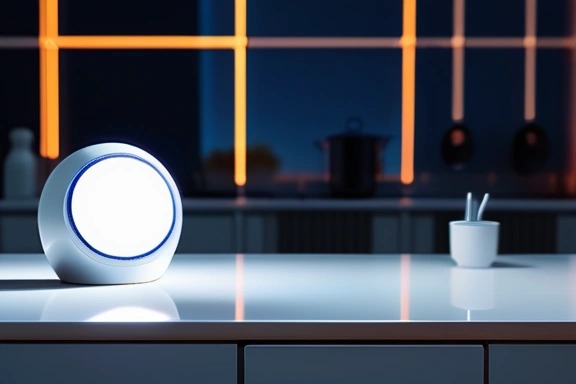
A software engineer's effort to restore an early social robot reveals both the fragility of connected hardware and the gap between yesterday's promises and today's AI capabilities.
When the cloud servers that powered your device shut down, what do you actually own? That question sits at the center of a quietly compelling project recently shared on Hacker News, where software engineer Tony Allevato documented his efforts to resurrect a Jibo robot, one of the earliest attempts to bring a social AI assistant into the home.
Jibo launched in 2017 to significant fanfare, riding a wave of MIT-derived hype and a wildly successful crowdfunding campaign that raised over $3.5 million. Designed by social robotics pioneer Cynthia Breazeal, Jibo was pitched as the world's first family robot, a stationary, talking device with expressive body language and a friendly voice that could manage calendars, take photos, and hold basic conversations. Then the company ran out of money. After a series of ownership changes, Jibo's cloud servers were shut down in 2019, rendering the hardware largely useless.
Allevato's project, detailed on his personal blog, isn't just an act of hardware nostalgia. It's a practical case study in what happens when startups fail and take their ecosystems with them. He reverse-engineered the robot's software stack, replacing cloud-dependent features with local processing to make Jibo functional again without needing external servers. The work touches on a frustration that more consumers are starting to feel as AI-enabled devices proliferate across the market.
This isn't unique to Jibo. A growing graveyard of abandoned smart hardware tells the same story. Amazon's Glow video-calling device was discontinued after barely a year. Google has shut down multiple Nest and Pixel products over the past several years, often with minimal warning. Sony pulled the plug on its Aibo revival's older online services. The pattern is consistent: hardware that depends on a company's servers to function is only as durable as the company itself.
For startup founders building AI hardware today, the lesson should be clear. Building a product that bricks itself when your startup pivots or folds is a liability, both ethically and commercially. Consumers who paid hundreds or thousands of dollars for a device expect it to keep working, and when it doesn't, the reputational damage extends to the entire category.
Allevato's workaround involved running local language models and custom software on hardware that was never designed for modern AI workloads. The irony is worth noting: Jibo, a device built around the promise of conversational AI, can now do more with open-source local models than it ever could with its original cloud-dependent architecture. That's a sign of how dramatically the landscape has shifted. Large language models running on consumer-grade hardware have reached a point where small, efficient systems can handle the kind of casual conversation Jibo was designed for, all without needing a data center hundreds of miles away.
What It Means for the Next Wave of Home AI
The current generation of AI hardware startups would do well to study Jibo's trajectory. Companies like Rabbit, Humane, and Embodied are all betting that consumers want dedicated AI devices rather than just using their phones. But if those devices depend entirely on cloud infrastructure that may not exist in three years, they're building the same vulnerabilities into their products. The community response to abandoned hardware, including Allevato's project, shows that there's real demand for devices that users can repair, modify, and keep running on their own terms.
The regulatory environment is also shifting. The European Union's recently strengthened right to repair legislation and broader sustainability mandates are pushing manufacturers to support products longer and design them for longevity rather than planned obsolescence. For AI hardware startups, building with an end-of-life plan isn't just good practice anymore; it may soon be a legal requirement.
As Bloomberg recently reported, the broader consumer robotics market is projected to grow significantly through the end of the decade, driven by aging populations, labor shortages, and the maturing of on-device AI. But growth depends on trust. And trust, once broken by a bricked device sitting uselessly on a kitchen counter, is difficult to rebuild.
Allevato's revived Jibo won't be stocking shelves at Best Buy anytime soon. But the project highlights a tension that every AI hardware company needs to reckon with: the difference between shipping a product and delivering on a promise. The startups that figure out how to make their devices useful even when the worst happens, not just when everything goes according to plan, will be the ones worth watching.