The most important automation story is not whether humanoid robots can master today's physical jobs, but whether companies will redesign those jobs until machines can handle them, a distinction that shifts the automation frontier downward into blue-collar and service work without waiting for robots to develop human-level dexterity.
The Reddit debate that surfaced this idea drew 581 points and 128 comments in seven hours, which is the engagement pattern of a post that names something people have been watching without quite articulating. The thesis is direct. You do not need a robot that can do a messy human task. You need a facility, workflow, or interface that converts a messy human task into a structured, predictable, machine-legible sequence. The redesign is the innovation, not the robot. Once the work environment is sufficiently constrained, simplified, and sensored, machines that would have failed in the original chaotic setting can perform reliably in the new one. The automation frontier moves not because the machines got better, but because the terrain was flattened for them.
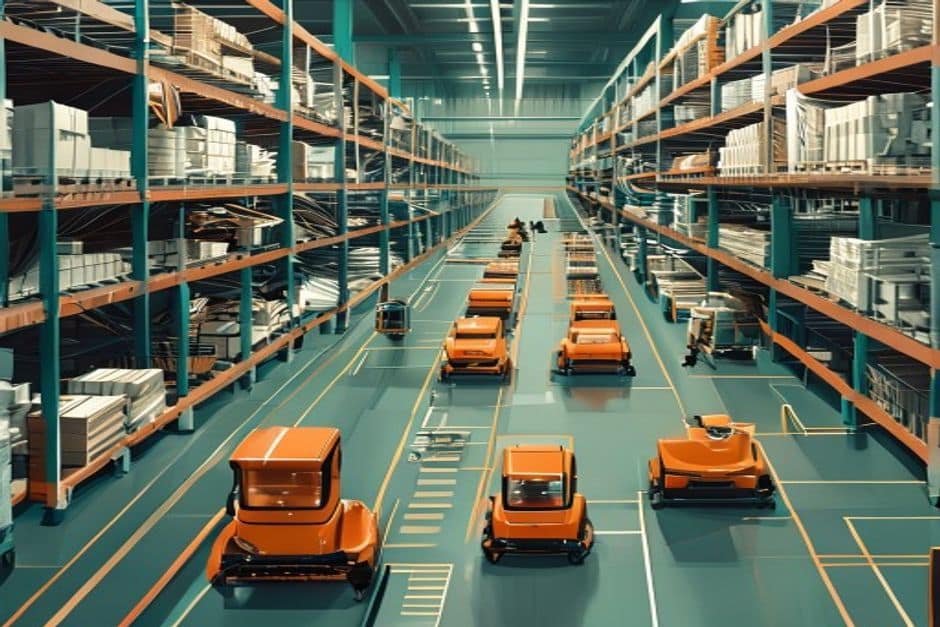
This is already visible in several sectors. Amazon's fulfillment center evolution is the clearest example. Early automation in warehouses required conveyor systems and fixed infrastructure, but the real transformation came when Amazon redesigned the facility layout so that mobile robots like those from Kiva could navigate predictable grid environments rather than messy human-scale spaces. The work descended to meet the machine. Pickers no longer walk miles of shelving. They stand at fixed stations and items come to them, delivered by a fleet of robots operating in a constrained, sensor-rich environment that was explicitly designed around machine capability. The robot did not need to navigate a human warehouse. The warehouse was rebuilt to be a robot warehouse.
The same logic is playing out in quick-service kitchens. Miso Robotics, which makes burger-flipping systems deployed by Jack in the Box and Caliburger, did not automate a human grill station. The stations around it were adjusted to make the robot's task more consistent. Mezli and other automated dining concepts went further, building food service units that were architecturally designed for automated preparation from the start, not retrofitted for a robot dropped into a human workspace. In retail, Amazon Go and its checkout-free successors redesigned the shopping journey rather than building a robot that could handle a traditional checkout line. The transaction became machine-readable by redesigning how customers move, pick, and pay. The building itself became the system.
For founders, this changes where the startup opportunity lives. If the automation moat is operational redesign rather than model intelligence alone, then the most valuable companies are not necessarily the ones building the best robot arm or the best vision model. They are the ones who understand a specific labor-intensive workflow deeply enough to redesign it around current machine capabilities, and who can sell that redesigned process as a product. That is a different kind of competitive advantage. It requires deep operational knowledge, domain credibility, and the ability to change customer behavior or facility design, not just better training data. The founders who win are often closer to management consultants or facilities engineers than to roboticists, because the core insight is about process, not hardware.
Logistics is the most visible current battleground. Flexport, project44, and dozens of visibility and warehouse management startups are building software that makes supply chain operations more structured and predictable, which as a side effect makes them more amenable to automated execution. The data standardisation that makes supply chains visible to software also makes them legible to machines. That progression is not accidental. Warehouse management systems that capture real-time inventory locations, order queues, and worker movements generate the structured data environment that autonomous picking systems need to function. The software layer that was sold as an operations tool becomes the prerequisite infrastructure for the automation layer that comes next. Founders who understood that sequence early built platforms rather than point solutions.
The labor implications are harder to discuss precisely because the timeline is diffuse. Work descending to meet machines does not mean jobs disappear overnight. It means job content changes, often before workers or managers fully recognise it. A warehouse picker's role has already changed substantially from the pre-Kiva era. The physical environment became more machine-optimised, and the human became a gap-filler in the parts of the process that machines still cannot handle, rather than the primary actor. That dynamic is visible in kitchens, retail, logistics, manufacturing, and healthcare settings. The worker is often still there, but their role has been restructured around what the machine cannot yet do, which is a smaller and shrinking domain.
For SF readers, the question worth asking is where that dynamic has not yet played out but soon will. Any sector with labor-intensive workflows that are currently too messy for machines, but could be made machine-legible through facility redesign, process standardisation, or interface simplification, is a startup opportunity. Healthcare patient flows, pharmacy operations, professional cleaning, food preparation at scale, and construction site logistics are all candidates. The founders who look at those messy environments and ask how the work could be redesigned rather than how the robot could be made more capable are looking at the same question that unlocked logistics. The answer will not always be a robot. Sometimes it will be a new layout, a different process, or a simpler interface. But it will always require someone who understands both the domain and the machine well enough to flatten the terrain between them.
Also read: Apple's Mac Studio memory cuts are squeezing the local AI builders who made it a workstation • Morgan Stanley's low-fee crypto pilot on E*Trade means the normalization race has reached mainstream retail brokerage • Jito is moving up the stack with JTX and Solana traders may finally get a self-custody app they use