Gold and silver are still hedges, but this week's selloff showed they are also crowded macro trades that can move fast when the dollar, the Fed and futures positioning all point the same way.
The fresh precious-metals selloff was not just another angry afternoon for retail stackers. The r/Wallstreetsilver thread that lit up on May 14 was reacting to a real market move, and the bigger story is that gold and silver are no longer behaving like quiet insurance policies sitting outside the financial system.
They are being traded like liquidity assets. That matters for founders, family offices and small businesses that have started looking at bullion as a treasury hedge after years of inflation, banking stress and currency anxiety. A hedge that can drop sharply in a leveraged futures session is still a hedge, but it is not a savings account.
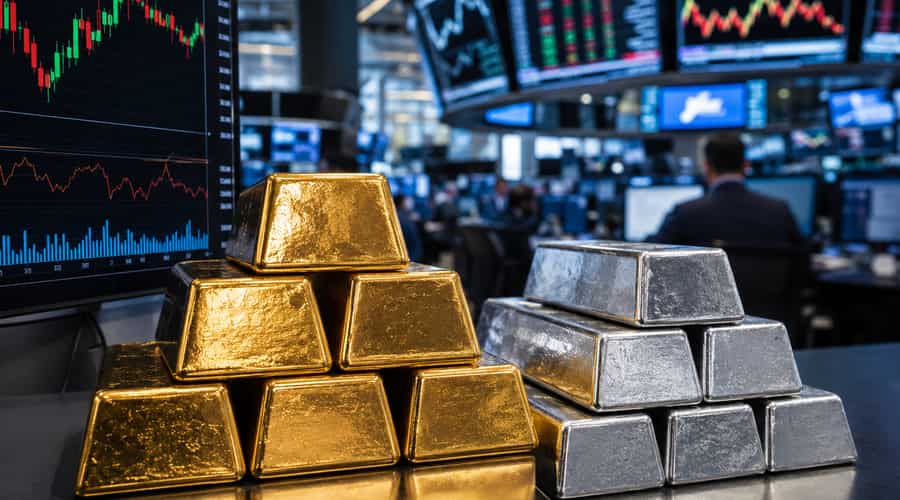
As CME Group's latest precious-metals update noted, gold recently pulled back nearly 2% toward $4,710 an ounce while silver slid more than 3% toward $80 an ounce after historic 2026 highs. The same update pointed to the Federal Reserve's pause at 3.5% to 3.75%, a firmer dollar and positioning pressure as headwinds. That is the key. The pressure came from market structure as much as from metal demand.
This is what makes the current selloff different from the usual internet argument about manipulation. When a market has moved far and fast, the marginal buyer is often not a coin collector or a jeweler. It is a fund, a momentum trader, a futures account, or a macro desk expressing a view on real rates. When that view changes, the tape can move before the physical market has time to answer.
Gold has always cared about interest rates, but the relationship becomes more visible when prices are stretched. Hotter inflation data this week reduced hopes for near-term rate cuts, and recent market coverage from Business Recorder tied gold's decline to investors reassessing those rate-cut bets after U.S. consumer inflation rose again in April. The Economic Times had also framed the same pressure in recent coverage, noting that stronger U.S. data can support the dollar and weaken the case for easier policy.
That does not mean inflation is suddenly good for paper money or bad for gold. It means the path matters. If inflation keeps the Fed from cutting, yields stay uncomfortable and the dollar can strengthen. In that environment, traders may sell gold even while long-term buyers still believe the currency story is intact. This is confusing if you only think of gold as an inflation hedge. It is less confusing if you think of it as a rate-sensitive reserve asset.
Silver has an even more complicated job. It trades partly like precious metal, partly like industrial input and partly like a speculative vehicle. That is why the move toward $80 matters. A few years ago that number would have looked impossible to many investors. In 2026, it is a level where bulls argue about supply deficits while traders worry about forced selling after a huge run.
Physical Buyers Are Not The Whole Market
Retail stackers often think in ounces, premiums and patience. Futures markets think in margin, liquidity and speed. Those are different languages. A coin buyer can look at a selloff and decide nothing has changed about debt, inflation or trust in central banks. A leveraged trader can look at the same selloff and decide the trade has to be cut before the next margin call.
This is why physical demand may support the market without preventing violent corrections. Central banks have been important gold buyers, and silver bulls continue to point to industrial demand from solar, electronics, data centers, vehicles and electrification. The Silver Institute has highlighted persistent silver deficits, including a fifth consecutive annual shortfall in 2025, with another deficit expected in 2026. Those are serious structural arguments.
But structural arguments do not settle every daily price. If funds are crowded long and the dollar rises, paper selling can overwhelm the bid for a while. Dealers may widen spreads. Retail buyers may find that the price on a screen and the price for real metal do not move together neatly. That gap is not a conspiracy by itself. It is how a fragmented market behaves when the fast side and the physical side are moving at different speeds.
For startup founders, the lesson is practical. Holding some gold or silver as a treasury hedge can still make sense for businesses worried about cash losing purchasing power, especially if their liabilities are long term and their operating cash is secure. But metals should not be confused with working capital. Payroll, taxes and vendor payments belong in instruments that do not need a favorable futures session to stay liquid.
The better question is not whether gold and silver are finished after a selloff. They clearly are not. The better question is how much volatility a business can tolerate in the part of its treasury meant to protect it. If the answer is very little, bullion should be sized modestly and held with patience. If the answer is more flexible, the current pullback may be a reminder that even strong secular markets punish anyone who enters them like they can only move one way.
What comes next depends on the dollar, Fed language and whether physical demand keeps absorbing the pressure from futures selling. If rate-cut hopes keep fading, metals may have more shaking out to do. If the dollar weakens or central-bank and industrial demand reassert themselves, the same market structure that made the selloff feel sudden could make the rebound just as sharp.
Also read: The Boot of Cortez tests the trophy market for physical gold • Solana is making a serious push into on-chain perps. • Bitcoin holders are turning scarcity into a market structure issue