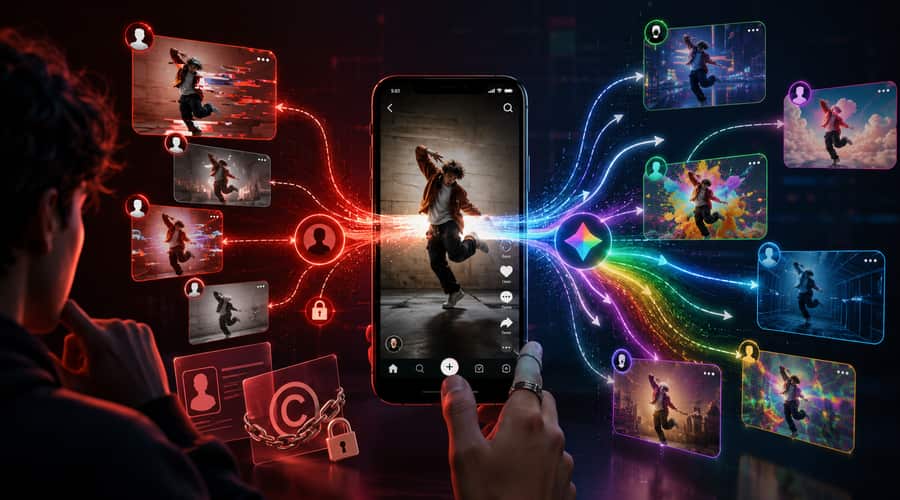
YouTube is bringing Gemini Omni into Shorts Remix and YouTube Create, making AI video remixing a native feature while putting new pressure on creator rights, attribution and revenue.
YouTube used Google I/O 2026 to move generative video deeper into its own creation tools. Gemini Omni is coming to Shorts Remix and the YouTube Create app, giving users a way to turn eligible Shorts into new AI-generated clips with prompts, reference images and scene-aware edits. That matters because remixing is no longer something happening around YouTube. It is becoming part of the product itself.
The timing is important. YouTube introduced Reimagine for Shorts in March, using Google’s Veo and Gemini technology to transform a single frame from an existing Short into an 8-second video. The new I/O announcement expands that idea with Gemini Omni, Google’s latest multimodal model, and puts it in the same workflow creators already use to make short-form videos.
According to YouTube’s own blog and coverage from 9to5Google and Android Central, users will be able to choose an eligible Short, select a frame or moment, and ask the system to rework the scene. Examples include changing a visual style, altering the setting or using reference media to place a person into a generated clip. The point is speed. A creator who once needed outside editing software can now make a polished AI variation inside YouTube.
YouTube says those remixed videos will carry AI labels, digital watermarks, identifying metadata and links back to the source video. Creators can also opt out of visual remixing if they do not want their Shorts used this way. Those are useful protections, but they do not make the ownership question disappear.
Why this matters for creators
Short-form video already runs on reuse. Sounds, formats, trends and reaction clips move quickly because platforms reward participation. AI remixing raises the stakes because the reused material is not just inspiration or commentary. It can become the raw input for a new video that looks and sounds materially different from the original.
For creators, that creates a practical tradeoff. Leaving remixing on could send viewers back through YouTube’s attribution links and help an older Short find a new audience. Turning it off may protect a creator’s style, likeness or performance from being reframed in a way they would never have approved. Neither choice is clean.
The harder issue is money. Attribution is not the same as monetization. If an AI-remixed Short performs well, the original creator may receive visibility, but YouTube’s existing monetization rules still determine who earns revenue and under what conditions. That gap is where disputes are likely to form, especially if remixers gain attention from work built on another creator’s face, voice or scene.
Google is turning AI into platform infrastructure
The YouTube move also fits Google’s broader strategy at I/O. Gemini Omni is not being treated as a standalone novelty. It is being pushed into consumer products where people already search, write, edit and publish. YouTube is one of the most important places to do that because creator tools can quickly become creator habits.
That puts pressure on TikTok and Instagram, both of which are adding more native AI creation features. The competition is not only about who has the most advanced model. It is about who can keep creators inside the app from idea to finished post. Every step that happens inside YouTube is one less reason to open CapCut, Runway or another third-party editor.
For viewers, the result will likely be more AI-assisted Shorts in the feed. Some will be clever. Some will feel cheap. That is the bargain YouTube is making: lower the barrier to creation, accept more derivative output, then rely on labels, ranking and creator controls to keep the system from overwhelming the original work that made Shorts valuable in the first place.
The unresolved questions
The most immediate questions are around consent and likeness. If a remix uses a creator’s performance as the basis for a new scene, or places a person into a generated clip using reference media, YouTube will need clear rules for complaints, takedowns and repeat abuse. Metadata helps identify where a clip came from. It does not decide whether a use was acceptable.
There is also a portability problem. YouTube can attach attribution inside its own platform, but remixed clips may travel elsewhere through downloads, screen recordings or reposts. Once that happens, the connection to the original creator can weaken quickly, especially on platforms that do not preserve the same metadata or link structure.
The feature is current because Gemini Omni’s YouTube rollout was announced this week at Google I/O 2026, with coverage describing it as arriving in Shorts Remix and YouTube Create starting this week. That recent expansion gives an older Reimagine concept new relevance, particularly for creators deciding whether to adjust remix permissions now.
The practical takeaway is simple: creators should review their Shorts remix settings and watch early traffic patterns closely. YouTube’s labels, watermarks and opt-outs are a start, but the bigger test will be whether creators see real upside from AI remixing or mostly new work monitoring how their videos are being used.
The next phase will be less about whether AI remixing is technically impressive and more about whether YouTube can make it feel fair. If attention shifts from original clips to AI-generated derivatives, creators will expect clearer answers on consent, credit and revenue. That is the conversation YouTube has now brought inside its own walls.
Also read: 1Password and OpenAI move credential security into Codex • SpaceX prepares to make S-1 public, turning private-valued Starlink into a market benchmark • OpenAI's IPO talks would mark a rare disclosure moment for AI