The Ansel Adams Publishing Rights Trust is not arguing against AI. It is arguing against using a dead artist's name, reputation, and most famous image to sell an unauthorized work.
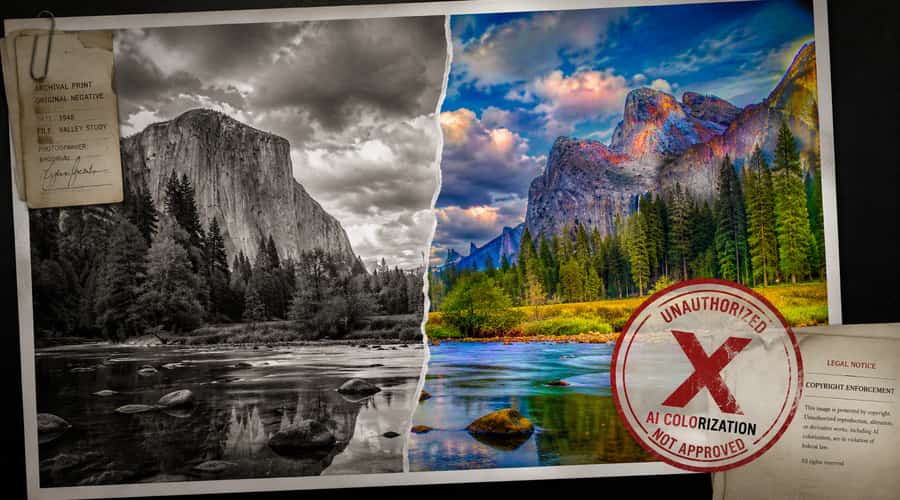
The dispute landed in public view because a gallery did something every creative AI startup should study closely. Danziger Gallery exhibited and offered for sale an AI colorized version of Ansel Adams' Moonrise, Hernandez, New Mexico at AIPAD's The Photography Show in New York, according to Engadget's account of the trust's statement. The trust says it was not consulted, asked for the work to be removed after learning about it, and objected to the way Adams' name and image were used in a commercial setting.
That matters because this is not the usual AI copyright fight about whether a model was trained on protected work. This is a more direct problem. A specific artist was named. A specific iconic photograph was converted into a new output. The result appeared in a gallery booth, not in a private experiment or a classroom discussion. For founders building AI creative tools, that difference is the whole story.
The trust's own framing is careful. It said Adams was interested in the potential of computers to transform photography, so the objection is not simply that software was involved. The complaint is that the gallery allegedly exploited Adams' name, reputation, and work while failing to identify any human artist responsible for the new image. That is a sharper point than a general anti AI argument. It goes to consent, attribution, licensing, and commercial use.
Why this moves the AI debate downstream
For the past few years, most generative AI lawsuits have centered on inputs. Writers, artists, publishers, and image libraries have argued over whether copyrighted material can be scraped and used to train models. That question remains unsettled, and it will shape the economics of the sector for years. But the Adams dispute focuses on outputs, which is where startups and marketplaces face a different kind of exposure.
A platform may believe its training process is defensible and still create risk if it encourages users to generate work tied to living artists, dead artists, estates, brands, or recognizable copyrighted works. The prompt reportedly used for the Adams image asked for a realistic color version of the photograph. That is not merely a mood board reference. It points directly at a protected image with a known author and a market value.
This is where product design becomes legal strategy. If a tool allows users to prompt for named artists, famous photographs, album covers, movie stills, or branded characters, the company is making a choice about what behavior it enables. Terms of service can help, but they will not be enough if the business model depends on outputs that trade on someone else's creative identity.
Rights holders are getting more active
The Adams trust has shown this pattern before. In 2024, it publicly criticized Adobe after AI-generated stock images were offered with references to Ansel Adams-style photography, and Adobe removed the material. The new Danziger Gallery dispute suggests rights holders are now watching more than software platforms. They are watching galleries, marketplaces, art fairs, and anyone else turning AI outputs into saleable objects.
That should get the attention of startups. The next phase of creative AI will not be won only by better image quality or faster generation. It will also depend on provenance, permissions, labeling, and the ability to prove that a commercial output did not misuse a protected name or work. Those controls may feel like friction today, but they are likely to become part of the infrastructure buyers expect.
There is also a business opportunity here. Artists' estates, museums, stock libraries, and publishers need systems that can detect unauthorized references, manage licenses, and approve new uses at scale. A company that helps rights holders participate in AI markets without losing control may find more durable demand than one that simply tells users to prompt more carefully.
The startup lesson is consent
The cleanest lesson from the Adams dispute is not that AI art should be avoided. It is that consent has to be built into the workflow before a product reaches the market. If a user asks for a colorized version of a specific copyrighted image, the system should know that this is different from asking for a generic desert landscape at dusk.
Galleries and marketplaces also have work to do. AI labels should not be treated as shields. A work can be clearly labeled as AI generated and still raise serious questions if it relies on another artist's name, labor, and legacy to create commercial value. Disclosure helps buyers understand what they are seeing. It does not replace permission.
The Adams trust has drawn attention to a risk that will not stay confined to fine art photography. Music, fashion, gaming, film, and advertising all face the same question in different forms. If AI makes imitation cheap, rights management becomes more valuable. The companies that understand that early will have an advantage. The ones that treat famous names and protected works as free prompt material may discover that the market is less forgiving than the technology.