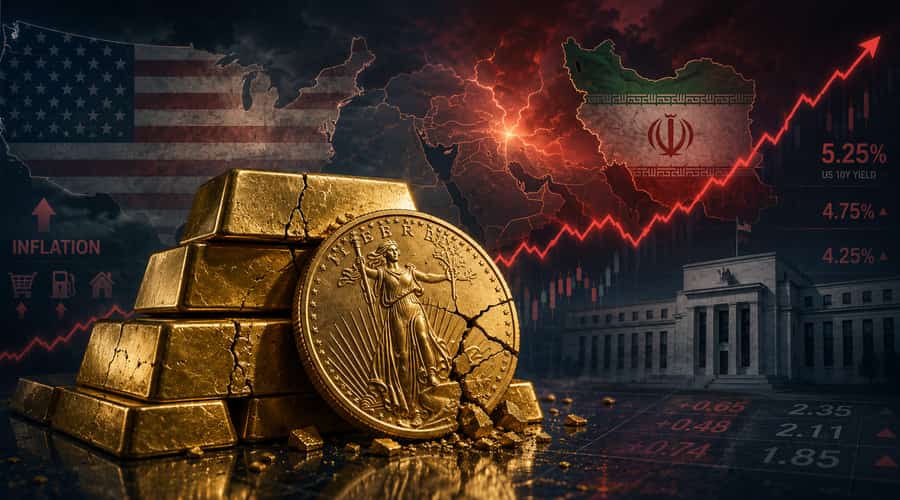
Gold is falling even as the Middle East gets more volatile, because traders are now more worried about inflation and rates than war panic.
Gold's latest slide says a lot about where markets think the real danger is. Instead of rushing into bullion as a geopolitical safe haven, traders are looking at higher oil prices, stickier inflation and the possibility that the Federal Reserve keeps policy tight for longer. That mix weakens the case for a non-yielding asset, even when the headlines look built for a classic flight to safety.
According to Reuters, gold fell to a two-month low on May 27 as renewed U.S.-Iran tensions lifted inflation concerns and strengthened expectations that central banks may have to stay restrictive. The move came with no clear end in sight to the U.S.-backed war with Iran, and with energy markets once again doing the work that gold traders used to do first.
That is the strange part. Geopolitical shocks usually send investors toward gold because they want protection when the world feels unstable. This time, the market is treating the conflict less like a pure panic event and more like an inflation shock that could keep policy restrictive. In other words, the war premium is being filtered through the rates market before it reaches bullion.
The sequence over the past few days matters. Gold had rallied earlier on hopes that Washington and Tehran could move toward a diplomatic deal, helped by lower oil prices and a softer dollar. That optimism faded once fresh U.S. strikes and conflicting political signals made a quick resolution look less certain. The market then shifted back to the inflation channel.
Oil is the bridge between the conflict and the rate outlook. Higher energy prices feed into inflation expectations, and inflation expectations shape how investors think about the Fed. If traders believe the central bank has less room to cut, or could even be forced to sound more hawkish, they tend to prefer assets that can earn yield instead of gold.
That does not mean the old gold thesis is dead. It means it is being tested in real time. A metal that has historically benefited from fear can struggle when the same fear also points to tighter money, stronger yields and higher financing costs across markets.
What it means for capital
The broader effect reaches well beyond bullion traders. If the market settles into a prolonged hold environment, the cost of capital does not just matter for large public companies. It matters for startups, project finance and the private markets that depend on cheap funding and easy risk appetite.
That is where the StartupFortune angle gets interesting. AI infrastructure is capital hungry, and so are the companies building around it, from cloud capacity to chips to power-intensive data centers. When rate cuts move further out, the math gets less forgiving. Higher borrowing costs can slow expansion plans, tighten venture expectations and make treasury management more conservative across the board.
For founders, this is not an abstract commodities story. A higher-for-longer rate backdrop can change the timing of a debt facility, the valuation investors are willing to underwrite, or the patience available for infrastructure-heavy growth plans. It can also push boards to ask harder questions about burn, runway and whether expansion should be funded now or after the macro picture clears.
Gold's short-term weakness also sits alongside a longer-term support story that has not disappeared. Central banks have been steady buyers in recent years, and reserve diversification remains part of the bull case for bullion. But short-term price action is now being driven by the rate path as much as by geopolitics. When the bond market starts pricing a longer hold, even gold loses part of its appeal.
The signal to watch
The next question is whether this pullback becomes a buying opportunity or the start of a larger sentiment reset. If oil stays elevated and the Fed stays cautious, gold may struggle to regain its usual geopolitical premium. If the conflict de-escalates and inflation fears ease, the metal could recover quickly, because the underlying demand for a hedge has not gone away.
For traders, the key is whether central bank demand and long-term reserve buying step in to absorb weakness. For treasurers and founders, the more practical signal is whether this episode changes rate expectations enough to affect financing windows. Gold is the headline, but the real story is the cost of money.
In that sense, the market is sending a blunt message. Geopolitical stress no longer automatically means higher gold prices. When conflict raises inflation fears faster than it raises panic, the safe haven trade can break down.
Also read: Jensen Huang's Beijing board role puts Nvidia's China strategy under a sharper lens • Cardano's treasury vote shows decentralized capital allocation can actually work • Ryan Sean Adams' ETH exit marks a turning point for Ethereum