Monterey Park’s vote shows that AI infrastructure is no longer just a power and permitting story. It is becoming a neighborhood politics story, and that changes the math for everyone building the next cloud boom.
Monterey Park, California, just gave the data center industry a warning it cannot brush off as routine local resistance. On June 2, residents voted overwhelmingly to permanently ban new data centers citywide, putting a formal public stamp on concerns that have been building around electricity demand, water use, noise, air quality and land use.
As The Guardian reported this week, early results showed 86.3% of more than 7,000 votes counted in favor of the ban, making Monterey Park the first city in the United States where residents voted directly on a permanent data center prohibition. The measure needs only a simple majority, and while final certification can take time, the margin tells its own story.
The ballot language was unusually direct. It asked voters whether the city should prohibit data centers to protect air quality, drinking water resources and public health, and to prevent impacts to electricity and water rates. The prohibition remains in place until voters end it, which makes it more durable than the temporary moratoriums now appearing in other cities.
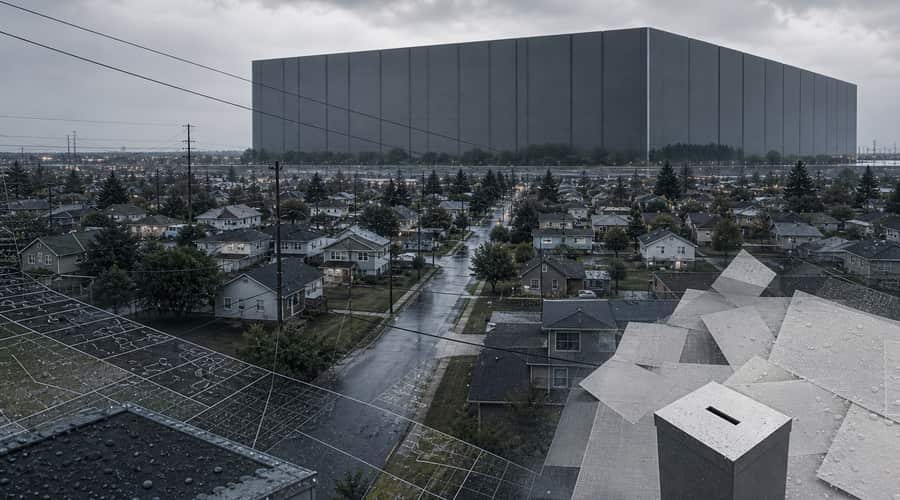
The immediate fight began with a proposed HMC StratCap project in the Los Angeles region city. The developer later withdrew its application, but the project had already become a symbol for residents who did not want a nearly 250,000 square foot facility near homes. That is the point. Once a data center becomes a local symbol, the spreadsheet case for investment starts losing power fast.
For years, the data center pitch has been simple enough: construction jobs, tax revenue, long-term infrastructure investment and the invisible backbone of the digital economy. That pitch worked better when these buildings were treated as technical assets. It works less well when voters see them as industrial neighbors with large power needs and limited direct employment once construction ends.
Gallup’s May polling shows the mood is not confined to one California city. The survey found that 71% of Americans oppose construction of an AI data center in their local area, including 48% who strongly oppose it. Opposition was higher than for a nearby nuclear plant, which is a remarkable political signal for an industry that depends on local approvals, grid connections and public patience.
Pew Research Center found a similar tension earlier this year. Americans were more likely to see data centers as bad for the environment, home energy costs and quality of life nearby than good for those areas, while they were more positive about jobs and tax revenue. That split matters because local fights are usually decided by the people who feel the costs most immediately.
Other cities are already testing their own responses. Denver approved a one-year pause on new data center development in May while officials study water, energy and neighborhood impacts. Charlotte is moving toward a 150-day moratorium vote on June 8 because data centers can currently be built by right in several zoning districts, including areas near homes. These are not abstract policy debates. They are calendars, council meetings and zoning maps.
The Buildout Will Move, Not Stop
None of this means the AI infrastructure boom is over. Demand for compute is still rising, and companies such as Microsoft, Amazon, Google and Meta need more capacity to run cloud services and AI models. But the route from demand to construction is getting harder. Developers now have to treat community approval as part of site selection, not as a public relations task after the land is chosen.
That changes where projects go. Rural sites, unincorporated land and regions with surplus power may become more attractive because they can reduce direct city-level political friction. International markets may also benefit if they can offer cheaper energy, faster permitting and fewer neighborhood objections. But moving the problem does not erase it. County governments, state regulators and utility commissions can still become pressure points.
The smarter operators will have to show their work earlier. They will need clearer commitments on water systems, backup power, noise mitigation, grid upgrades and who pays for new infrastructure. They will also need to be honest about jobs. A data center can bring construction activity and tax receipts, but it is not a factory with thousands of long-term workers. Communities know the difference.
For entrepreneurs and investors around AI, the Monterey Park vote is a reminder that infrastructure is not just capital expenditure. It is permission. The companies building model layers, enterprise tools and cloud platforms all depend on physical facilities that must live somewhere, and the people who live there now have a stronger playbook for saying no.
The next phase of AI growth will not be decided only by chips, models and venture funding. It will also be decided in city halls where residents ask what they get in return for hosting the machinery behind everyone else’s productivity gains. If the industry cannot answer that question clearly, Monterey Park will not look like an exception. It will look like an early vote.
Also read: AI has outscored law professors at answering legal questions • NeurIPS is facing backlash over AI detector desk rejections • Goldman says Big Tech will spend more on AI infrastructure