Uber, Lucid and Nuro are taking their robotaxi plan to Houston, but this is not a clean asset-light replay of Uber's old ride-hailing model. The company is putting real money, cars and depot space behind the bet.
Houston is next, and that tells you where this robotaxi race is really moving. Uber, Lucid Motors and Nuro announced on June 17 that Houston will be the second market for their joint robotaxi service, with rides targeted for mid-2027 after a San Francisco Bay Area launch planned for later in 2026.
According to Axios, nearly 100 Lucid Gravity robotaxis are already being tested in California and Texas, and Nuro has been testing autonomous vehicles in Houston since 2019. That matters more than the usual launch language because robotaxi announcements are cheap. Test vehicles, depot leases and safety drivers on actual streets are harder to hand-wave away.
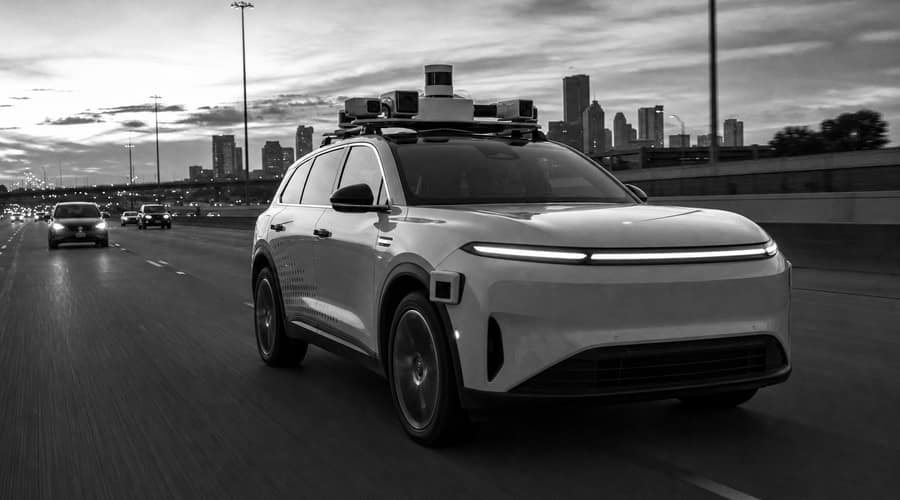
The service will run through the Uber app. Lucid supplies the Gravity SUVs, including five-seat and seven-seat versions with a roof-mounted sensor unit and additional sensors around the vehicle. Nuro provides the Level 4 autonomous driving system, called Nuro Driver. Uber brings the riders, the routing data and, increasingly, the physical infrastructure that driverless fleets need before they can make money.
That last part is the detail you shouldn't miss. Axios also reported that Uber has signed a long-term lease for a 50,000-square-foot depot in downtown Houston, with plans for 40 EV chargers and 15 maintenance bays, plus a separate charging pitstop in the city. Construction is expected to begin in early 2027. So no, this is not Uber simply matching riders with someone else's cars the way it did in the old app economy. Autonomy drags the company back into the real world: land, plugs, bays, vehicles and maintenance schedules.
The old Uber story was asset-light. This one is heavier.
Lucid's role is just as concrete. The Verge reported in April that Uber increased its planned Lucid Gravity robotaxi fleet from 20,000 vehicles to 35,000 and raised its investment in Lucid to $500 million. For Lucid, which has spent years trying to turn well-reviewed EV engineering into a larger business, the Uber order gives the Gravity a second life beyond consumer luxury SUV buyers. For Uber, it locks up vehicle supply before the market gets crowded.
Nuro may have the most interesting seat in the car. The company started with squat delivery robots meant to carry groceries and convenience-store orders, including tests around Phoenix and earlier work with partners such as 7-Eleven. That version of the business never became the giant network its founders hoped for. In 2024, Nuro moved more plainly toward licensing its autonomous driving technology instead of trying to build a delivery hardware empire. The Uber and Lucid deal is the first big proof that the pivot has teeth.
You can see why the software route is attractive. Owning vehicles is expensive. Servicing them is boring. Charging them takes real estate. If Nuro can put its driving stack into a fleet that Uber operates and Lucid builds, it gets closer to the valuable part of autonomy without carrying every operational burden itself. That's the clean version of the argument, anyway.
The harder version is that nobody gets to skip operations in robotaxis. Waymo has proved that boring execution matters. Alphabet's self-driving unit has spent years building its own cars, systems, maps, depots and service playbook. That vertical model is costly, but it has also put Waymo robotaxis into paying service while most rivals are still talking about launch windows. Sacra has estimated Waymo at more than 500,000 paid rides a week across 10 U.S. cities, with annualized revenue of about $355 million in early 2026. Those numbers are still small beside Uber's core business, but they're not theoretical.
Frankly, Waymo is the company everyone in this story is measuring against, even when they don't say it out loud. Uber, Lucid and Nuro are betting that specialization can beat vertical control: Uber owns the customer relationship and infrastructure, Lucid builds the vehicle, and Nuro handles the autonomy system. Waymo's bet is that one company controlling the full stack can move faster once the machine is built. Both arguments sound reasonable until a car stops in traffic, a regulator asks for data, or a depot location turns out to be wrong for the next 10 years.
Houston is a practical place to run that test. It is huge, car-dependent and already familiar to Nuro. Axios reported that Nuro's Houston testing has included rain, storms and road debris, the kind of ordinary mess that matters far more than a clean demo route. The companies have not yet given the planned operating area or the exact depot location, which are the details riders, regulators and competitors will be watching next.
Tesla sits in the background of this story because it has spent years promising robotaxis without running a broad driverless commercial service. Elon Musk's timelines have trained readers to be skeptical, and they should be. A mid-2027 Houston date is still a target, not a service you can book today.
Still, this announcement is current and substantial because it comes with a city, a sequence, a vehicle count, a depot and a construction window. The first real test comes before Houston, when San Francisco riders are asked to trust a Lucid SUV driven by Nuro software and summoned through Uber. If that works without a safety driver, Houston stops being a press release and becomes the next operating problem.
Also read: ElevenLabs bets $11 million on Warsaw as voice AI crosses into enterprise-grade territory, Databricks just showed that AI agents are a margin problem as much as a revenue opportunity, and Snap's $2,195 Specs bet everything on AR being the next smartphone