
Karnataka wants Bidadi to become India’s first AI-focused smart township. The first test is not artificial intelligence, it is land, consent and whether farmers believe the state is telling them the whole story.
Bidadi is being sold as the place where Bengaluru’s tech future gets room to breathe. Before you get to AI zones, smart homes or zero-traffic corridors, though, you hit the older Indian infrastructure problem: who gives up the land, who decides the price, and who gets to call it development.
Times of India reported on Sunday that the Global Bidadi IT and AI Township near Bengaluru is being pitched as India’s first AI-based smart city, a work-live-play hub meant to ease pressure on Bengaluru and pull more technology investment into Karnataka. That makes the project sound like an AI story. It isn’t only that. It’s a test of whether India’s AI ambition can move from summit speeches and compute portals into roads, power, zoning and land records without triggering a political backlash before the first serious company even signs up.
The current acquisition is big enough to explain the anger. Times of India reported on June 12 that the Karnataka government issued a final notification to acquire 499 acres in Kempayyanapalya and Mandalahalli in Bidadi Hobli, and Vaderahalli in Harohalli Hobli. Kempayyanapalya accounts for 367 acres, with 70 acres in Mandalahalli and 61 acres in Vaderahalli. Those are not abstract plots on a presentation slide. They are villages with farmers, family claims, court papers, revenue records and livelihoods attached to them.
The larger plan is far bigger. The Greater Bengaluru Integrated Township, or GBIT, has been described as a 7,481-acre project across nine villages in Ramanagara and Harohalli taluks. Times of India put the later project estimate above Rs 20,000 crore, after reporting in May that the cabinet had cleared an Rs 18,000 crore version of the suburban township plan. The compensation package reported for affected landowners runs from Rs 2.07 crore to Rs 2.5 crore per acre, with an alternative of developed land in return.
Frankly, that is where the branding starts to look thin. If you call something an AI city, you still have to answer old questions about acquisition, consent and ecology. You can’t run a model on a lake bed. You can’t decongest Bengaluru by pushing the same planning habits into Bidadi and then adding an AI label at the end.
The opposition has not stayed local. The Economic Times reported that Union Heavy Industries and Steel Minister H.D. Kumaraswamy said on June 26 that he would be at Byramangala in Bidadi the next day and would wait for Karnataka Chief Minister D.K. Shivakumar to join him for talks with farmers opposing the township. Earlier in the week, the same outlet reported that Shivakumar had invited Kumaraswamy for June 26 talks at Vidhana Soudha in Bengaluru.
That back-and-forth tells you the project has moved beyond a planning file. Kumaraswamy has accused the state government of helping real estate interests and challenged Shivakumar to meet landowners directly. Times of India reported that BJP and JD(S) leaders appealed to Rahul Gandhi to intervene, while farmers sought a halt to acquisition. JD(S) leaders have also alleged that 755 farming families would be affected in the first acquisition round, with many of them marginal or poorer landowners.
Shivakumar’s side is arguing scale and necessity. The state says objections were examined before the final notification, and the project has been presented as a way to create technology zones, parks, medical facilities, schools, skill centres and jobs outside Bengaluru’s overloaded core. That problem is real. Bengaluru’s traffic, housing pressure, water stress and civic strain are not imaginary. Biocon founder Kiran Mazumdar-Shaw called Bengaluru a “garbage city” this weekend, according to Times of India, and whatever you think of that phrase, you know why it landed.
But the government’s case needs more than a list of proposed amenities. The reported project features include 17 lakes and 1,080 acres of parks, which sounds reassuring until farmers ask what happens to existing agricultural land, local water systems and village economies during acquisition. A smart city that cannot explain its land logic clearly will not feel smart to the people being moved out of the way.
AI needs boring infrastructure
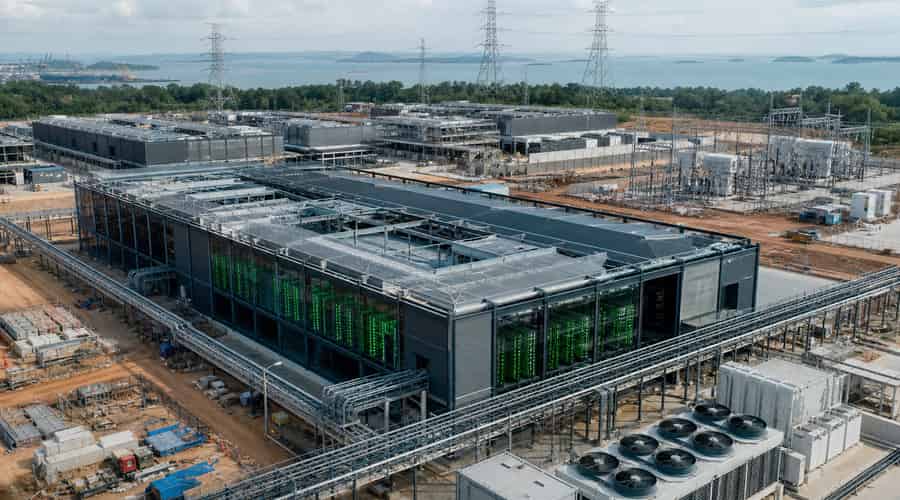
For StartupFortune readers, the useful point is not whether Bidadi eventually gets an AI lab, data centre or corporate campus. The useful point is that AI expansion is now physical. It needs substations, cooling, transport links, housing, permissions, land titles and political patience. GPUs get the headlines. Land acquisition gets the project built or stopped.
Karnataka is trying to turn India’s AI momentum into a geography near Bengaluru, where the talent, founders, global capability centres and engineering labour market already exist. Bidadi offers space. That is the pitch, and it is logical as far as it goes. The risk is that AI becomes a new wrapper for a familiar real estate machine.
You should be skeptical whenever a township is described with every desirable word at once: jobs, parks, schools, hospitals, mobility corridors, green zones, technology clusters. Some of it may be true. Some of it may arrive years late. Some of it may never arrive in the form promised to the people who lost land first.
Karnataka can still make a stronger case. Publish the acquisition map in a way ordinary landowners can read. Separate actual AI capacity from ordinary township development. Name the power, water and transport assumptions. Show which companies or institutions are expected to anchor the project, not just the category they belong to. Put the rehabilitation terms in plain language. If farmer consent is being claimed, show how that number was reached.
Bidadi is current because the fight is current. The final notification came this month, the farmer and opposition pressure has intensified this month, and Times of India’s latest report landed today. The state may still get its AI city. Right now, though, the project is teaching a blunt lesson before it teaches any machine anything: India’s AI future will be built in villages and taluks as much as in labs and boardrooms.
Also read: Firmus puts its ASX float behind a larger Nvidia bet | Pimco is turning AI data centers into a private debt power play | NPCI is betting AI can take UPI to a billion daily payments