Etched, the Cupertino-based AI chip startup, has disclosed that quantitative trading giant Jane Street and a TSMC-linked venture firm are among its backers, a signal that sophisticated money is taking the transformer-specific chip thesis seriously.
Bloomberg reported on June 30, 2026 that Etched revealed the identities of two investors who had not previously been named publicly: Jane Street, the famously tight-lipped quantitative trading firm that runs some of the most compute-intensive AI workloads in finance, and a venture firm tied to Taiwan Semiconductor Manufacturing Co., the foundry that will actually manufacture Etched's chip. The disclosures come as Etched puts its total funding at $800 million, following a $500 million round in January 2026 led by Stripes that valued the company at $5 billion. Peter Thiel and Ribbit Capital also participated in that raise.
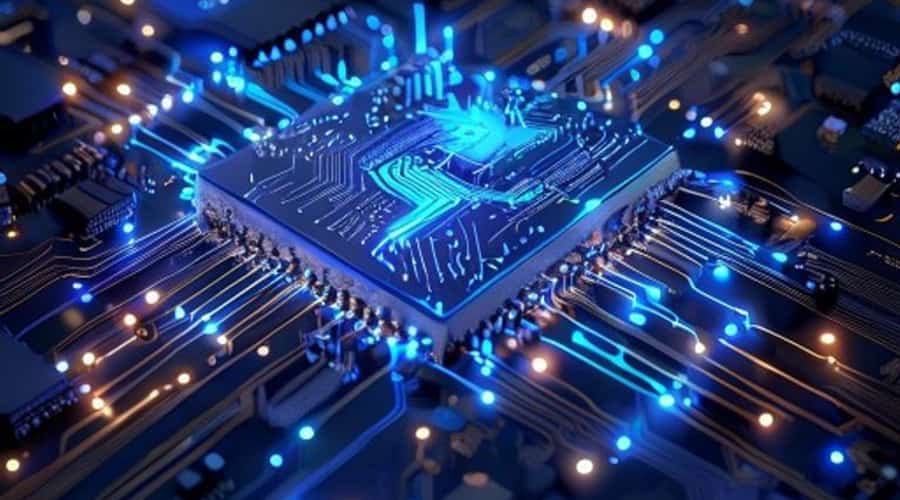
The company, founded by Harvard dropouts Gavin Uberti and Chris Zhu in 2022, is building a chip called Sohu that does exactly one thing: run transformer models. Not a general-purpose GPU with transformer acceleration bolted on. Not a reconfigurable architecture that can handle whatever architecture comes next. A piece of silicon hardwired to the transformer, manufactured on TSMC's 4-nanometer process, designed to make inference dramatically cheaper and faster than anything Nvidia sells today.
Etched claims Sohu can deliver inference up to 20 times faster than Nvidia's H100, and that a single Sohu-equipped server could replace up to 160 H100s. Those numbers have not been independently validated through standardized benchmarks, and as of early 2026, Sohu had not yet shipped to customers. The claims are aggressive, which is the point: the entire investment thesis lives or dies on whether the performance advantage is real and durable enough to matter by the time the chip reaches scale.
Most of the coverage around AI chip startups focuses on the headline number. The Jane Street detail is more interesting than the dollar amount. Jane Street is not a promotional investor. The firm doesn't take stakes in companies to generate deal flow or build relationships. It runs quantitative strategies that consume enormous amounts of AI compute, and when it puts money into an inference chip startup, it's making a statement about what it expects to use. That's a different kind of conviction than a generalist venture fund writing a check on market size.
Inference costs are now the central spending battle in AI infrastructure. Training a frontier model is expensive and relatively rare. Running that model millions of times a day, for every query a customer sends, is where the economics become punishing at scale. Firms like Jane Street run inference workloads that would make most companies wince. If Sohu delivers even a fraction of its claimed efficiency advantage, the economics are compelling enough that a firm in Jane Street's position would notice.
The TSMC venture arm participation carries a different kind of signal. TSMC is not in the business of backing companies whose chips it doubts it can manufacture profitably. Putting venture capital into Etched alongside manufacturing it on 4nm is as close as a foundry gets to saying it believes in both the product and the customer relationship. It also quietly addresses one of the standard objections to AI chip startups: that even good chip designs get stuck in TSMC's queue behind Nvidia, Apple, and AMD. Having the foundry's investment arm in your cap table doesn't eliminate that problem, but it doesn't hurt.
The risk the thesis cannot escape
Etched's core bet is that transformers are the enduring architecture of AI, not a phase. That belief has looked more defensible each year since the original 2017 "Attention Is All You Need" paper, and the entire industry has converged on variants of the transformer for language, image, video, and multimodal models. But locking silicon means if the architecture shifts, Sohu becomes expensive fiberglass. The company is essentially wagering that the transformer's dominance lasts long enough for Sohu to pay back its development costs and for Etched to ship a second generation.
That's not an unreasonable bet. Nvidia's dominance in AI infrastructure is built on the H100 and Blackwell architectures, which are general-purpose enough to handle whatever workload arrives, but general-purpose means they're never optimal for any specific one. The efficiency gap between a GPU running transformers and a chip that does nothing else is real. The question is whether Etched can close the distance between its performance claims and actual shipping hardware before better-resourced competitors, or Nvidia itself, close the same gap from the other direction.
Etched says it has $1 billion in contracts. The investors it has now named suggest the people writing those contracts and those checks have done the math and like the answer. Whether the chip that ships matches the chip that was promised is the only question left that matters.
Also read: Central banks are warning that AI leverage is the real risk, not just the valuations • Apptronik is turning robot training into the next AI factory • The Bank of England is warning that AI trading agents could trigger the next market crisis