Galaxy Digital just switched on the first slice of what Mike Novogratz calls the largest single-campus data center in America, and he says the AI power business is now worth more than the rest of his crypto empire combined.
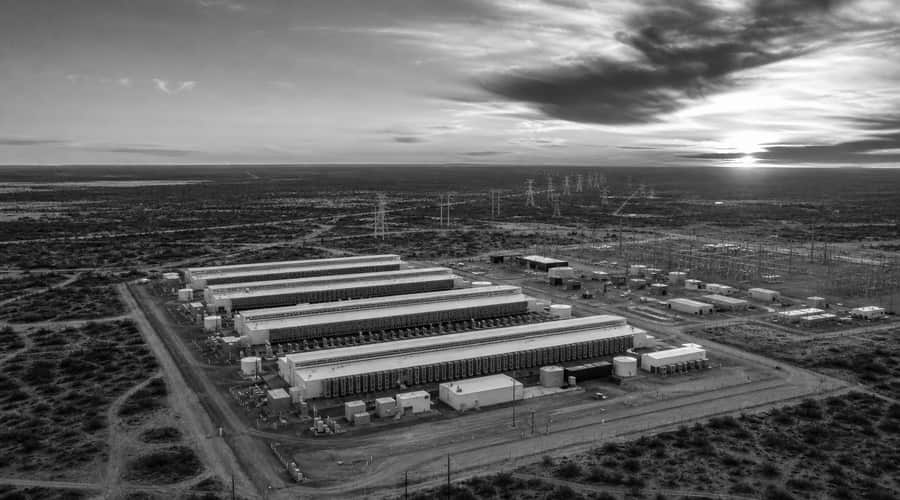
On July 6, Galaxy Digital completed Phase I of its Helios data center campus in West Texas, delivering 133 megawatts of critical IT load to CoreWeave under a 15-year lease, according to a company announcement carried by PR Newswire. That's not a pilot project. It's revenue, starting now, on a site that four years ago was mining bitcoin.
Bloomberg captured the scale of the pivot in a July 10 profile headlined "Novogratz Morphs Galaxy Into AI Landlord, One Gigawatt at a Time," describing a CEO who jokes he might need a new tattoo to commemorate the campus. The joke lands because the numbers are no longer small. CoreWeave has committed to 526 megawatts across Helios Phases I through III, and the campus itself now spans more than 2,200 acres with 1.63 gigawatts of approved power capacity. Novogratz has said it could eventually scale to 3.6 gigawatts.
Here's the part that makes this story more than a real estate press release. Galaxy bought the Helios site from Argo Blockchain in 2022 for roughly $65 million, back when it was a distressed bitcoin mining facility struggling to survive a crypto winter. Novogratz didn't buy it as an AI bet. He bought it as a cheap power asset, and by his own account, it took a conversation on a plane in late 2023, about a looming AI power shortage, to change his mind about what the land was actually worth.
That reframing turned out to be the trade of his career. In its first annual report as a Nasdaq-listed company, filed in April, Galaxy put Helios above a $15 billion valuation, with Novogratz telling investors the AI infrastructure business now represents more than half the value of Galaxy today. GLXY shares jumped more than 23% in one session earlier this year after he laid out the scale of the shift in detail.
What Galaxy actually does at Helios is simple to describe and hard to execute. The company builds the shell, secures the power, and leases finished capacity to AI compute tenants like CoreWeave for 15 years at a time. It isn't running the GPUs. It's the landlord, collecting rent on the one thing every AI company is starving for right now: electricity that's already interconnected to the grid and ready to load.
That distinction matters more than it sounds like it should. Nvidia can sell you all the chips in the world. None of them run without a substation nearby and a utility willing to hook you up, and that process can take years in most of the country. Galaxy already owns the land, the interconnection queue position, and, increasingly, the debt structure to build fast. Reuters and other outlets have reported that data center developers across Texas are now racing utilities and each other for exactly this kind of shovel-ready power, and Galaxy got years of head start simply by owning a bankrupt bitcoin miner's real estate.
Frankly, this is why crypto miners across the country are eyeing their own facilities differently. Names like Core Scientific, Cipher Mining, and TeraWulf have all been chasing similar conversions, swapping mining rigs for AI hosting deals with hyperscalers. None of them, so far, has landed anything close to Helios in scale. Galaxy got there first, and it got there mostly by accident.
None of this means the bitcoin business at Galaxy is gone. Novogratz still runs trading, asset management, and mining operations elsewhere in the portfolio. But the center of gravity has moved. If you're holding GLXY stock expecting a crypto-cycle play, you're now holding something closer to a leveraged power utility with an AI tenant, and that's a very different risk than the one Galaxy sold investors five years ago.
The next test comes with Phase II and Phase III, both already underway on the same site, as CoreWeave's contracted capacity climbs toward 526 megawatts by 2028. Galaxy says construction is on budget and on schedule so far. Hyperscale data center builds rarely stay that way for long, and the real measure of Novogratz's bet won't be the ribbon-cutting this month. It will be whether Helios keeps delivering power on time for the next two years, while every other developer in Texas fights for the same substations.
Also read: US grants the UAE license free access to advanced AI chips after reclassifying its export status • Morgan Stanley Warns Chip Stocks Look Overbought Just as SK Hynix Debuts • Raytheon and Rheinmetall Just Won Britain's Biggest AI Army Training Deal