JPMorgan has cut MiniMax's price target again, but the sharper warning is not the target itself. MiniMax is raising fresh money while Zhipu is proving it can still charge more.
JPMorgan lowered its MiniMax Group target from HK$300 to HK$240 this month, according to Chinese financial outlets that cited the bank's research note. It's the second cut in a month. The bank had already cut its target from HK$1,100 to HK$400 in mid-June and moved the stock from Overweight to Neutral. Two cuts, one month. For a company that only listed in Hong Kong in January, that's a rough public-market education.
The immediate problem started with MiniMax's own pricing. The company's M3 model was launched at roughly double the price of its M2.7 predecessor, according to the same JPMorgan note cited in Chinese market reports. A week later, MiniMax reversed course and cut API pricing by 50% on a permanent basis. That is not a small tactical discount. It's the market telling you the product has not earned the higher price.
JPMorgan's criticism went beyond the price sheet. The bank's analysts said MiniMax had not shipped a new domestically leading model since M2, while rivals kept pushing ahead. Zhipu's GLM releases, Moonshot's Kimi line and DeepSeek's newer models have made the comparison harder for MiniMax, not easier. You can forgive one messy launch in a fast market. You can't forgive losing pricing power and technical momentum at the same time.
Then came the capital raise. The Wall Street Journal reported that MiniMax said it would raise about HK$9.54 billion, or $1.22 billion, through a placement of 35.6 million shares at HK$268 each, roughly 9.9% below the previous close. The company also planned HK$6.5 billion of zero-coupon convertible bonds due in 2027, with an initial conversion price of HK$335. Together, that is close to $2 billion of fresh financing.
Investors did not treat it gently. MiniMax shares fell 12% to HK$260.80 by midday on July 10, according to the Journal, even as the Hang Seng Tech Index rose 2.7%. That's the cleanest read on the deal. The money helps MiniMax pay for AI infrastructure and research, but the new shares and convertibles also raise the dilution question at exactly the wrong moment.
MiniMax needed the money because frontier model work is expensive. That part is not mysterious. The Financial Times reported in January that MiniMax raised $619 million in its Hong Kong IPO at HK$165 a share, then closed its first trading day at HK$345. Barron's also reported that debut, noting the stock more than doubled on day one. Six months later, the company is back in the market for a much larger sum, and the stock is nowhere near its March enthusiasm.
Zhipu has the cleaner story
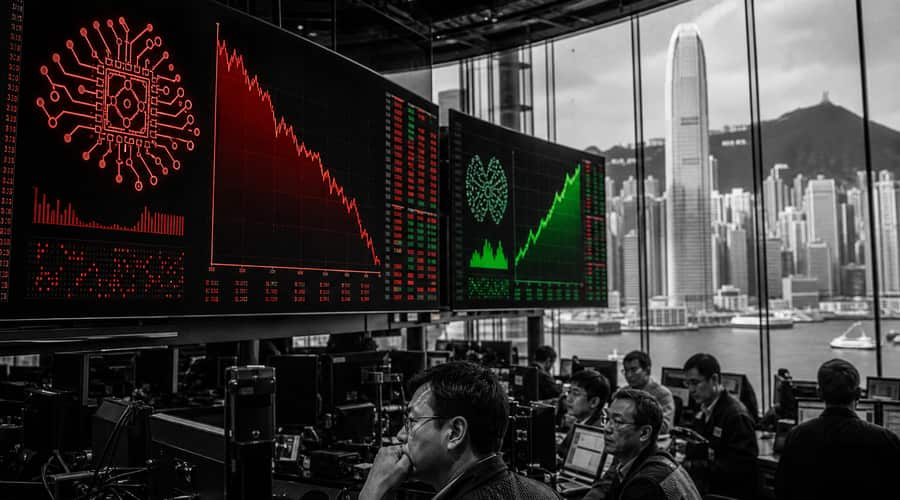
The MiniMax problem looks worse because Zhipu is moving in the opposite direction. JPMorgan raised its Zhipu target and kept the stock at Overweight in June, according to market reports. That contrast is the whole story. MiniMax tried to charge more and had to back down. Zhipu raised API prices earlier this year and, according to JPMorgan's cited analysis, usage kept growing.
That is what pricing power looks like. It is not a slogan. It is customers staying on the platform after the bill goes up.
Zhipu has its own risks, including US restrictions after the Commerce Department added the company to its Entity List in January 2025. But in this particular comparison, JPMorgan is rewarding evidence that developers and enterprise users are staying with the GLM family. MiniMax is being punished because its price increase exposed weaker demand for M3 than investors wanted to believe.
Frankly, this is the part AI investors should care about more than valuation headlines. Raising money is easy. So is showing off a new model and talking up AGI. What's hard is keeping customers paying once the price goes up, and on that measure, Zhipu gave JPMorgan a far cleaner answer than MiniMax.
The cash buys time, not proof
MiniMax is not finished. It is still one of China's best-known AI start-ups, with consumer products such as Talkie and Hailuo AI, backing from Alibaba and Tencent-linked investors, and a Hong Kong listing that gives it access to public capital. The new financing also gives it room to keep building compute capacity, which the company said would support AI infrastructure and research and development.
But public markets are less patient than private rounds. A January IPO story can survive on growth, scarcity and investor appetite for China's AI names. By July, the question is narrower: can MiniMax ship a model strong enough to restore pricing power before dilution and competition take over the narrative?
Citi analysts told clients, according to the Journal, that MiniMax's shares were likely to remain under pressure because of uncertainty around user retention and monetization. That is dry analyst language, but it lands. If users stay and pay, the capital raise looks like fuel. If they don't, it looks like a bridge to another markdown.
For anyone watching Chinese AI stocks, this is not a simple risk-off story. Capital is still available. Zhipu can still win a higher target. DeepSeek and other Chinese labs are still drawing attention. The split is inside the group now, between companies with enough product pull to raise prices and companies that have to cut them back.
MiniMax has fresh money. Zhipu has the stronger signal.
Also read: Google Delays Gemini 3.5 Pro Launch to July 17 After Scrapping Its Base Model • Meta Pulled Its Muse AI Tool But Your Instagram Photos Are Still In It • Amazon Has Cut 57,000 Jobs While It Pours $200 Billion Into AI