Trump says he'll bomb Iran's bridges and power plants next week if Tehran doesn't negotiate. The Gulf pays first if he follows through, because Iran has already shown where it prefers to send the pain.
President Trump put the threat plainly on Fox News: the US would knock out Iran's power plants and bridges unless Tehran returned to negotiations. That is the danger. Not only the legality of targeting civilian infrastructure, which The Guardian noted could raise grave questions under international humanitarian law, but the geography of retaliation. The man making the threat sits in Washington. The countries most exposed sit across the Gulf.
According to AP, the US has reimposed a blockade on Iranian ports after the latest breakdown in talks over the Strait of Hormuz. CNN and other live coverage placed the move on July 14, during the fourth straight day of renewed US-Iran fire. Trump said the message to Iranian negotiators was blunter still: make a deal, or they would have nothing left.
That's not a stray line. Earlier on Truth Social, Trump said "1000 Missiles are Locked and Loaded" and warned that Iran would be destroyed if it acted on threats against his life. The New York Post reported the warning after mourners at Ali Khamenei's funeral displayed threats against Trump, and AP reported that Khamenei, killed in the February 28 US-Israeli strike that opened the war, was buried after months of delay. Mojtaba Khamenei, his son and successor, has cast revenge as a national demand.
Iran Knows Where To Hit
Here's the part that gets lost when Washington and Tehran trade threats: Iran doesn't need to hit the US mainland to make an American decision hurt. It has a closer target. It has already used it.
Within the first 48 hours of the war, Iran had struck Gulf Cooperation Council states. By April 1, according to figures attributed to the UAE Ministry of Defence and widely cited in regional tallies, Iran had fired 438 ballistic missiles, 2,012 drones and 19 cruise missiles at the UAE alone. That was more than at any other target in the war, including Israel. Manama, Kuwait International Airport, Abu Dhabi and Riyadh all came under fire. The Gulf wasn't the side story. It was the battlefield.
Saudi Arabia has pushed for de-escalation and backed Pakistan brokered peace efforts. The UAE, which absorbed the heaviest early barrage, has taken a harder line. Neither government started this fight. Neither controls whether Trump escalates it. That is the imbalance at the center of the story, and you don't have to admire Iran's strategy to see how brutally simple it is.
Iran answers pressure where American allies are close, wealthy and exposed.
Oil Markets Already Believe The Threat
Markets have already shown how fast this turns. Brent crude fell below $70 a barrel on July 1, near its prewar level, after a June memorandum briefly reopened the Strait of Hormuz. The International Energy Agency's July report put Gulf exports at 16.1 million barrels a day. Then the ceasefire cracked on July 7 and 8, and North Sea Dated crude jumped back toward $77 after touching $68. The Guardian's July 14 market blog later put Brent above $87 as strikes resumed and the blockade returned.
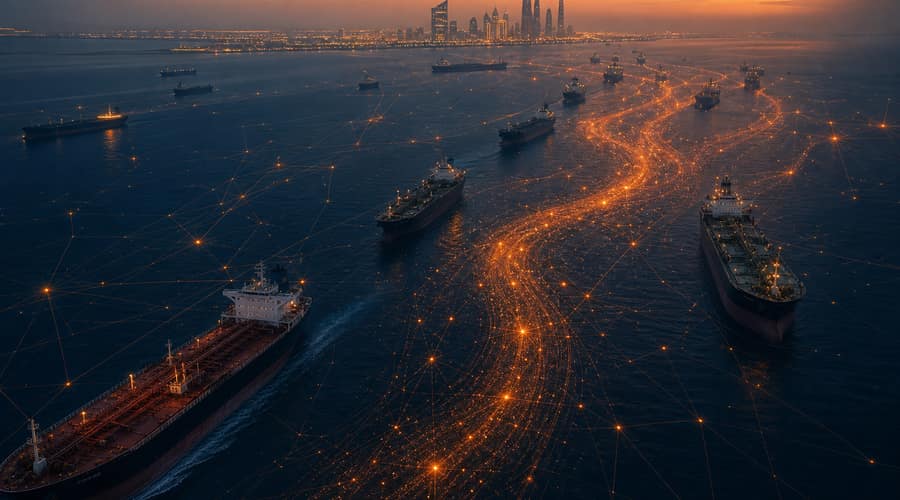
That is a violent swing for a shock that has not yet included US attacks on Iranian bridges and power plants. Now add a sustained blockade. Add another Iranian strike on Gulf infrastructure. Add insurers, tanker owners and commodity traders trying to price a waterway that carries about a fifth of global oil shipments, as Axios noted in its report on pipeline projects designed to bypass Hormuz. You get a market that reacts before the bombs land, because waiting for certainty is how traders lose money.
Frankly, the Gulf states know this better than Washington does. Saudi Arabia, the UAE and Iraq are all trying to build or expand routes that reduce dependence on Hormuz, from the UAE's overland capacity to Iraq's Basra-Haditha pipeline plan. Those projects tell you what official statements usually soften: the old model, oil moving freely through the strait while foreign capital flows into Gulf cities, no longer feels secure enough on its own.
None of this requires Trump's threat to materialize before damage begins. The threat itself is already doing work. It moves oil prices, stiffens Iran's posture and gives Mojtaba Khamenei's new leadership another public reason to prove it won't bend. Every Fox News warning and Truth Social escalation lands in Riyadh, Abu Dhabi, Manama and Kuwait City before it lands anywhere else.
Iran has already shown it prefers to answer American pressure by hitting the Gulf rather than the US directly. If Trump follows through next week, there is no good reason to expect that pattern to change. Only the scale changes.
Also read: The CLARITY Act Is Seven Votes Short With Three Weeks Left to Find Them • Australia is rushing to approve AI data centers before backlash grows • Big Banks Are Chasing a Fiserv Deal That Would Let Them Dodge Their Own Fee Caps