Sila raised $300 million for its Moses Lake silicon anode plant on July 21, 2026. The money is notable. What's more notable is who else now sits beside EVs in the battery story: AI, defense, space, and robotics.
Battery materials startup Sila didn't need the EV market to behave. On July 21, the company announced a $300 million private equity round to expand its Moses Lake, Washington manufacturing campus, even as automakers are cutting EV programs and the old battery startup story has become harder to sell. The round was led by Atreides Management and Sutter Hill Ventures, with 8VC, Bessemer Venture Partners, Matrix Partners, and funds and accounts advised by T. Rowe Price Associates joining.
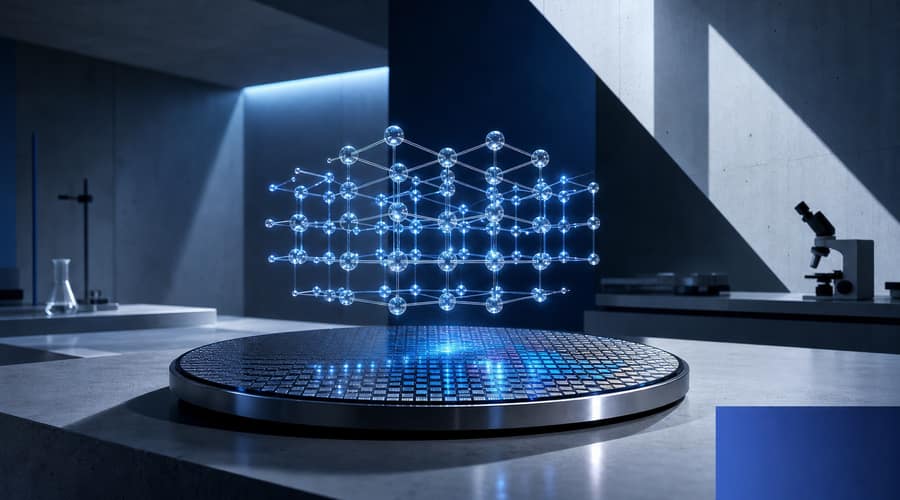
That is the point. Sila isn't asking investors to believe in one market anymore. Its Titan Silicon material is a silicon-carbon anode that replaces graphite in lithium-ion batteries, and Sila says it can improve cell energy density by about 20% while enabling fast charging in less than 10 minutes in some applications. For cars, that helps range and charging anxiety. For drones, satellites, robotics, data center backup systems, and military equipment, it can be the difference between a machine that works long enough and one that doesn't.
Look at the timing. The U.S. EV trade has been wobbling since federal support narrowed and automakers began walking back some battery-electric plans. The Wall Street Journal reported this month that Honda will stop producing its Prologue electric SUV after the 2026 model year, while Business Insider reported that EV sales dropped sharply after the $7,500 federal tax credit ended in September 2025. Sila is raising into that market anyway.
That tells you something.
A factory built for more than cars
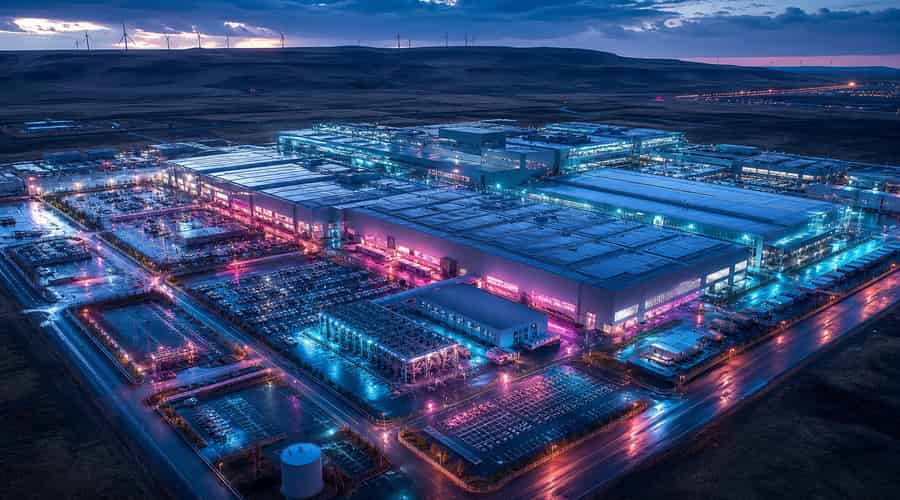
Sila's Moses Lake site is not a lab with a ribbon on the door. The company says it completed construction and began operations there in fall 2025. The campus spans 160 acres and starts with 2 gigawatt-hours of Phase 1 annual capacity. Phase 2 is the big swing: Sila says the plant is designed to reach as much as 250 gigawatt-hours over the next five years, which would make it the largest anode production facility in the world if the company gets there.
That kind of number doesn't come from a single Mercedes-Benz program or a consumer electronics win. It comes from building a material that can move across markets where weight and charging time matter and where supply chain origin matters too. Sila says Titan Silicon has shipped in devices since 2021 and is now aimed at drones, satellites, electronics, robotics, AI systems, and EVs. You don't have to buy every part of the pitch to see why capital is still showing up.
The defense angle is real, not a convenient afterthought. Sila markets Titan Silicon as an NDAA-compliant U.S.-made battery material for military and national security uses. On its defense application pages, the company points to intelligence, surveillance, and reconnaissance systems, where batteries have to support sensors and real-time processing during long missions. Longer flight time and lower pack weight are not marketing flourishes there. They are procurement facts.
Bessemer Venture Partners made the same connection earlier this year in its 2026 defense tech roadmap. The firm named energy and materials independence as one of five critical frontiers, and specifically cited Sila's Moses Lake plant as part of the domestic battery materials push. That matters because Bessemer is also in this round. It isn't just writing the thesis. It's funding one of the companies inside it.
The EV slowdown did not hit everyone evenly
The contrast with other battery startups is rough. The Boston Globe reported in March 2026 that SES AI was ending EV battery development projects and shifting toward drones and energy storage, while 24M Technologies had conducted extensive layoffs and was weighing its future. Those were not minor companies. They were part of the same broad battery boom that pulled huge checks into next-generation cell and materials startups from 2020 through 2024.
Sila has had its own long, expensive road. It was founded in 2011 by Gene Berdichevsky, Alex Jacobs, and Gleb Yushin, and it spent years pushing silicon anodes out of the category of promising battery chemistry and into manufacturing. The company introduced Titan Silicon for mass-scale use in 2023, began commissioning Moses Lake in 2025, and is now trying to prove it can ramp an industrial plant without losing the performance gains that made the material valuable in the first place.
Frankly, that is the hard part. Battery startups don't usually die because the slide deck lacked a market. They die because factories punish optimism. Yield, quality control, customer qualification, and raw material logistics are boring until they become the whole company.
That is why the investor list is more useful than the headline number. Sutter Hill has backed Sila for years. Bessemer has written publicly about Sila as part of a national security and energy materials thesis. T. Rowe Price-advised funds joining the round pushes the financing further toward growth capital than early venture faith. The bet is not that silicon anodes might be useful one day. The bet is that Sila can make enough of them, in Washington, for customers that can't wait for a perfect EV cycle to return.
For founders and investors watching hard tech in 2026, Sila is the cleanest current data point. The easy EV story has weakened. The better battery story now runs through AI infrastructure, defense, robotics, space, and any device that needs more energy without more weight. Sila started as a materials science company chasing better batteries for electric cars. The market around it has changed. The company looks better because of it.
Also read: Four Rapyd executives who scaled payments past $1 billion just raised $8 million to fix the chaos they lived through • Axiom Biosciences is skipping Nasdaq for Hong Kong and the math behind that call is hard to argue with • Samsung is in talks to take an equity stake in Mistral AI as the French startup seeks €3 billion at a €20 billion valuation