Tesla has cleared the old Model S and Model X line at Fremont for Optimus, and the timing is not subtle. The car business still throws off revenue, but the valuation story now sits on robots.
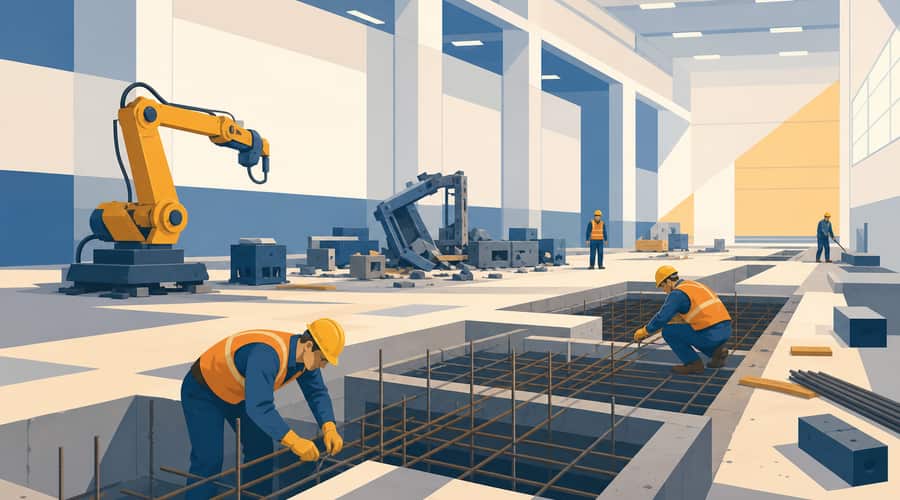
The Model S line ran for 14 years. The Model X line ran for 11. Tesla has now pulled both out of Fremont and is preparing the space for Optimus, its humanoid robot. According to Thomasnet, Tesla said the decommissioning took 46 days after the last Model S and Model X vehicles left the line in May 2026, with robotic equipment, conveyors and concrete foundations removed from the factory floor.
You can see why the company wants the visual. An old car line being stripped down is not just factory maintenance. It is a physical statement about where Tesla wants investors to look next. Model 3 and Model Y still carry the volume story, but the former flagship line is being handed to a product that still has to prove it can be built, priced and used at scale.
That is a big ask.
Electrek reported after Tesla's Q1 2026 call that Elon Musk expected limited Optimus production at Fremont to begin in late July or August 2026. Musk also warned that early output would be quite slow because Optimus has roughly 10,000 unique parts and a supply chain that has not been through mass production before. That sentence matters more than the production target. A new line can be cleared in 46 days. A working industrial supply chain takes longer.
The financial backdrop makes the move sharper. On July 22, Tesla reported second-quarter 2026 revenue of about $28.2 billion, but CNBC and Investor's Business Daily both reported adjusted earnings of $0.33 per share, below Wall Street estimates of about $0.53. Investor's Business Daily also put operating income at $398 million, down 57% year-over-year, with regulatory credit revenue falling to $146 million. Free cash flow was negative by roughly $1.1 billion.
The EV business is not broken. It just cannot carry the valuation on its own.
Optimus has to become more than a demo
Tesla's advantage is real, but it is not magic. The company already knows how to design motors, batteries, power electronics, factory tooling and high-volume assembly systems under one roof. That is why Optimus gets taken seriously even before it has a commercial sales record. If you are betting on a humanoid robot manufacturer, you would rather back the company that has already made millions of moving machines than one that has only made lab prototypes.
Still, you should not confuse that with proof. Tesla has not published a firm public price for Optimus. Musk has talked in the past about a long-term price in the $20,000 to $30,000 range, but that is a scale target, not a purchase order you can sign today. The first useful units are expected to work inside Tesla's own factories, where the company can collect training data, find failures and iterate before any customer deployment is on the line.
That internal route is sensible. It is also convenient. Tesla gets to claim progress before the market gets to grade the product.
The robot race is no longer theoretical
The competitive field has moved quickly. Figure reached a $39 billion valuation in a September 2025 Series C round, according to TechCrunch, after raising more than $1 billion in that round. Its earlier $675 million Series B in 2024 included Microsoft, OpenAI, Nvidia and Jeff Bezos, according to The Information. That distinction matters because the original version of this article blurred two different funding events.
Apptronik is another serious name. The Austin company said in February 2026 that it had closed more than $935 million in Series A financing, with participation from Google, Mercedes-Benz, B Capital, John Deere and Qatar Investment Authority. TechCrunch separately reported that the round valued Apptronik at about $5.3 billion. In June, Apptronik announced Robot Park, a training program using fleets of Apollo robots and work with Google DeepMind.
Then there is Atoms. Travis Kalanick wrote on a16z's site on July 22 that Atoms had announced a $1.7 billion equity investment led by Andreessen Horowitz, with Ben Horowitz joining the board. The Financial Times reported the same day that the venture is aimed at automating physical industries including mining, construction, heavy transport and food production. Uber participated too. That detail is hard to ignore, given Kalanick's history with the company.
But Atoms is not a clean humanoid competitor in the same way Figure or Apptronik is. It is broader and more industrial. Mining and food and transport are different markets from a general-purpose home robot, even if the capital is chasing the same larger idea: machines that can do physical work without a narrow fixed script.
Frankly, Tesla has chosen the harder version of the story. It is not just trying to build a better robot arm for a warehouse or a mining vehicle for a controlled site. It wants Optimus to become a general-purpose humanoid, first in its own factories and later outside them. That gives the upside real force. It also makes the failure points easier to find.
The next proof will not come from a slide deck. It will come from Fremont, when the cleared Model S and Model X floor starts producing Optimus units in numbers that investors can count.
Also read: Amazon fires its AGI researchers and bets a billion dollars on deployment instead, IBM stock fell 25% in a single day because AI spending is eating the budgets that used to feed its mainframe empire, and Google Cloud grew 82% in Q2 2026 and the $514 billion backlog tells you everything about who is winning the AI race