World Foundation has raised $52.5 million through a locked WLD token sale, and the timing matters: Sam Altman's identity project is trying to turn deepfake anxiety into enterprise demand.
The pitch is straightforward, even if the method isn't: as AI-generated deepfakes get cheaper and more convincing, someone has to build the infrastructure that proves you're a real person. World, rebranded from Worldcoin in October 2024, wants that someone to be them. The Block reported Friday that Pantera Capital led the first close of a strategic WLD token sale, with Bain Capital Crypto, Susquehanna Crypto, Selini Capital and Eightco Holdings among the participants. All purchased tokens are locked for one year. That's not a small ask in crypto, where liquidity is usually the point.
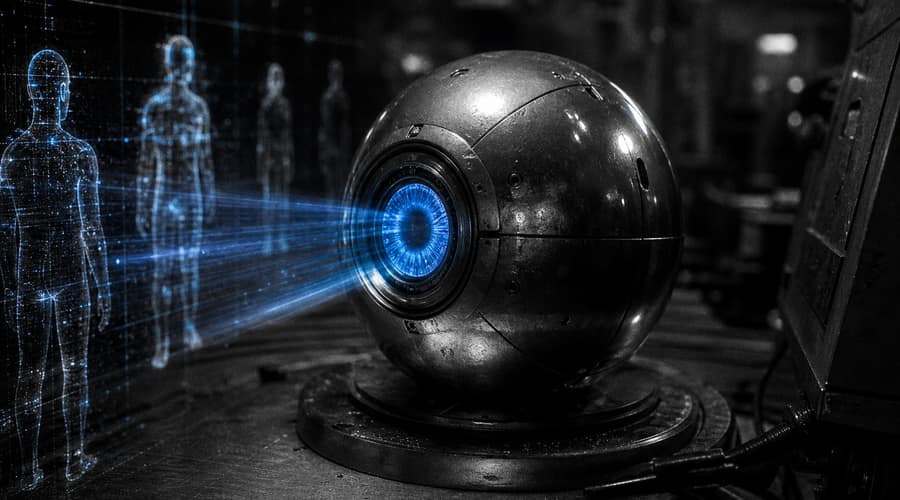
The money goes to World Foundation, the Cayman Islands foundation company that stewards the World protocol. The core asset is still the Orb, the iris-scanning device that has made the project both memorable and hard to sell. World says more than 39 million people have joined the network, more than 18 million have completed Orb verification and users have generated more than 475 million World ID proofs. Those are real numbers. They're also the best answer World has to critics who see a biometric network before they see an identity layer.
Worldcoin launched into a crypto market already trained to distrust grand promises. Then came the privacy fight. Spain's data protection agency ordered Tools for Humanity to stop collecting and processing personal data in March 2024, and the AEPD said in December 2024 that Bavaria's data protection authority had ordered deletion of iris codes collected without the required safeguards. Colombia's data regulator opened an inquiry after the project launched there, Rest of World reported. Indonesia suspended Worldcoin and World ID operations in May 2025, according to state news agency ANTARA. Edward Snowden had warned about the idea even earlier, telling people in 2021 not to catalogue eyeballs.
That history hasn't gone away. It sits under this fundraise.
World's argument is that the internet is moving toward a problem nasty enough to make its solution look less strange. The company has been pushing World ID for business, including Zoom and Docusign integrations announced in April. Zoom's Deep Face feature uses a three-way match between the image from a user's original Orb verification, a real-time liveness selfie on the user's device and the live video frame in a meeting. When the match works, participants see a verified-human badge. Docusign is working with World ID for agreement workflows where a human authorization still has to mean something.
Frankly, that enterprise pivot changes the story more than the rebrand did. Asking individuals to scan an iris for a crypto wallet was always a hard sell outside places where identity systems are weak or token rewards carry unusual weight. Selling proof-of-human checks to Zoom and Docusign, products used by people who may never touch WLD, is a different category of ambition. You don't have to like the Orb to understand why deepfake meetings and synthetic accounts are creating an opening.
The token sale is testing more than World
The funding structure matters because World Foundation doesn't sell conventional startup equity. The Block reported that the tokens sold in the transaction are intended for use within World Network and don't represent an investment interest or rights to profits or returns. A spokesperson told The Block the purchased WLD doesn't represent equity in Tools for Humanity, the for-profit company behind much of the project's hardware and software development.
That distinction is not legal decoration. It is the whole fundraising machine.
Locked token sales went quiet after the 2022 and 2023 crypto winter, especially as US regulators looked harder at token distribution and retail speculation. Bain Capital Crypto and Susquehanna Crypto aren't fringe names. Their participation gives this deal weight beyond World itself, because other founders and funds will read it as a signal that institutional buyers are again willing to back token-linked infrastructure if the use case looks large enough and the lockup is clear enough.
World Foundation called this a first close, and The Block reported that it isn't clear whether more token sales are planned. A spokesperson declined to comment to the outlet on that question. Keep that detail in view. The $52.5 million is useful capital, but the larger issue is whether World can keep financing growth while regulators keep asking whether the biometric bargain is lawful, necessary and understood by the people lining up for scans.
None of the regulatory pressure has disappeared. Spain's regulator was still warning Tools for Humanity in 2026 over a proposed restart of activity, according to Spanish press reports. Indonesia's suspension followed complaints and questions over local operating permits. Any serious European expansion has to move through the same GDPR arguments that slowed the first wave of Orb deployments.
World's bet is plain enough: the need to distinguish humans from AI will overpower objections to biometric collection at scale. It may be right. But you should say the hard part out loud. The infrastructure World is building is only valuable if people trust it enough to use it, and trust is exactly what the last two years damaged.
Sam Altman is also running OpenAI, the company whose models sit at the center of the synthetic-media problem World claims to solve. Whether that reads as a conflict or an advantage probably depends on which side of the Orb you're standing on.
Also read: Citadel Securities buys into Crypto.com at $20 billion as Wall Street bets on crypto exchange infrastructure • Samsung put USDC into 241 million Galaxy phones and Circle got the distribution win crypto has been chasing for years • Trump's crypto fortune may be the thing that kills the crypto bill he champions