Kuwait Petroleum Corporation closed a $16 billion lease-and-leaseback deal with a Blackstone, KKR, and Brookfield consortium on July 25, marking the largest foreign direct investment in Kuwait's history and the latest proof that sovereign energy states have found a formula Wall Street cannot resist.
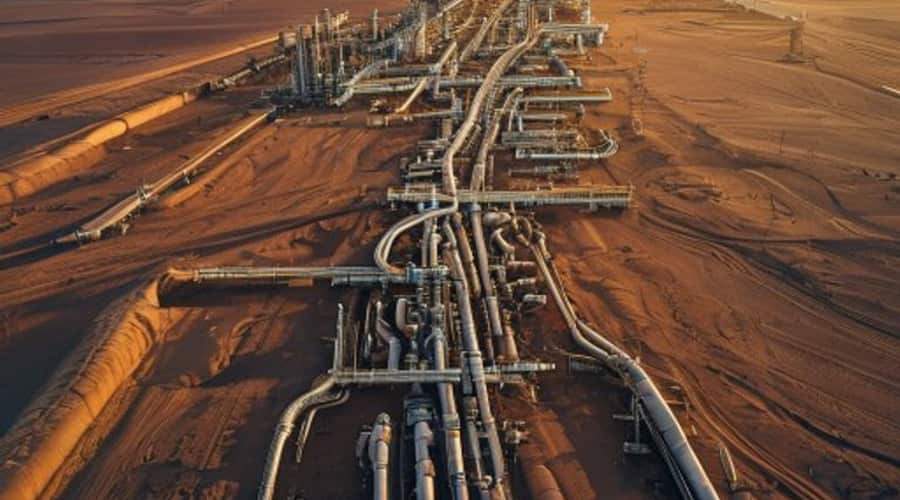
The transaction, named Project Peregrine, hands the three firms a combined 49% stake in a newly formed Kuwaiti joint venture that holds usage rights to all 13 of Kuwait Oil Company's crude pipelines spanning roughly 320 kilometers. KOC keeps 51% and full operational control. In exchange, the consortium pays $7.85 billion upfront, with the balance of the $16 billion total enterprise value flowing to the JV through volume-based tariffs over 20.5 years. The state keeps the keys. Wall Street gets a steady, commodity-linked cash stream.
That structure is not accidental. It is a template, and Kuwait did not invent it. ADNOC ran the same play in 2019 and 2020, raising $10 billion on its oil pipelines and then $20.7 billion across a broader gas pipeline network - always at the 49/51 split, always with a volume tariff floor, sovereign operational control intact throughout. Saudi Aramco followed with a $12.4 billion oil pipeline deal led by EIG in 2021, then a $15.5 billion gas pipeline deal with BlackRock and Hassana. The Gulf is methodically monetising infrastructure it built over decades, pulling billions in Western private capital into assets it refuses to actually relinquish. Kuwait's deal is the newest entry in that playbook. The most watched, given its scale.
Blackstone, KKR, and Brookfield collectively manage somewhere north of $2.6 trillion in assets under management. They are not choosing Kuwait because they lack options. They are choosing it because everything else looks considerably messier. Equity markets are rattled by AI spending overhangs, rate uncertainty, and a technology sector where valuations keep getting revised. Against that backdrop, a 20-year tariff on 320 kilometers of pipe moving Kuwaiti crude looks almost boring. That's precisely the appeal.
Infrastructure has become the defensive trade of 2026 for the mega-PE firms. KKR's global infrastructure platform has been pushing into energy, transportation, utilities, and real assets aggressively; Brookfield crossed the $1 trillion AUM threshold in 2025 partly by owning exactly this kind of long-duration, real-asset yield. Blackstone has framed its infrastructure strategy around what it calls predictable, contracted cash flows, and a volume-based tariff on a state-owned crude network fits that description precisely. When three firms of this size show up together on a single deal, it usually means the risk-adjusted return is compelling enough that none of them wanted to sit it out.
There's also a geopolitical read here. Gulf sovereign wealth is flowing into Western tech and financial assets; this is the other direction of that same current. Kuwait gets hard Western capital, diversified counterparties, and a signal to international markets that its infrastructure is bankable at the highest level. The PE firms get a yielding asset in a jurisdiction that has been stable for decades and whose oil output volumes are contractually obligated to flow through the very pipes they now partly own.
What other sovereign energy states are watching
The lease-and-leaseback model solves a real political problem. Outright pipeline privatization is toxic in most petrostates, where national oil companies carry cultural and strategic weight that makes foreign ownership of core infrastructure a non-starter. The 49/51 structure with a volume tariff threads that needle: the state retains control, the foreign investor gets yield, and no minister has to explain to parliament why they sold the family silver.
That's why every ADNOC and Aramco deal has used the same split, and why Kuwait's Project Peregrine copies it almost exactly. The question now is who is next. Iraq, Oman, and Kazakhstan all operate significant state-owned pipeline networks with aging infrastructure and sovereign balance sheets that would benefit from a multibillion-dollar cash injection. None of them have pulled off a deal at this scale yet, and the Kuwait transaction gives their finance ministries a fully documented blueprint, right down to the JV incorporation structure and the tariff mechanics.
Frankly, the pipeline monetisation wave is still early. ADNOC's 2019 oil pipeline deal was the proof of concept. Saudi Aramco's 2021 follow-on was validation. Kuwait in 2026 is the model going mainstream. Each successive deal has been cleaner and faster to close, drawing a wider pool of institutional capital, because the asset class now has comps. Pension funds and infrastructure funds that couldn't underwrite the first ADNOC deal with confidence can now point to five years of performance data and three separate precedents.
KOC described the transaction as the largest foreign direct investment in Kuwait's history. That framing matters domestically. For the PE firms, it's a deal they'll probably be quoting in investor presentations for the next decade, right alongside the Aramco and ADNOC transactions that showed this structure works. The $7.85 billion changes hands at close. The tariff clock starts running. And somewhere in Abu Dhabi, Riyadh, and Baghdad, finance ministers are doing the same math Kuwait just did.
Also read: Nubank is buying a $6 million bank so it can keep calling itself a bank • Moody's warns that AI spending is turning the world's most profitable companies into capital-intensive ones • Robinhood Chain hit 100 million transactions in three weeks but memecoins are running the show