
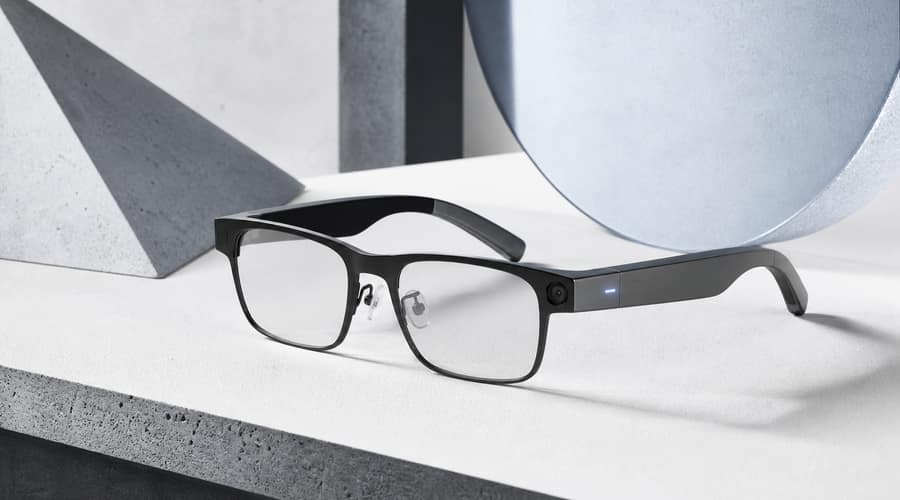
Apple's first smart glasses are now expected in late 2027, and the delay gives Meta time to widen its lead. But privacy is the fight Apple can still win.
Apple doesn't usually rush into categories it didn't create. It watched smartphones before the iPhone and tablets before the iPad. With smart glasses, the same patience is showing again, only this time Meta isn't waiting politely. It has already turned Ray-Ban Meta glasses into the first consumer smart-glasses product with real volume.
According to Bloomberg's Mark Gurman, Apple is now aiming to launch its first smart glasses in late 2027 after earlier reporting pointed to a faster timetable. That's a slip. The product is expected to sit closer to Meta's Ray-Bans than to Vision Pro: cameras, microphones, speakers, Siri, and a paired iPhone doing much of the work. No in-lens augmented-reality display. Not yet.
That matters for you because this isn't really an AR story at launch. It's an AI hardware story. Apple is trying to put a camera and assistant on your face without triggering the same public suspicion that follows Meta around. That's a harder problem than shaving a few grams off a frame.
Privacy is the product test
Gurman's latest Power On newsletter, as AppleInsider summarized on July 26, focused on the problem Apple has to solve before these glasses can feel normal in public: people don't trust face-mounted cameras. They have reason not to. The Ray-Ban Meta recording light is small, and privacy researchers have shown that camera indicators on smart glasses can be hidden or missed in ordinary use.
Apple is reportedly looking at a more visible recording-light system built around the camera module. Good. A light nobody sees is theatre. A light people notice changes the social contract around the device, especially in offices, schools, hospitals, shops, and anywhere else a wearable camera can turn from useful tool into compliance headache.
Meta isn't defenseless here. It has the Ray-Ban brand on the frame, years of real-world usage data, and a product people can actually buy today. But Apple has one asset Meta can't borrow for a launch keynote: a long-standing privacy reputation that ordinary customers already understand. You don't have to believe every Apple privacy claim to see the advantage. The company has trained buyers to think of privacy as part of the product, not an afterthought in settings.
Meta has the numbers
The head start is not small. UploadVR reported in February that EssilorLuxottica and Meta sold more than 7 million smart glasses in 2025, more than tripling earlier sales. Omdia put global AI-glasses shipments at 8.7 million units in 2025 and gave Meta an 85.2% share of that market. IDC's Q1 2026 tracker was lower for Meta, at 69.2%. Still domination by any normal hardware standard.
Meta and EssilorLuxottica have also discussed pushing annual production capacity from about 10 million units to 20 million by the end of 2026, according to Bloomberg reporting carried by FashionNetwork and PYMNTS. The partners have even talked about going beyond 30 million if demand holds. No final decision has been announced. Keep that caveat in the story, because it tells you the difference between ambition and shipped hardware.
Apple's rumored price target is just as important as the camera design. Gurman has reported a possible $200 to $500 range in the US, which puts Apple directly against Ray-Ban Meta rather than above it. That's a real choice. Apple could have made these a high-margin accessory for loyalists and avoided direct comparison. Competing in Meta's bracket says Apple wants the category, not just a corner of it.
Siri is the awkward part. The glasses only make sense if the assistant can look at what you're looking at, follow the context, and respond quickly enough that you don't feel silly wearing cameras on your face. Apple has already had to recover from delays and criticism around Apple Intelligence and Siri. If the assistant misses the moment, the privacy pitch won't carry the product by itself.
Here's the thing: Apple doesn't need to outsell Meta in year one. It probably won't. What it needs to do is make smart glasses feel acceptable to buyers who don't want a Meta camera on their face and to companies that need clearer rules before they hand wearables to staff.
That is where the late-2027 timing cuts both ways. Meta gets another year to sell and learn from how people actually use these things day to day. Apple gets another year to fix Siri. The winner won't be the company with the cleverest demo - it will be the one people don't mind seeing across the table.
Also read: AI companies have signed enough nuclear deals to power 7 million homes and uranium stocks are surging • Claude shared chats have been indexed by Google and anyone with a search bar can find them • Georgia Power is seizing family homes to build AI data center power lines and residents are calling it theft