
Nvidia's reported Ohio backstop isn't just another AI infrastructure deal. It's a test of whether investors still trust demand when the seller is helping finance the buyer.
Nvidia is in talks to guarantee as much as $250 billion so OpenAI can lease computing capacity from a giant data center planned for Piketon, Ohio, according to the Wall Street Journal's July 27 report. That is the story. Not the size of OpenAI's appetite, which has been obvious for years, but the fact that the company selling the chips may also help underwrite the place where those chips will run.
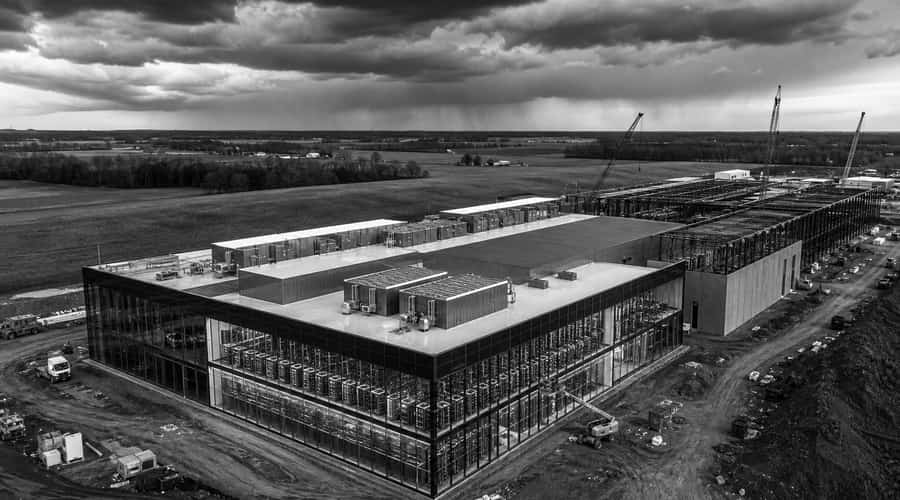
The project is being developed by SB Energy, a SoftBank subsidiary, on federal land at the former Portsmouth Gaseous Diffusion Plant, a uranium-enrichment site roughly 50 miles south of Columbus. The planned campus would require 10 gigawatts of power and could cost more than $500 billion if fully built. The first phase is expected in 2028, with about 800 megawatts, according to reports from the Journal and Data Center Dynamics.
Look at the site. This isn't a normal cloud expansion tucked inside a familiar market. The Department of Energy listed the Portsmouth site among federal locations opened for data center development, and SB Energy broke ground there in March. Data Center Dynamics reported that the power plan includes 9.2 gigawatts of new natural gas generation and $4.2 billion of transmission work with AEP Ohio, tied to $33.3 billion of Japanese funding under a U.S.-Japan trade arrangement. That is heavy industrial infrastructure, not a server room with a bigger invoice.
The proposed Nvidia guarantee would cover lease and construction financing, not the chips themselves. The Journal also reported that Nvidia and OpenAI have discussed as much as $350 billion in separate financing for accelerator purchases. Add those two figures and you get roughly $600 billion of possible Nvidia-linked exposure around one customer's buildout.
That's why the market reacted. Nvidia shares fell about 5% on Monday after the report, while AMD dropped 8%, according to the Wall Street Journal's market coverage. Dell and Intel also traded lower in the broader AI-hardware selloff, with 24/7 Wall St. putting both declines near 4% during the session. Investors weren't suddenly shocked that OpenAI needs more compute. They were asking a narrower question: how much of this demand is still clean customer demand, and how much is being made possible by Nvidia's own balance sheet?
The Loop Is Visible
Nvidia CEO Jensen Huang has defended the company's AI investments as strategic, and Bloomberg reported this week that he has argued those investments can help Nvidia's business while also producing investment returns. Fair enough. Huang has earned the right to be taken seriously on infrastructure bets that looked excessive before they became obvious.
But the circularity is real. Nvidia invests in AI companies. Those companies buy Nvidia chips. Nvidia backs cloud and data center capacity that lets those companies buy still more chips. If you're an investor, you don't have to call that a fraud to find it uncomfortable. Vendor financing has a long history in technology markets, and it becomes most dangerous when everyone involved starts treating financed demand as if it were the same as cash demand from a fully independent customer.
Bloomberg reported on July 27 that Nvidia is working on more than $750 billion of fresh AI deals, including a $500 billion-plus partnership with South Korea's SK Group. Nvidia's own July 25 announcement said the SK agreement covers AI factories, including a planned SK Telecom AI factory of up to 2 gigawatts, and a long-term memory partnership with SK hynix. That is not small. It is not even merely large. It is a financing and supply web being built at national-infrastructure scale.
For OpenAI, the Ohio project has a clear logic. The company now relies heavily on cloud capacity from Microsoft, Amazon and Oracle. A 10-gigawatt campus it leases directly would give it more control over its compute stack, its timing and its bargaining position. You can see why Sam Altman's company wants that. Compute is the oxygen of frontier AI.
Control has a price.
The Risk Moves Somewhere
Nvidia reported $13.2 billion in cash and cash equivalents at the end of its fiscal first quarter, plus about $67.3 billion in marketable debt and equity securities. That is a powerful liquidity position. It still doesn't make a potential $250 billion guarantee feel ordinary, even if the guarantee is contingent and even if the final terms change before anything is signed.
The basic issue is simple. If AI revenue arrives at the scale the industry is building for, Nvidia's role will look aggressive and probably brilliant. OpenAI gets capacity, SoftBank gets a tenant, lenders get a stronger credit wrapper, and Nvidia locks in years of chip demand. Everyone wins, and the Monday selloff looks nervous in hindsight.
If the revenue doesn't arrive, the risk doesn't vanish. It sits somewhere. It may sit with lenders, with SoftBank, with OpenAI's lease obligations, or with Nvidia's guarantee. The exact legal plumbing matters, but the economic question is plain enough for any investor to understand: who pays if the facility is built faster than the market can use it?
Frankly, that's the part Nvidia can't wave away with another speech about AI factories. Microsoft said in 2025 that it planned to spend $80 billion on AI data centers in fiscal 2025, and Amazon, Google and Oracle have all been spending heavily too. The industry is already full of companies betting that demand will catch up with construction. Nvidia is now considering whether to help finance the catch-up itself.
That may work. It may even be the only way to build infrastructure this large on the timeline OpenAI wants. But you should be clear about what changed this week. Nvidia isn't just selling the picks and shovels anymore. It is being asked to help finance the mine.
Also read: Nvidia is financing a $50 billion Texas data center that will run on its own chips, Taiwan detains an Nvidia employee as its China chip smuggling probe reaches the chipmaker itself, SpaceX is buying Cursor for $60 billion while the AI coding startup makes its boldest bet on India yet