A reported fake reading on a Costco PAMP gold pack is not proof of counterfeit bullion. It is a reminder that retail gold buyers need more than one test before they panic.
The latest gold scare started in a very modern place: a Reddit thread. A buyer said a 25 gram PAMP gold product purchased from Costco was testing as fake on a Sigma Metalytics machine, while also acknowledging the result might be an error because the bars are so small.
That distinction matters. In precious metals, one bad reading can feel like a verdict, especially when gold is expensive and counterfeits are real. But a single electronic test, on fractional bars sealed inside packaging, is not the same thing as a professional authentication result. It is a warning light. You still need to find out whether the problem is the metal, the tester setting, the sensor position, the packaging, or the way the piece is being read.
Costco's own listing for the 25 Gram PAMP Suisse Lady Fortuna Multigram Gold Bar Veriscan describes the product as 25 individually controlled 1 gram 999.9 fine gold minted bars, Swiss-made by an LBMA Good Delivery refiner and secured within protective CertiPAMP packaging. The listing also says the product is 24kt gold, online only, non-refundable, and not eligible for price adjustments.
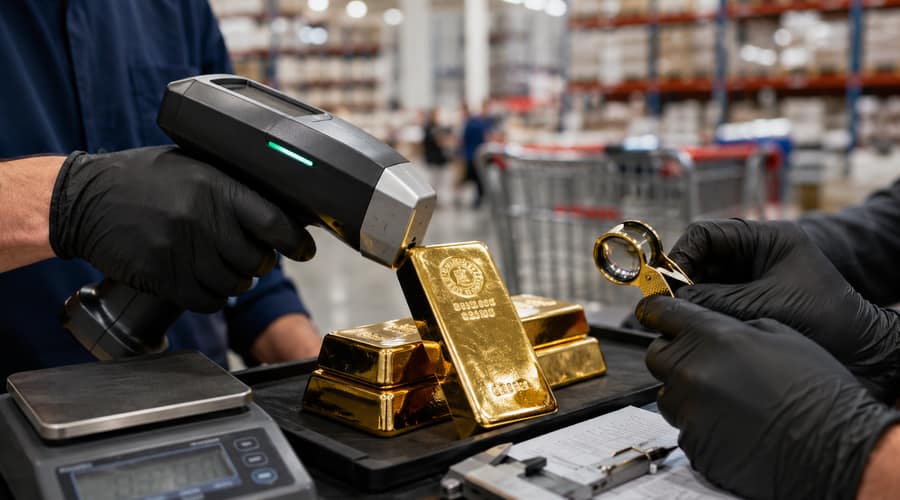
Sigma Metalytics says its devices test the characteristic resistivity of a sample and compare it with the expected range for the selected alloy. That is useful because fake gold can look convincing, and some counterfeits are designed to pass simple weight and appearance checks. The machine is trying to answer a narrower question: does this sample behave electrically like the metal the user selected?
That makes setup important. A 1 gram bar inside an assay card is a very different testing job from a loose 1 ounce coin sitting flat on a sensor. The bar is tiny. The protective packaging creates distance. The user must select the correct metal and use the right sensor or wand for the size and shape of the sample. If the tester is not reading enough of the bar cleanly, the result can scare the owner without proving the bar is fake.
This is why the Reddit discussion quickly moved away from a simple accusation against Costco and toward practical testing questions. Was the correct setting selected? Was the small wand used? Was the bar positioned close enough to the sensor? Was the assay card film or packaging interfering with the reading? Those are not trivial details when each piece in a multigram sheet is only 1 gram.
There is also a separate authentication layer here. PAMP's VERISCAN system is designed to identify registered bullion products and help detect counterfeits by using the microscopic surface pattern of the metal as a kind of fingerprint. That does not mean every buyer will find the process intuitive, and it does not replace a dealer's full inspection, but it gives owners another path before assuming the worst from one electronic reading.
Retail Gold Has Moved Into The Mainstream
The bigger story is not that one Costco customer may have a testing issue. It is that Costco has helped turn bullion buying into a mainstream retail habit, which brings in buyers who may not already know the difference between assay packaging, refinery authentication, electronic conductivity testing, XRF analysis, and dealer verification.
That creates a knowledge gap. A seasoned coin dealer will usually treat one failed test as the beginning of a process. A newer buyer may treat it as disaster. The same tool can produce very different behavior depending on who is holding it.
Costco also has a trust advantage that most bullion sellers would love to have. Its brand is built on membership, scale, and a strong consumer reputation. That does not make counterfeit risk impossible anywhere in the supply chain, but it does make the claim that Costco is casually selling fake PAMP gold a serious allegation that needs stronger evidence than a single home test result posted online.
For buyers, the practical response is simple. Keep the packaging intact. Check the product against the refinery's authentication method where available. Retest with the correct Sigma setting and the proper wand for fractional pieces. Compare weight and dimensions only if doing so will not damage the assay. If doubt remains, take it to a reputable local coin shop or bullion dealer with professional equipment and experience testing sealed fractional bars.
The lesson is not to ignore a bad reading. It is to slow down before turning a bad reading into a conclusion. Gold is valuable enough to attract counterfeiters, but it is also valuable enough to demand a careful process when something looks wrong.
What happens next depends on whether more buyers report the same issue, and whether any tested product is confirmed counterfeit by a professional dealer or refinery-backed verification. Until then, the market should treat this as a useful warning about authentication, not a proven scandal about Costco gold.
Also read: A former CIA official faces a $40 million gold theft case • Billionaire Eric Sprott doubles down on Americas Gold and Silver USAS by converting his guaranteed silver payout into pu • Billionaire Eric Sprott doubles down on Americas Gold and Silver USAS by converting his guaranteed silver payout into pu