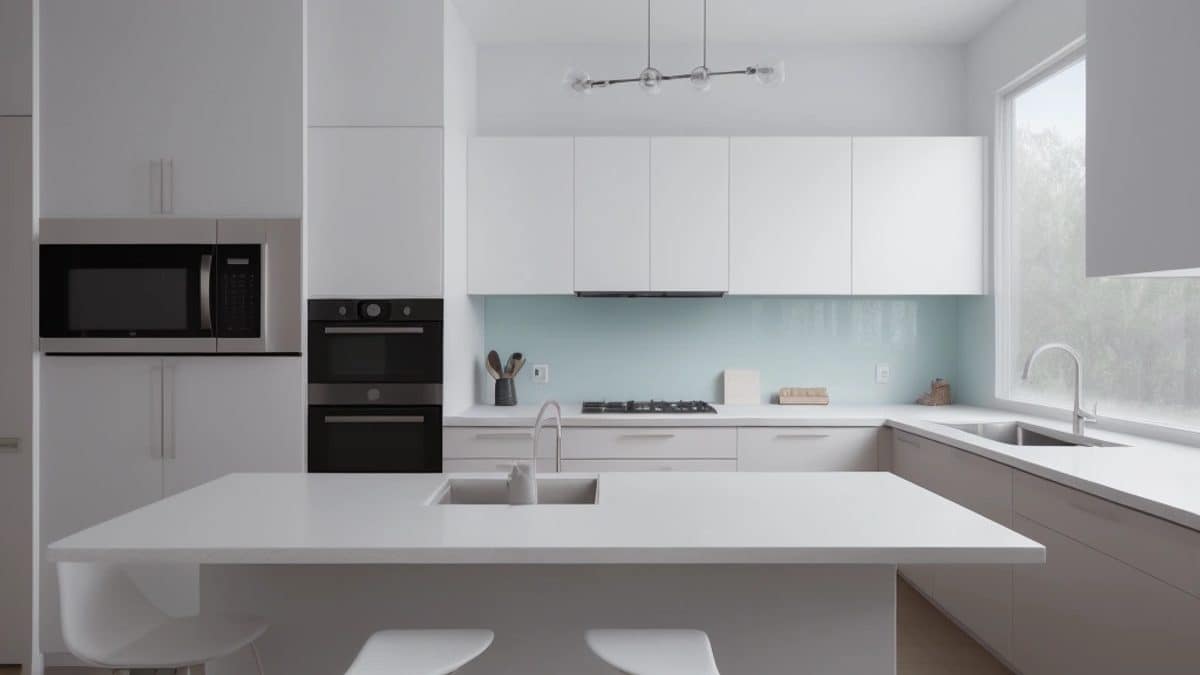
A viral post on r/ChatGPT showing two nearly identical kitchen photos, one real, one AI-generated with only the microwave clock changed, has become an accidental public tutorial in both the remarkable precision and the revealing tells of modern AI image editing.
The post is simple. A Reddit user shared two photographs of the same kitchen and asked: can you tell which one was taken by a camera and which was recreated by GPT with only the microwave's time changed? The thread exploded. Hundreds of comments dissected lighting angles, shadow consistency, font rendering on the digital display, and subtle geometric distortions around the appliance frame. The majority of users could not reliably identify the AI-generated version on first look. Several who were confident turned out to be wrong. The experience was disorienting in a way that a benchmark score or a press release about model capabilities never could be, because it was personal and it was immediate.
What makes the experiment more than a social media curiosity is what it reveals about where AI image editing actually stands in April 2026. The task the user set, change one specific detail in a photograph while preserving everything else, is technically demanding. It requires the model to understand the original image in full, isolate a single region, generate plausible new content for that region, and then blend the result seamlessly with the surrounding pixels in terms of lighting, texture, and perspective. A year ago, this class of edit reliably produced visible artifacts. The microwave clock thread suggests the gap between AI-edited and camera-captured has closed to the point where casual visual inspection is no longer a reliable detection method.
The workflow being demonstrated, known as inpainting, has existed in rudimentary form since early diffusion models. What has changed is precision and context-awareness. As AI inpainting guides published in early 2026 explain, modern tools do not simply fill a masked region with plausible textures. They read the full scene: the color temperature of ambient light, the angle and hardness of shadows, the specific font and pixel density of digital displays, and the geometric relationship between the edited object and every other surface in the frame. GPT-4o's native image editing capability, along with competing implementations in Gemini and Claude's multimodal tools, has pushed this context-awareness to a level where the most common remaining tells are not lighting or texture but typography. Digital clock displays are particularly revealing because the AI must render a specific time in a specific font at a specific size and angle, and subtle inconsistencies in character spacing or pixel alignment are where trained eyes catch the seam.
The commercial implications of this capability are already being actioned. E-commerce product photography, which historically required reshoots every time a product detail changed, is an obvious beneficiary. A brand that sells a product in twelve colorways no longer needs twelve photoshoots. A food delivery platform that wants to show a dish at different times of day does not need a photographer standing in a kitchen at sunrise and sunset. Adobe's Generative Fill and PhotoRoom's professional tier have been marketing exactly these use cases for the past eighteen months, and enterprise adoption in retail has been accelerating accordingly.
The Liar's Dividend Problem
The microwave thread is entertaining precisely because the stakes are low. Nobody's life or safety depends on whether a kitchen photograph is genuine. The same capability applied to a news photograph, a legal document image, or an identity verification photo carries a different weight entirely. The ability to alter a single specific detail in a photograph, plausibly and at scale, is the technical foundation of a class of disinformation that existing detection tools are struggling to address.
Current AI watermarking standards, including the Coalition for Content Provenance and Authenticity standard being adopted by Adobe, Google, and a growing number of publishers, attach cryptographic metadata to images at the point of creation or editing. This allows verification tools to check whether an image has been modified and flag the alteration. The problem is that the watermark only works if it is present, and images that were captured on a standard smartphone and then edited through a consumer AI tool often strip or do not carry C2PA metadata. The microwave experiment, replicated at scale by malicious actors with a photograph of a document or a timestamp on a security camera still, produces exactly the kind of localized, specific edit that is hardest to detect without the original file for comparison.
What the Reddit thread has done, unintentionally, is make this reality legible to a broad audience that would never read a technical paper on diffusion model inpainting. The comments section is full of people who assumed they could spot AI images and discovered they could not. That recalibration of public confidence in visual evidence is arguably the most significant thing the thread produced, more important than the entertainment value of the puzzle and more durable than the specific benchmark it represents for GPT's image capabilities. We are in an era where every photograph requires a second question: is this what it says it is? The microwave on Reddit just made that question feel personal.
Also read: How to Build a Local Marketing Agency Without a Large Team - Using Agentic Agency • Google commits $40 billion to Anthropic and the AI funding arms race enters a new era • China's military is treating the Iran war as a live tutorial in AI-driven combat and taking notes