The Commerce Department's $250 million award to I-Pulse is not a normal chip subsidy. It is a bet that Robert Friedland's mining-world pulsed-power technology can solve a semiconductor problem the big fabs have mostly left alone.
Robert Friedland made his fortune in the ground. He co-founded Ivanhoe Mines, helped build the Kamoa-Kakula copper story in the Democratic Republic of Congo, and became one of mining's best-known billionaires. Now Washington is backing his next act with $250 million for I-Pulse, a pulsed-power company trying to build silicon-carbide switches for work that ordinary chips were never designed to handle.
The Department of Commerce's CHIPS Research and Development Office announced the definitive agreement on June 25, funding I-Pulse's Albuquerque laboratories to develop high-temperature, high-current, high-voltage solid-state switches made from silicon carbide. As Bloomberg reported, this is not the kind of semiconductor fight you usually hear about from Taiwan Semiconductor, Intel, or Nvidia. These parts sit in a narrower and harder corner of the market, where components have to survive extreme electrical conditions in geothermal drilling, rock crushing, manufacturing equipment, and defense systems.
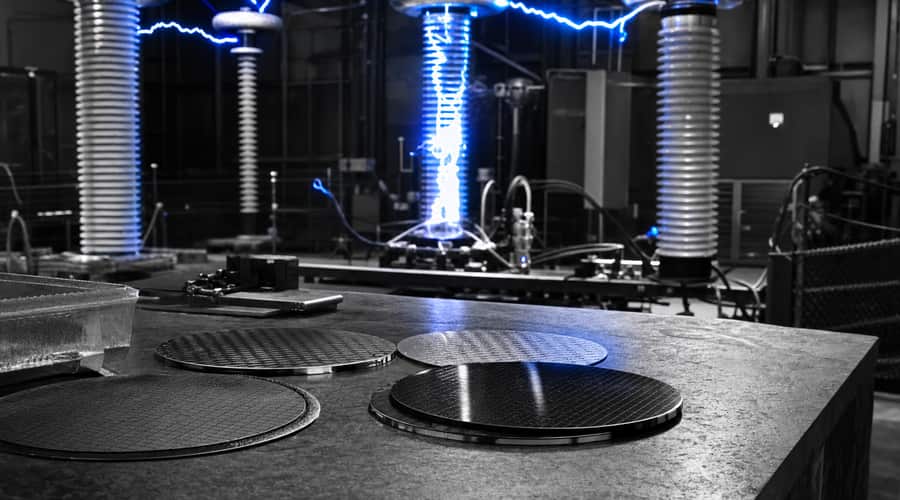
You can see why the award landed outside the usual fab story. I-Pulse's pitch starts with pulsed power, not consumer electronics. The company uses short surges of high-voltage electricity to fracture and soften rock ahead of a drill bit, a technique developed for geothermal formation drilling. Friedland and co-founder Laurent Frescaline are telling Washington something blunt: if the United States wants this kind of industrial and defense capability at home, it needs the switches that make the physics usable.
Albuquerque is not a random dot on the map. The city has Sandia National Laboratories and the U.S. Air Force Research Laboratory, both deeply tied to pulsed-power research. According to I-Pulse's announcement, the CHIPS award will support work with national labs and universities, with Dr. Rick Spielman and Dr. Randy Curry leading the Albuquerque team. That is the practical part of the story. You don't build this around a PowerPoint deck. You build it near the people who already understand the machines.
I-Pulse did not arrive at this award cold. In October 2025, Chile's state-owned copper company Codelco took a minority stake in the business, joining mining investors that included BHP, Newmont, Rio Tinto, Teck Resources, and Ivanhoe Mines. In March 2026, I-Pulse acquired CSI Technologies, a California maker of high-energy, high-voltage capacitors used in industrial, medical, and defense markets. Those details matter more than the usual startup language. They show customers, investors, and manufacturing assets already sitting around the technology before the federal check arrived.
Frankly, that is why this award is more interesting than another subsidy for another established fab. I-Pulse is not asking the government to help it make more of a chip the market already knows how to buy. It is trying to fill a specific domestic gap in power electronics, one tied to mining, drilling, defense, and heavy industry. The CHIPS program has always had a harder job than handing money to famous semiconductor names. It has to decide which weak points in the supply chain are worth public money before the market prices them correctly.
The bet is still a bet. Silicon-carbide switches for pulsed-power systems are not a mass-market product, and the customers are not hyperscalers ordering AI accelerators by the truckload. They are mining companies, defense contractors, geothermal developers, and manufacturers with very particular needs. A $250 million R&D award for that category says the government is paying for strategic necessity, not obvious volume. The Wall Street Journal reported in May 2026 that the same program awarded $2 billion to nine quantum computing firms, which points to a broader pattern: Washington is spreading CHIPS money across technologies it considers critical before they look mainstream.
The founder profile is the sharpest part. Previous CHIPS awards have gone to names like Intel, GlobalFoundries, and TSMC's Arizona operation, companies that already know how to manufacture semiconductors at scale and want help doing more of it in the United States. Friedland built mines. His company is coming at chips through drilling physics, not through the logic-gate world. That sounds odd until you look at the actual requirement. The problem is not making a faster phone processor. It is making a rugged switch that can push brutal pulses of electricity through industrial systems without failing.
I-Pulse still has to prove the hard part. The agreement funds research and development, not full production, and there is a long road between Albuquerque lab work and commercial silicon-carbide switches shipping at volume. But the company has already done something rare in the CHIPS era: it became credible to major mining houses, a Chilean state enterprise, a California capacitor manufacturer, and now the U.S. federal government before shipping chips at scale. The next question is simple enough. Can a mining billionaire turn a niche pulsed-power technology into a domestic semiconductor capability Washington actually needs?
Also read: The White House just put a government checkpoint between OpenAI and the public; Onsemi bets $7 billion in stock on a world where AI runs at the edge, not the cloud; General Intuition raises $320 million on the thesis that video game footage is the most underrated training data in robotics