On April 20, 2026, users across the globe reported that virtually every major AI application had gone offline at once, briefly halting workflows that millions of businesses and individuals now treat as essential.
It started, as these things often do, with confused posts on social media. Then the volume picked up. ChatGPT unreachable. Claude timing out. Copilot spinning. Gemini returning errors. Within hours, "every single AI app is down" was trending globally, and the frustration was less about inconvenience than about a creeping realization: we had quietly handed enormous operational dependence to a handful of infrastructure layers we rarely think about until they fail.
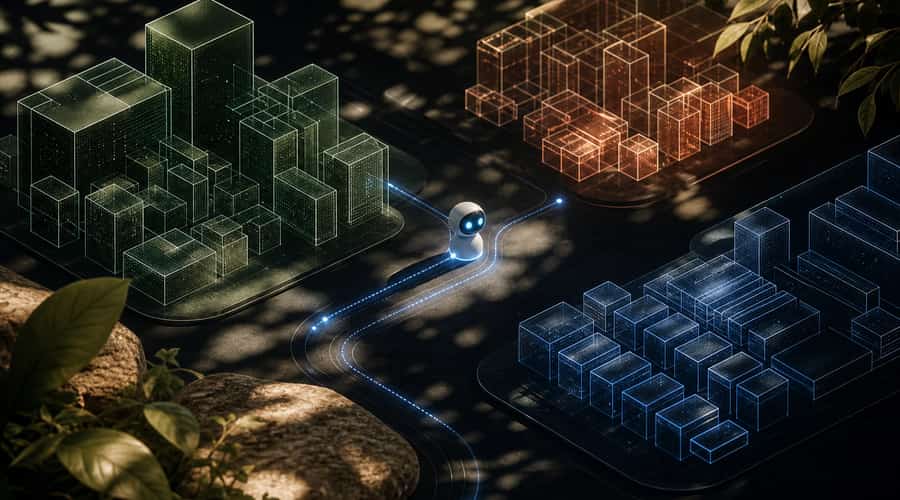
The outage, whatever its precise technical origin, illustrated something the AI industry has been reluctant to discuss plainly. Nearly every consumer and enterprise AI product in widespread use runs on one of three cloud backbones: Amazon Web Services, Microsoft Azure, or Google Cloud. Those platforms are not just hosting providers. They supply the compute, the networking, the storage, and in many cases the foundational model APIs that third-party developers build on top of. When something disrupts that layer, the failure does not stay contained. It cascades.
Thousands of AI-powered applications are not independent products in any meaningful infrastructure sense. They are thin layers built on top of OpenAI's or Anthropic's API endpoints. A customer service bot, a legal drafting tool, a coding assistant, a medical documentation product , if the underlying model API goes dark, all of them go dark simultaneously, regardless of how different they appear to end users. This is the dependency chain that quietly formed over the past several years as developers discovered it was faster and cheaper to build on existing model APIs than to train or host their own.
The concentration is not a secret, but its practical implications have rarely been stress-tested at this scale. Enterprise procurement teams signing AI contracts typically evaluate the software layer in front of them, not the infrastructure two or three layers beneath it. That gap in due diligence is now significantly harder to ignore.
What It Costs When the Tools Stop Working
Productivity losses during an AI outage are difficult to quantify precisely, but the direction is clear. Companies that have restructured workflows around AI-assisted tasks , drafting, summarizing, coding, analysis , face immediate bottlenecks when those tools vanish without warning. Unlike a slow system or a degraded experience, a complete outage removes the option entirely. Teams either revert to slower manual processes or stop work on tasks that now depend on AI as a prerequisite step. In sectors like healthcare documentation, customer support, and software development, that interruption has measurable downstream cost within hours.
It also reframes the risk calculus for finance and operations leaders who have been approving AI integration at pace. Resilience planning, multi-vendor redundancy, and fallback protocols have not kept up with adoption rates. Yesterday's event will push those conversations from the back of the agenda to the front.
Regulators Were Already Watching
In Brussels and Washington, discussions about AI infrastructure resilience had been gaining traction through 2025, with policymakers increasingly treating major AI platforms as critical digital infrastructure deserving the same oversight frameworks applied to financial systems or telecommunications networks. A visible, simultaneous multi-platform outage affecting hundreds of millions of users is precisely the kind of real-world event that converts those discussions into legislative urgency. Expect mandatory uptime transparency requirements, resilience audits, and concentration risk disclosures to move faster through the regulatory pipeline as a direct consequence.
The more immediate question for the AI industry is reputational. Consumer tolerance for outages in tools framed as essential productivity infrastructure is considerably lower than for social media or entertainment apps. Trust, once shaken at scale, requires consistent reliability over time to rebuild. The companies whose services went dark on April 20 will need to explain not just what happened, but what structural changes prevent it from happening again. Vague assurances will not be sufficient this time.
Watch for official post-mortems in the days ahead, enterprise contract renegotiations in the weeks that follow, and a new wave of startups pitching multi-model redundancy and AI failover architecture as the problem nobody adequately solved before it became expensive not to.
Also read: ChatGPT users are pushing back on a chatbot that lectures more than it listens • Why the McDonald's support bot is making paid AI subscriptions look expensive • Zoom partners with Sam Altman's World to verify that meeting participants are actually human